Small Dumbbell Storage: Space-Saving Racks & Layouts
Maximize your home gym footprint with our guide to small dumbbell storage. Compare tiered racks, wall mounts, and layout designs for tight spaces.

The Footprint Problem: Why Small Dumbbell Storage Fails
When outfitting a compact home gym or apartment workout space, fitness enthusiasts often gravitate toward light to moderate fixed-weight sets. A standard small dumbbell collection—typically ranging from 5 to 25 pounds in 5-pound increments—seems unassuming. However, storing ten individual bells without a dedicated system quickly consumes 12 to 15 square feet of valuable floor space. More importantly, leaving these weights scattered creates tripping hazards and disrupts the spatial flow required for dynamic movements like lunges or kettlebell-style swings.
Effective space optimization is not just about buying a rack; it is about understanding the geometry of your equipment, the structural integrity of storage solutions, and the biomechanical clearance needed for safe lifting. According to guidelines published by the American Council on Exercise, a functional home gym requires meticulous attention to equipment spacing and safety zones to prevent injury in confined areas. This guide breaks down the exact measurements, rack models, and layout frameworks needed to optimize your small dumbbell storage in 2026.
The Geometry of Rack Tiers: Urethane vs. Rubber Hex
Before selecting a storage unit, you must evaluate the physical dimensions of your weights. The vertical clearance between rack tiers is a frequent failure point for home gym owners.
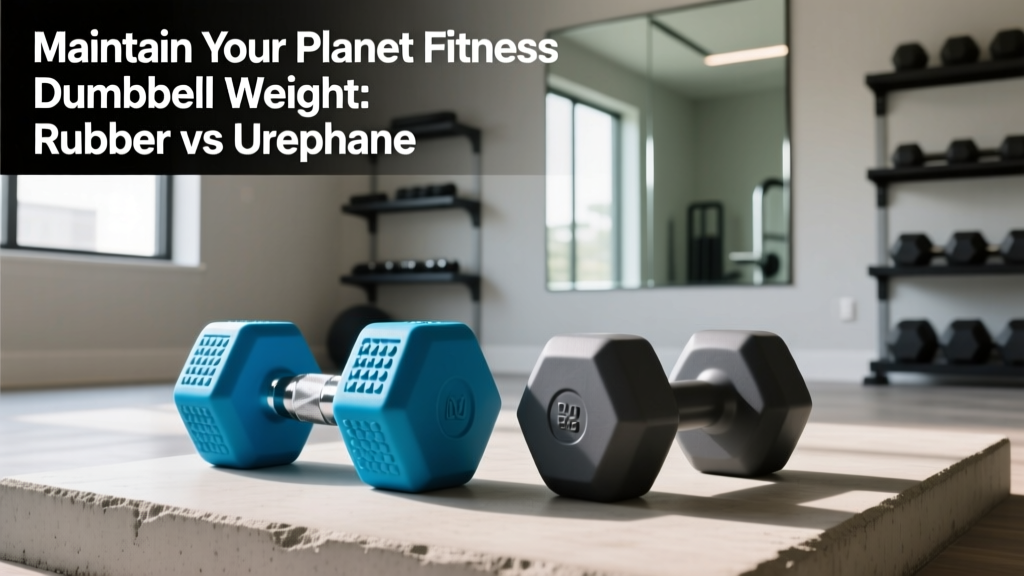
- Rubber Hex Dumbbells: These are budget-friendly but incredibly bulky. A 25-pound rubber hex dumbbell can have a head height of up to 5.5 inches. If your rack features a standard 6-inch vertical tier clearance, the 25-pound bells will fit, but anything larger will scrape the steel tier above it, eventually tearing the rubber casing.
- Urethane Dumbbells: Urethane is significantly denser than recycled rubber. A 25-pound urethane small dumbbell often features a head height of just 4.2 inches. This allows for tighter tier spacing and a lower overall center of gravity on the rack.
A fully loaded 3-tier rack holding 5 to 25-pound pairs can weigh over 350 pounds. If the rack base is less than 24 inches deep, retrieving a heavy bell from the top tier shifts the center of mass forward. Always anchor freestanding racks to the wall or opt for models with extended 28-inch base feet if you are storing dense iron or urethane sets.
Spatial Comparison: Tiered Racks vs. Wall Mounts
Choosing between a freestanding tiered rack and a wall-mounted solution depends entirely on your available floor plan and wall structure. Below is a data-driven comparison of the two primary storage methodologies for compact spaces.
| Storage Type | Floor Footprint | Wall Clearance Needed | Max Weight Capacity | Avg Cost (2026) |
|---|---|---|---|---|
| 3-Tier Freestanding | ~3.5 sq ft | 4 inches (for baseboard) | 500 - 800 lbs | $150 - $350 |
| Wall-Mounted Shelves | 0 sq ft | 0 inches (flush mount) | 200 - 300 lbs | $90 - $180 |
| Vertical A-Frame | ~2.0 sq ft | 12 inches (lean angle) | 300 lbs | $120 - $200 |
Top Tiered Racks for Compact Collections
For those who cannot drill into studs or are renting, freestanding tiered racks remain the gold standard. Based on extensive structural testing and spatial analysis reviewed by Garage Gym Reviews, two models dominate the space-optimization market.
1. Rogue 3-Tier Dumbbell Rack
Priced around $295, the Rogue 3-Tier is constructed from 11-gauge steel, offering unparalleled rigidity. Its footprint measures exactly 22.5 inches wide by 24 inches deep. The 24-inch depth is the critical spatial feature here; it provides a wide enough base to prevent tipping when pulling 25-pound bells from the top tier. The tier spacing is optimized for both round and hex heads, though users with oversized rubber hex bells may find the top tier slightly restrictive for anything over 30 pounds.
2. Rep Fitness 3-Tier Rack
At approximately $149, the Rep Fitness model is the budget-friendly alternative. It utilizes 14-gauge steel. While sufficient for a small dumbbell set (5 to 15 pounds), loading the top tier with 25-pound iron bells can cause minor deflection in the crossbars over time. It shares a similar footprint to the Rogue but features slightly narrower tier spacing, making it strictly suited for compact urethane or neoprene-coated bells.
Wall-Mounted & Zero-Floor Solutions
If your home gym is in a multi-purpose room like a living area or a narrow hallway, reclaiming floor space is mandatory. Wall-mounted dumbbell shelves completely eliminate the floor footprint. However, structural integrity is paramount.
Never use drywall anchors for dumbbell storage. A standard pair of 25-pound dumbbells exerts 50 pounds of downward force, multiplied by the leverage of the shelf bracket. You must use 3/8-inch by 3-inch lag screws driven directly into the center of wooden wall studs, which are typically spaced 16 inches on center.
Brands like Titan Fitness and Hold Fitness offer heavy-duty wall shelves specifically designed with 16-inch mounting brackets. These shelves typically protrude only 8 to 10 inches from the wall, allowing you to store your small dumbbell pairs safely out of the way while maintaining an open floor plan for yoga mats or bodyweight circuits.
Layout Design: The 36-Inch Clearance Rule
Optimizing space is not just about the storage unit; it is about the spatial flow around it. When designing your layout, implement the 36-inch clearance rule. You need a minimum of 36 inches of unobstructed floor space directly in front of your dumbbell rack.
This specific measurement allows you to squat down, grip the dumbbells with a neutral spine, and lift them vertically without your elbows striking the wall or the rack itself. If your room is too narrow to accommodate a 24-inch deep rack plus a 36-inch clearance zone (totaling 5 feet of depth), you must pivot to a wall-mounted solution or an adjustable dumbbell setup to maintain ergonomic safety.
The Adjustable Pivot: When Fixed Bells Do Not Fit
Sometimes, the most space-efficient solution for a small dumbbell collection is to eliminate the collection entirely. If your spatial analysis reveals that even a 3-tier rack compromises your workout zone, adjustable dumbbells are the ultimate layout hack.
Consider the PowerBlock Sport 24 set. This adjustable system replaces eight pairs of fixed dumbbells (ranging from 5 to 24 pounds) but occupies a footprint of just 12 inches long, 6 inches wide, and 6.5 inches high. You can store them on a standard bookshelf, under a bed, or in a closet. For micro-apartments where a dedicated fitness zone does not exist, adjustable cubes paired with a discreet wall-mounted cradle offer the highest ratio of utility to spatial economy.
Frequently Asked Questions
Can I store my small dumbbells outside or in an unheated garage?
Yes, but the material dictates longevity. Neoprene and vinyl-coated small dumbbells will degrade, crack, and peel when exposed to UV light and freezing temperatures. If storing in a garage, opt for bare cast iron, chrome, or high-quality urethane, and keep them on a rack elevated at least 4 inches off the concrete floor to prevent moisture-induced rust.
Is an A-frame rack better for small spaces than a 3-tier rack?
An A-frame rack has a smaller physical footprint (often under 2 square feet), but it requires a wider operational clearance. Because the weights are stacked vertically in a pyramid, you must stand further back to safely lift the bottom tiers without your shins hitting the lower bells. In narrow rooms, a vertical 3-tier rack with a flat front profile is much more space-efficient.
How do I protect my hardwood floors from a heavy dumbbell rack?
A fully loaded steel rack can dent hardwood floors due to the concentrated point-load of the feet. Cut a 3/4-inch thick rubber horse stall mat to the exact footprint of the rack base. This distributes the weight across a wider surface area, protects the polyurethane finish on your floors, and adds a layer of friction to prevent the rack from sliding during weight retrieval.
By carefully analyzing your room dimensions, understanding the physical geometry of your weights, and selecting the appropriate structural storage, you can seamlessly integrate a comprehensive small dumbbell collection into even the most constrained environments. For more detailed specs on steel gauges and rack footprints, always consult the manufacturer guides at Rogue Fitness before finalizing your layout.
More gear to consider
All reviews
Dumbbell Kickbacks Form: Rubber Hex vs Urethane Dumbbells Reviewed

2026 Loadable Dumbbell Trends: Adapting Dumbbell Squat Form
Collar & Clamp Types: Safe Gear for a Full Dumbbell Chest Workout
Incline Dumbbell Press vs Bench Press: Urethane vs Rubber Hex Trends

Power Rack vs Squat Rack vs Squat Stand: A Dumbbell Workout Guide