EZ vs Straight Bar Space Layouts & Dumbbell Equivalent to 225 Bench
Discover how to optimize home gym space with an EZ vs straight bar comparison and find the exact dumbbell equivalent to 225 bench press layouts.

The Home Gym Spatial Dilemma: Barbell Footprints vs. Dumbbell Zones
Designing a high-performance home gym in 2026 requires ruthless spatial efficiency. The average spare bedroom or garage corner offers roughly 100 to 150 square feet of usable floor space. When outfitting this area for upper-body hypertrophy and heavy pressing, lifters immediately face a geometric conflict: standard Olympic barbells demand massive lateral clearance, while compact alternatives often compromise on load capacity. Two of the most common spatial debates center around arm isolation tools—specifically the EZ curl bar vs. straight bar comparison—and how to execute heavy compound chest presses without the 11-foot wingspan required for a standard barbell setup.
This guide breaks down the exact dimensional footprints, biomechanical trade-offs, and layout configurations needed to maximize a compact training space, including a deep dive into finding the functional dumbbell equivalent to 225 bench press when a full barbell station simply will not fit.
Dimensional Breakdown: EZ Curl Bar vs. Straight Bar
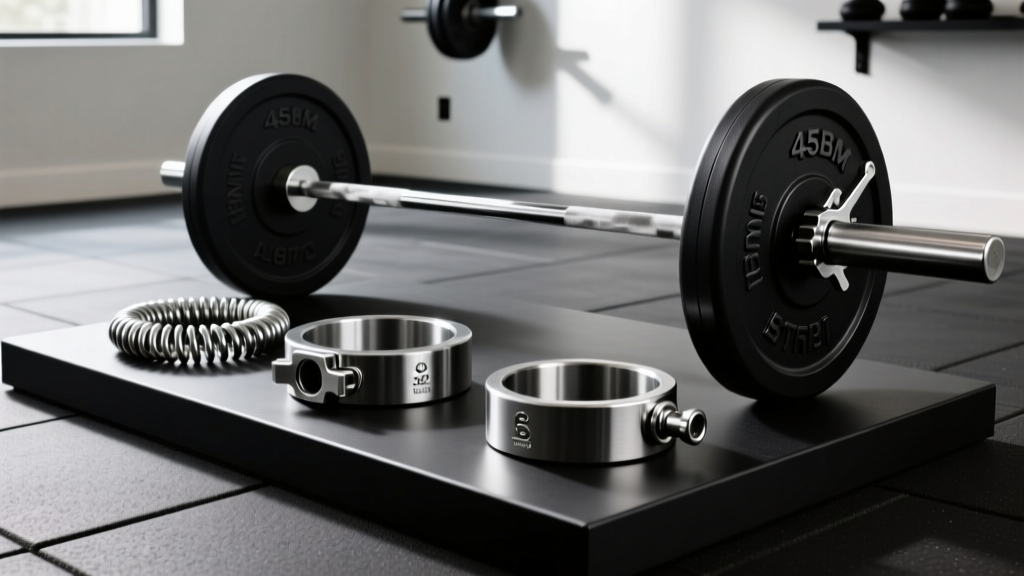
Before purchasing iron, you must map your clearance zones. A standard 7-foot Olympic barbell requires a minimum lateral clearance of 9.5 feet to safely load and unload 45-pound bumper plates. In contrast, an EZ curl bar cuts this requirement nearly in half, fundamentally changing how you can design your room's layout.
| Feature | Standard Straight Bar (Olympic) | Standard EZ Curl Bar | |
|---|---|---|---|
| Overall Length | 71 - 86 inches | 47 - 50 inches | |
| Bar Weight | 44 - 45 lbs | 15 - 25 lbs | |
| Min. Room Width | 9.5 feet (with plates) | 6 feet (with plates) | |
| Primary Use | Heavy Compounds (Squat, Bench, Deadlift) | Arm Isolation (Curls, Tricep Extensions) | |
| Storage Footprint | Requires heavy-duty floor stand or rack | Wall-mounted hangers or small floor cradle |
Biomechanics in Confined Spaces
When space forces you to choose between an EZ bar and a straight bar for arm days, biomechanics must dictate the decision. The straight bar (such as the Rogue Ohio Bar, approx. $295) forces your wrists into full supination. While this maximizes bicep brachii activation, it places immense valgus stress on the elbows and compresses the carpal tunnel.
According to educational resources from ACE Fitness, the angled grips of an EZ curl bar (like the CAP Barbell OB-47B, approx. $45) allow for a semi-pronated grip. This slight wrist angle reduces joint strain, making it the superior choice for high-volume, unspotted drop-sets in a cramped home gym where you cannot safely bail a straight bar from a standing position. If your layout only allows for a single barbell dedicated to arm work, the 47-inch EZ bar is the undisputed king of space-saving ergonomics.
The Heavy Press Dilemma: Finding the Dumbbell Equivalent to 225 Bench
The most significant spatial casualty in a compact home gym is the barbell bench press station. A standard bench, combined with a 7-foot bar and 45-pound plates, requires an 11-foot wide by 6-foot deep dedicated zone. If your room is 10x10, a barbell bench is physically impossible without removing drywall.
The Stabilization Deficit Formula
Because dumbbells require independent stabilization from the rotator cuff and pectoral synergists, the absolute load you can move is reduced. The National Strength and Conditioning Association (NSCA) notes that unilateral stabilization demands typically reduce maximum pressing capacity by 10% to 15% compared to a fixed barbell path.
This brings us to a critical programming question for space-restricted lifters: What is the exact dumbbell equivalent to 225 bench press?
A 225-pound barbell bench press consists of the 45lb bar plus 180lbs of plates (90lbs per side). To replicate the hypertrophic stimulus, central nervous system (CNS) recruitment, and mechanical tension of a 225lb barbell press using dumbbells, you must account for the stabilization deficit. Lifting two 100-pound dumbbells (200 pounds total) is widely recognized by strength coaches as the functional dumbbell equivalent to 225 bench pressing. The increased range of motion (ROM) at the bottom of a dumbbell press further compensates for the 25-pound difference in total load, delivering equal or greater pectoral micro-trauma.
Gear Required for the 200lb Dumbbell Press Zone
To achieve this equivalent in a 2026 compact gym layout, you need specialized heavy-duty equipment. Standard 5-50lb adjustable sets will not suffice.
- Fixed Hex Option: A pair of Rogue Rubber Hex 100lb Dumbbells (approx. $375/pair). These require a heavy-duty A-frame rack but offer zero setup time for heavy working sets.
- Adjustable Option: The SMRTFT Bell 120 (approx. $499 per dumbbell). Utilizing a pin-selector mechanism, these allow you to reach the 100lb+ threshold without the massive footprint of a 15-pair dumbbell rack, preserving up to 20 square feet of floor space.
- The Bench: You need an adjustable utility bench with a minimum 1,000 lb weight capacity and a wide, stabilizing rear leg base (e.g., Rep Fitness AB-4100, approx. $249) to handle the lateral sway of 100lb dumbbells.
Optimal Layout Configurations for Compact Rooms
Integrating your arm isolation tools and heavy pressing equivalents requires distinct zoning. Here are two layout blueprints optimized for 2026 home gym dimensions.
Layout 1: The 'Dead Space' Corner Arm Station
Corners are notoriously difficult to utilize for barbell movements but are perfect for EZ bar isolation work.
- Mounting: Install a pair of Rogue Wall Mount Bar Hangers ($35) at chest height on the adjacent corner walls.
- Storage: Store your 47-inch EZ curl bar on one hanger and a lightweight tricep cambered bar on the other.
- Execution Zone: Leave a 4x4 foot rubber-matted zone directly in front of the corner. This provides ample clearance for standing EZ bar curls, overhead tricep extensions, and lateral raises without your elbows striking drywall or mirrors.
Layout 2: The Heavy Dumbbell Floor Press Zone
If you lack the 11-foot wingspan for a barbell bench, and even the 8-foot wingspan for a heavy dumbbell bench press feels too tight, the floor press is your ultimate spatial hack.
Expert Layout Tip: By eliminating the bench, you reduce the depth requirement of your pressing zone from 6 feet down to just 3 feet. Position your heavy adjustable dumbbells against a reinforced wall, lay a 1-inch thick horse-stall mat directly on the floor, and execute your 100lb dumbbell equivalent to 225 bench presses. The floor naturally limits your elbow travel, protecting the rotator cuff while allowing you to overload the triceps and inner pecs in a room as narrow as 7 feet.
Expert Verdict: Designing for Longevity
Optimizing a home gym is not just about what fits through the door; it is about how the equipment flows during a high-intensity superset. The EZ curl bar decisively beats the straight bar for spatial efficiency and joint preservation in confined rooms, allowing for safe, unspotted arm training. Meanwhile, acknowledging the physical limitations of your walls means abandoning the traditional barbell bench press in favor of heavy, 100lb adjustable dumbbells. By calculating the precise dumbbell equivalent to 225 bench mechanics, you can build elite-level upper body mass without ever needing to swing a 7-foot barbell through a standard bedroom doorway.
More gear to consider
All reviews
Heel Elevated Dumbbell Squats: Bumper vs Iron Plate Value

Rubber Hex vs Urethane: Budget Guide & Dumbbell Halo Muscles Worked
Power Rack vs Squat Rack: Incline Dumbbell Press Alternative Mistakes

Cast Iron vs Competition Kettlebells: Can You Use a Dumbbell for Swings?
Rubber vs Urethane Dumbbells: Best Value for the Dumbbell Bench Row