EZ Bar vs Straight Bar: Care & Dumbbell Row Benefits
Compare EZ curl bar vs straight bar maintenance, longevity, and biomechanics while exploring how they stack up against traditional dumbbell row benefits.

Beyond the Dumbbell: Why Bar Selection Matters for Longevity
When building a resilient home gym or outfitting a commercial facility in 2026, the debate between an EZ curl bar and a straight barbell often centers on joint comfort and muscle activation. Many lifters transition to barbells after experiencing the initial dumbbell row benefits—such as unilateral lat development, enhanced stretch, and reduced lumbar shear force—only to find that heavy barbell rows accelerate equipment wear if the gear is not properly maintained. While the unilateral nature of dumbbells distributes wear across multiple independent handles, a single barbell absorbs hundreds of pounds of torsional and bending stress during Pendlay rows and heavy curls.
Understanding the metallurgical and mechanical differences between straight bars and EZ curl bars is critical for maximizing the lifespan of your free weight investment. This guide breaks down the structural vulnerabilities, finish degradation, and sleeve wear patterns unique to each bar type, providing a definitive maintenance protocol to keep your equipment pristine.
Biomechanical Stress: Straight Bar vs. EZ Curl Bar
The physical geometry of a barbell dictates how stress is distributed across the shaft and sleeves. According to biomechanical analyses of barbell bent-over rows, a standard 7-foot straight bar with a 28mm to 29mm shaft experiences peak bending moments at the center knurl when loaded with 45-pound bumper plates. Over time, repetitive loading and unloading—especially when lifters drop the bar onto J-cups or the floor—can lead to permanent deformation if the bar's tensile strength falls below 190,000 PSI.
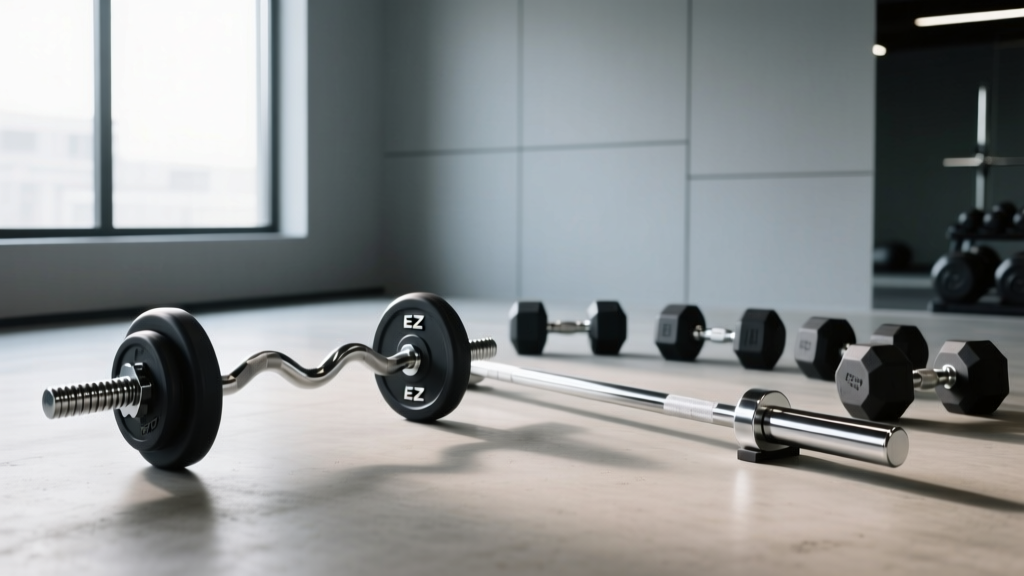
Conversely, the EZ curl bar features an undulating shaft designed to reduce wrist and elbow valgus stress during curls and triceps extensions. However, this angled geometry creates asymmetric stress vectors when the bar is used for heavy bent-over rows or front squats. The bends in the shaft act as natural stress concentrators. If an EZ curl bar is routinely overloaded beyond its typical 35,000 to 50,000 PSI yield point (common in cheaper import models), micro-fractures can develop at the apex of the inner angles.
Expert Insight: Never use a standard Olympic EZ curl bar for heavy Pendlay rows or rack pulls. The angled shaft is not optimized for the sheer horizontal forces generated during heavy back training, accelerating metal fatigue and compromising the sleeve welds.
The Knurling & Oxidation Matrix
The longevity of your bar's grip is entirely dependent on its finish. Knurling cuts into the steel, exposing raw material to oxygen, sweat, and humidity. In 2026, manufacturers offer a wider array of protective coatings than ever before, but each requires a distinct maintenance approach.
| Finish Type | Rust Resistance | Maintenance Frequency | Best Use Case |
|---|---|---|---|
| Bare Stainless Steel | High | Monthly | Premium straight bars; aggressive knurling preservation. |
| Hard Chrome | Medium-High | Bi-Weekly | Commercial EZ curl bars; resists flaking but can pit if scratched. |
| Black Oxide | Low | Weekly | Budget straight bars; requires constant oiling to prevent surface rust. |
| Cerakote (Ceramic) | Very High | Monthly | Custom colorways; excellent corrosion resistance but can chip on sleeves. |
The Sweat and Chalk Factor
During high-volume back and arm days, lifters heavily chalk the knurling. Gym chalk (magnesium carbonate) is highly hygroscopic, meaning it pulls moisture from the air and traps it against the steel. When mixed with the slightly acidic pH of human sweat, this creates a corrosive paste that eats through black oxide and cheap chrome finishes within weeks. Straight bars used for rows are particularly vulnerable because the lifter's torso hovers over the center knurl, dripping sweat directly into the deepest part of the knurl pattern.
Sleeve Hardware: Bushings vs. Bearings in Rowing Motions
While sleeve rotation is critical for Olympic lifts, its importance in rowing and curling is often misunderstood. Both straight bars and EZ curl bars utilize either bronze bushings or needle bearings to allow the sleeves to spin independently of the shaft.
- Bronze Bushings: Ideal for EZ curl bars and powerlifting straight bars. They provide a slower, more controlled spin, which is preferable for strict curls and heavy rows where a fast-spinning sleeve could destabilize the wrist.
- Needle Bearings: Found in high-end Olympic weightlifting bars. While excellent for snatches, the high-RPM spin is unnecessary for rows and curls, and the delicate needles are prone to crushing if the bar is repeatedly dropped onto concrete or metal rack pins.
Never use standard WD-40 to lubricate barbell sleeves or clean knurling. WD-40 is a solvent and water-displacer, not a long-term lubricant. It will strip away existing factory grease from the bushings and attract abrasive dust, turning your sleeve internals into a grinding paste. Use only 3-in-One oil, mineral oil, or manufacturer-approved synthetic greases.
The 2026 FitGearPulse Maintenance Protocol
To ensure your straight bars and EZ curl bars survive decades of heavy rows and curls, implement this strict, two-tiered maintenance schedule. This protocol accounts for the specific wear patterns of both bar geometries.
Weekly: Knurl Debridement
- Dry Brush: Use a stiff nylon brush (never brass or stainless steel on chrome or Cerakote) to vigorously scrub the knurling while the bar is dry. This removes dried sweat and chalk from the valleys.
- Wipe Down: Apply a light mist of mineral oil or a specialized barbell cleaner to a microfiber cloth. Wipe the entire shaft, paying special attention to the inner angles of the EZ curl bar where chalk accumulates.
- Sleeve Check: Spin each sleeve by hand. Listen for grinding or clicking. A smooth, silent spin indicates healthy bushings; a gritty sound means dust has breached the seal.
Bi-Annual: Deep Sleeve Lubrication
Every six months, or after 500 hours of use, the internal sleeve hardware requires attention. While most modern bars feature sealed cartridges, older or budget models allow for direct lubrication.
- Remove the external snap rings or end caps using a specialized spanner wrench or flathead screwdriver (wrap the screwdriver tip in tape to prevent scratching the steel).
- Slide the sleeve off the shaft. Note the order of the washers and bushings.
- Clean the shaft ends and the inside of the sleeve with a degreaser.
- Apply a generous coat of white lithium grease or heavy synthetic bearing grease to the bronze bushings. Avoid light oils, which will leak out of the sleeve gaps during heavy rows.
- Reassemble and torque the end cap to the manufacturer's specification (usually between 15-25 ft-lbs).
Final Verdict: Matching the Bar to the Biomechanics
While the dumbbell row benefits remain unmatched for addressing muscular imbalances and sparing the lumbar spine, barbell rows with a straight bar offer unparalleled overload potential for the mid-back and lats. The EZ curl bar, meanwhile, should be reserved strictly for its intended purpose: arm isolation and joint-friendly pressing variations.
By respecting the metallurgical limits of your equipment and adhering to a rigorous cleaning protocol, you can prevent the silent killers of barbell longevity—oxidation, bushing degradation, and knurling erosion. Invest in stainless steel or Cerakote finishes for your primary straight bars, and treat your EZ curl bars as precision instruments rather than all-purpose leverage tools. Your equipment, and your lats, will thank you for the next decade.
More gear to consider
All reviews
Beyond the Dumbbell Ladder Workout: Olympic vs Standard Plates
EZ vs Straight Bar Care & Dumbbell Clean and Press Muscles Worked

2026 Trend Report: Storing Dumbbells for Toning Arms & Light Weights

552 Dumbbells vs. Olympic Barbells: Weight & Knurling Buying Guide

Best Storage for Dumbbell Workouts for Chest Without a Bench