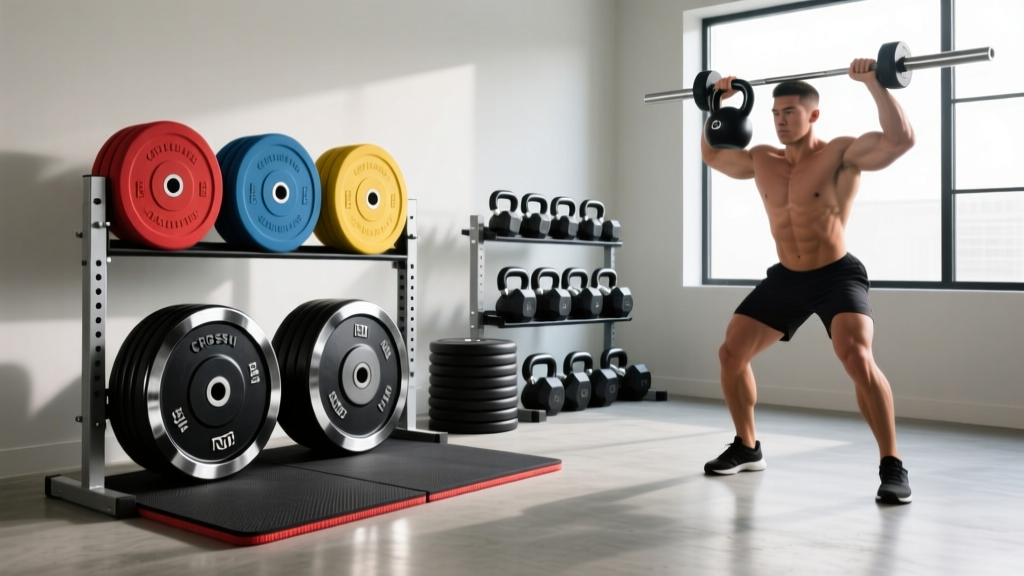
Power Rack vs Squat Rack vs Stand: Squats & Dumbbell Backward Lunges
Compare power racks, squat racks, and squat stands for 2026 home gyms. We analyze footprint, safety, and space for dumbbell backward lunges.

The Home Gym Spatial Dilemma: Beyond the Barbell Squat
When building a home gym in 2026, most lifters obsess over barbell clearances, weight capacities, and pull-up bar heights. But a critical, often-overlooked factor in choosing your primary lifting station is how it dictates the spatial flow of your entire workout. You might have the budget for a commercial-grade cage, but if its footprint chokes off the floor space required for unilateral accessory work, your programming will suffer. This is especially true for dynamic, space-intensive movements like dumbbell backward lunges.
Choosing between a full power rack, a half squat rack, and independent squat stands isn't just a decision about barbell safety; it is a decision about your gym's longitudinal clearance. In this head-to-head comparison, we break down the exact dimensions, 2026 pricing, and spatial realities of the big three rack types to help you design a garage gym that supports both heavy squats and expansive dumbbell backward lunges.
The Contenders: 2026 Specs, Pricing, and Footprints
Before we test their spatial flow, we must define the baseline specifications of the most popular models in each category this year.
1. The Power Rack (Full Cage)
The gold standard for home gym safety is the 4-upright power rack. The Rogue Fitness RML-390F Flat Foot Power Rack remains a top-tier choice in 2026. Priced around $925, it features 3x3-inch 11-gauge steel uprights and a 43-inch by 43-inch footprint. While the flat-foot design avoids bolting into concrete, the massive 90-inch height and deep cage create a dominant physical presence in any room.
2. The Squat Rack (Half Rack)
Half racks utilize two main front uprights with a rear stabilizing base, offering a compromise between cage-level safety and open-floor access. The REP Fitness PR-4000 Power Rack (configured as a half rack with extended spotter arms) retails for approximately $749. Its footprint is roughly 48 inches deep, but the open front allows for easier barbell bail-outs and a less claustrophobic lifting environment.
3. Squat Stands (Independent Uprights)
For minimalists, independent squat stands like the Titan Fitness T-2 Series (priced at an accessible $249 per pair) offer a 23-inch by 23-inch base per stand. According to BarBend's comprehensive guide to squat stands, modern stands have vastly improved in stability, utilizing heavy-duty rubber foot pads and optional cross-members to prevent tipping during heavy re-racks.
The Spatial Flow Test: Accommodating Dumbbell Backward Lunges
Here is where the theoretical footprint meets practical biomechanics. A properly executed dumbbell backward lunge requires a 3 to 4-foot step backward, combined with the length of your torso and the trailing leg. To perform this movement safely and with full range of motion, you need a minimum of 6 to 8 feet of unobstructed longitudinal space behind your starting point.
Expert Warning: Never perform walking or backward lunges inside a fully enclosed power rack. The 43-inch internal depth of standard cages creates a severe trip hazard with the uprights, safety straps, and weight storage pegs. You must lunge outside the rack.How Each Rack Impacts Your Lunge Zone
- The Power Rack Setup: If you place a 43-inch deep Rogue RML-390F just 12 inches from your garage wall (to allow for plate loading), you have effectively consumed 55 inches of depth. In a standard 20-foot deep garage, this leaves plenty of room in front of the rack. However, if you are building out a shallow basement gym (e.g., 12 feet deep), the rack's massive footprint will push your starting line so far forward that your backward lunge will send you crashing into the basement stairs or a parked car.
- The Half Rack Setup: Half racks allow you to store weights on the rear uprights, keeping the floor clear. Because the front is open, you can position your barbell squats closer to the front edge of the rack's footprint, saving roughly 18 inches of floor space behind the barbell compared to a full cage.
- The Squat Stand Setup: This is the undisputed king of spatial freedom. Because the T-2 stands only require a 23-inch depth, you can push them flush against a wall when not in use, or easily slide them into a corner. This opens up the entire center of your gym floor, providing a massive, unobstructed runway for high-rep dumbbell backward lunges, kettlebell swings, and sled pushes.
Head-to-Head Comparison Matrix
| Feature | Power Rack (Cage) | Squat Rack (Half Rack) | Squat Stands |
|---|---|---|---|
| Avg. 2026 Price | $850 - $1,200 | $650 - $900 | $200 - $350 |
| Footprint Depth | 43" - 48" | 48" (including rear base) | 23" (per stand) |
| Lunge Clearance | Poor (Forces you forward) | Moderate | Excellent (Max floor space) |
| Barbell Safety | Maximum (4-sided spotter arms) | High (Extended front arms) | Low (No front spotter arms) |
| Weight Capacity | 1,000+ lbs | 800 - 1,000 lbs | 600 - 800 lbs |
Safety, Spotter Arms, and the Accessory Trade-Off
While squat stands win the spatial flow test for dumbbell backward lunges, they introduce significant compromises in barbell safety. If you are squatting heavy without a spotter, a power rack's 4-sided safety strap system is non-negotiable. If you fail a rep, you can dump the bar forward, backward, or laterally.
Squat stands, however, only catch the bar if it drops straight down or slightly backward. If you lose your balance and fall forward during a heavy squat, the barbell will miss the catch arms entirely, potentially destroying your floor or causing severe injury. Furthermore, squat stands are virtually useless for heavy barbell bench pressing, as they lack the front uprights required to support spotter arms over your chest.
The Hybrid Solution: Sliding Stands and Folding Racks
For lifters who demand the safety of a cage but the open floor space required for expansive dumbbell backward lunges, 2026 has popularized the wall-mounted folding power rack. Models like the Rogue RML-3W fold flat against the wall, reducing their depth from 43 inches to just 4 inches when not in use. This allows you to squat heavy with full safety, then fold the rack away to reveal an entirely empty floor for your unilateral lunge programming.
Expert Verdict: Which Setup Fits Your 2026 Goals?
Choose the Power Rack If:
You are a powerlifter or strength-focused athlete who regularly squats over 315 lbs without a spotter, and you have a dedicated gym space (like a 2-car garage) where the 43-inch depth won't encroach on your accessory work zones. You will simply need to designate a specific 'lunge lane' outside the rack's perimeter.
Choose the Half Rack If:
You want a balance of barbell safety and open-floor aesthetics. Half racks are ideal for CrossFit-style garage gyms where you need to transition quickly from barbell squats to open-floor dumbbell backward lunges without navigating around four massive steel uprights.
Choose Squat Stands If:
You are training in a small apartment, a shallow basement, or a multi-use living space. If your primary programming relies heavily on dumbbells, kettlebells, and bodyweight movements—and your barbell squats are kept in the moderate range (under 275 lbs)—squat stands offer the ultimate spatial freedom. You can easily slide them aside to create a massive, unobstructed runway for your dumbbell backward lunges, ensuring perfect biomechanics without the fear of tripping over a steel cross-member.
Final Installation Tip: Regardless of which rack you choose, always use 3/4-inch vulcanized rubber horse stall mats to define your lifting zone. For dumbbell backward lunges, the matting provides crucial traction for your trailing foot, preventing the slips that commonly occur on smooth epoxy garage floors when stepping backward under load.
More gear to consider
All reviews
EZ Bar vs Straight Bar: Space Layouts & Standing Flys with Dumbbells
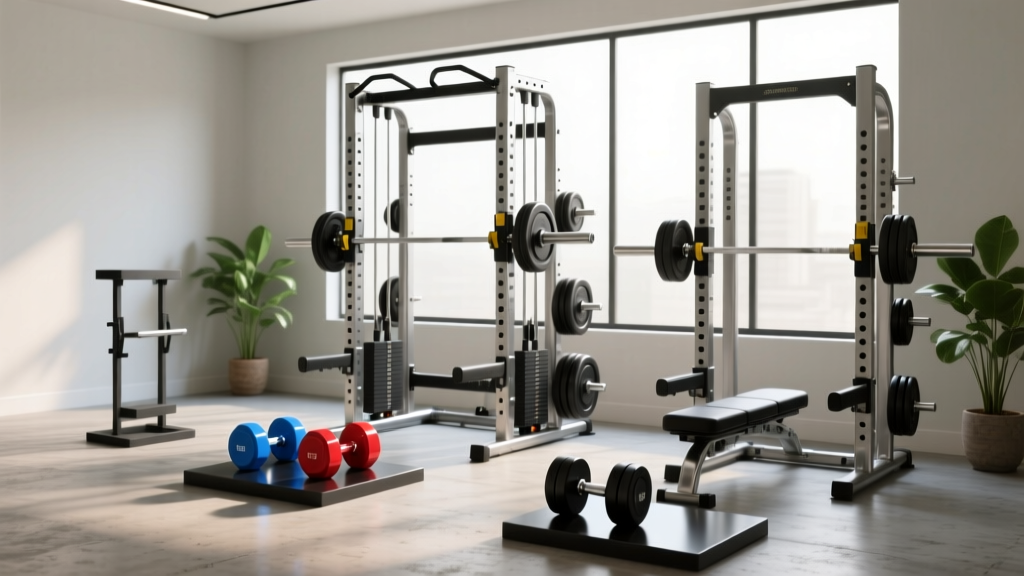
Power Rack vs Squat Rack vs Stand: Best Dumbbell Chest Exercise Setup

Dumbbell Y Raises: Rubber Hex vs Urethane Maintenance Guide

Dumbbell Butterfly Mistakes and Neoprene Troubleshooting Guide

Sumo RDL Dumbbell Mistakes: Neoprene Home Gym Fixes