EZ Curl vs Straight Bar: Compact Layouts & Dumbbell Flys for Shoulders
Optimize your home gym layout. Compare EZ curl vs straight bar footprints and master space-saving dumbbell flys for shoulders without bulky machines.

The Spatial Dilemma: Barbell Footprints in Compact Gyms
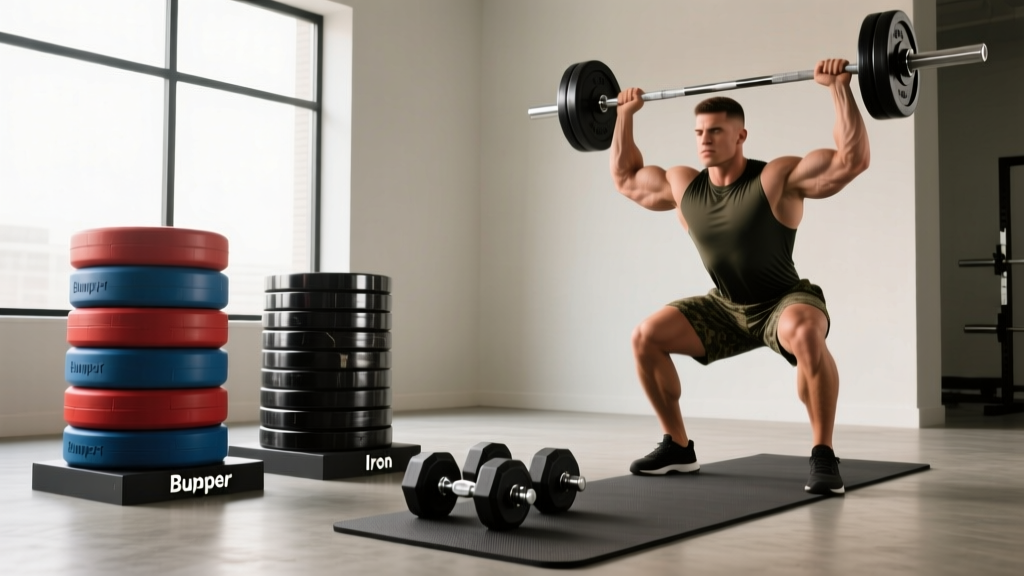
As urban living spaces shrink and home gym real estate becomes a premium commodity in 2026, the era of the sprawling garage gym is giving way to the high-density 'micro-gym.' Whether you are carving out an 8x8 foot corner in a basement or utilizing a 10x10 spare bedroom, every square inch dictates your equipment choices. The most common spatial conflict arises in arm and shoulder training: choosing between a standard straight bar and an EZ curl bar, and figuring out how to execute isolation movements like dumbbell flys for shoulders without dedicating 30 square feet to a cable crossover or reverse pec deck machine.
Designing an efficient layout requires looking beyond the price tag and examining the true operational footprint of your free weights. A piece of equipment’s physical length is only half the equation; the dynamic clearance required for human biomechanics and plate loading is where most home gym layouts fail.
Straight Bar Dimensions & Storage Realities
The standard 7-foot Olympic straight bar—such as the iconic Rogue Ohio Bar—measures exactly 86.75 inches in length. While it is the undisputed king of squats, deadlifts, and bench presses, it is a spatial nightmare for dedicated arm isolation work in tight rooms.
The Clearance Calculation
To perform a standing bicep curl or overhead press with a 7-foot bar, you must account for the shaft (51.5 inches), the sleeves (16.25 inches each), and the plates. If you load a standard 45-pound bumper plate (17.5 inches in diameter), the total width of the loaded barbell remains 86.75 inches. However, you need a minimum of 12 inches of clearance on either side to avoid scraping your drywall or knocking over adjacent equipment racks. This means a 7-foot bar demands a minimum operational width of 110.75 inches (over 9 feet). If your designated gym wall is only 8 feet wide, a standard straight bar is functionally obsolete for wide-grip or standing exercises.
Storage Footprint
Storing a 7-foot bar horizontally requires a massive 7-foot wall span. Vertical wall gun racks solve the floor space issue but require ceilings higher than 7 feet to safely lift the bar into the cradle.
The EZ Curl Bar: A Compact Alternative?
Enter the EZ curl bar. Designed with angled grips to reduce wrist and elbow valgus stress, the EZ bar is inherently shorter and more manageable. A standard Olympic EZ curl bar, like the Rogue Curl Bar, measures just 43 inches in length and weighs 30 pounds. Even the longer 'Super Curl' bars, such as those from Titan Fitness, max out around 47 inches.
With a 43-inch bar, your total operational width—even with 12 inches of clearance on each side—drops to just 67 inches (5.5 feet). This allows you to perform heavy bicep curls, skull crushers, and overhead tricep extensions in narrow hallways or tight alcoves without risking property damage.
Biomechanics vs. Square Footage
From a biomechanical standpoint, the EZ bar is superior for most lifters performing curls. A straight bar forces the radioulnar joint into full supination (palms facing completely up), which can cause medial elbow pain or wrist impingement, especially when lifting heavy in a fatigued state. The semi-supinated grip of the EZ bar aligns better with the body's natural carrying angle. When space optimization forces you to choose one bar for a compact arm-day setup, the EZ curl bar wins on both joint health and spatial efficiency.
Barbell Footprint & Storage Matrix
| Model Type | Example Model | Length | Est. Price (2026) | Min. Operational Width | Storage Profile |
|---|---|---|---|---|---|
| Standard 7ft Straight | Rogue Ohio Bar | 86.75" | $295 | 110.75" | Horizontal Wall / Vertical Rack |
| Shorty 5ft Straight | CAP Barbell 5ft | 60.0" | $45 | 84.0" | Horizontal / Under-Bench |
| Standard EZ Curl | Rogue Curl Bar | 43.0" | $115 | 67.0" | Shelving / Small Vertical Hook |
| Super EZ Curl | Titan Fitness 47" | 47.0" | $139 | 71.0" | Shelving / J-Cup Hanging |
Replacing Bulky Machines: Dumbbell Flys for Shoulders
While the EZ bar solves the arm isolation footprint, shoulder training presents a different spatial challenge. Developing the posterior and lateral deltoids traditionally requires a reverse pec deck or a dual-cable crossover station—machines that easily consume a 6x8 foot footprint. In a micro-gym, this is unacceptable.
The solution lies in mastering dumbbell flys for shoulders (specifically rear deltoid reverse flys and incline lateral raises) using adjustable dumbbells and a single folding bench. Adjustable dumbbells, such as the 15-inch Nuobell 80s or the PowerBlock Pro series, replace an entire rack of fixed weights, condensing 500+ pounds of iron into a 2-square-foot cradle.
Space-Saving Execution: Chest-Supported Rear Delt Flys
According to kinesiologists and exercise databases like ExRx.net, standing bent-over dumbbell flys often invite lower-back cheating and momentum, requiring a wide, sweeping clearance zone for the arms. To optimize space and increase muscle isolation:
- The Setup: Set an adjustable folding bench to a 30-degree incline.
- The Position: Lie face-down (chest-supported). This eliminates the need for a wide stance and stabilizes the torso.
- The Movement: With a neutral grip, perform your dumbbell flys for shoulders, driving the elbows toward the ceiling. Because your torso is anchored to the bench, your spatial footprint is strictly limited to the width of the bench plus your arm span, preventing you from swinging weights into nearby walls or power racks.
Designing the 8x8 Layout: Putting It All Together
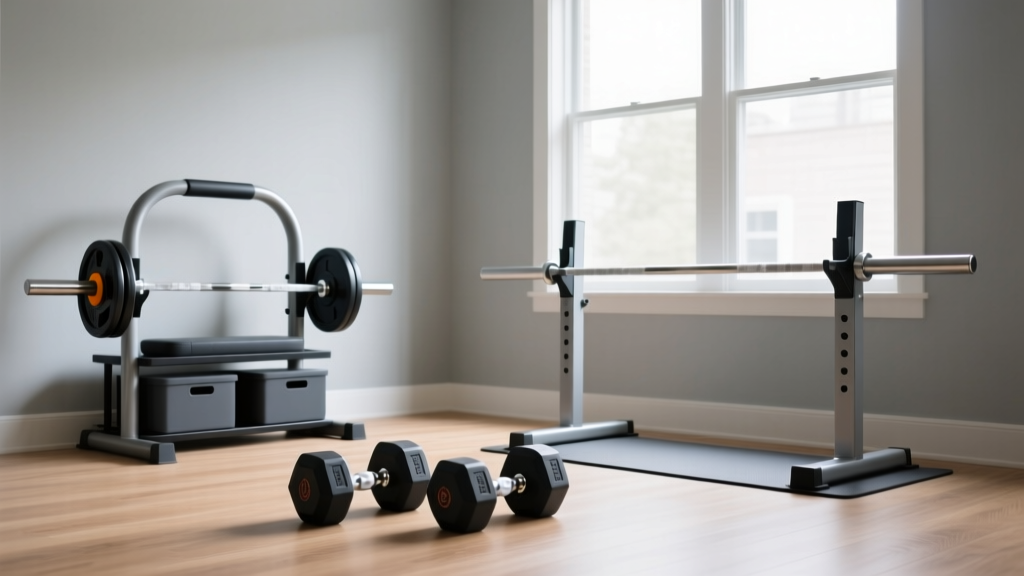
How do you integrate these space-saving principles into a physical layout? Here is a proven 64-square-foot (8x8) micro-gym schematic that accommodates heavy compounds, arm isolation, and shoulder flys.
- Wall A (The Anchor): Install a wall-mounted folding squat rack (e.g., Rogue R-3W). When folded, it protrudes only 4 inches from the wall. Store your 43-inch EZ curl bar vertically on a single wall hook mounted at 6 feet high, keeping it off the floor and out of the walking path.
- Wall B (The Isolation Zone): Place your adjustable dumbbell cradle here. Keep a 12-inch plyo box nearby that doubles as a seat for seated shoulder presses and a platform for step-ups.
- The Center Zone: Use a flat/incline folding bench on wheels. For your dumbbell flys for shoulders, wheel the bench to the center, set it to an incline, and execute your chest-supported rear delt work. When finished, fold the bench flat and roll it under the wall-mounted rack, instantly reclaiming 12 square feet of floor space for deadlifts or kettlebell swings.
FAQ: Space Optimization Questions
Can I do shoulder flys on the floor to save space?
Yes, you can perform floor-seated rear delt flys or lateral raises. However, the floor limits your range of motion (ROM) because the dumbbells will hit the ground before your arms are fully extended at the bottom of the movement. A folding incline bench takes up minimal storage space but provides the full ROM necessary for optimal hypertrophy.
Is a 5-foot straight bar better for small spaces than an EZ bar?
A 5-foot straight bar (60 inches) is excellent for bench pressing in narrow rooms where a 7-foot bar won't fit. However, for dedicated bicep curls and tricep extensions, the 5-foot straight bar is still unnecessarily long and forces the wrists into full supination. The 43-inch EZ curl bar remains the superior choice for joint-friendly arm isolation in tight layouts.
What if I need a straight bar for deadlifts?
If deadlifts are a priority, purchase a 7-foot straight bar but store it vertically in a corner gun rack. Accept that you will need to clear the room's center entirely to use it. For all other accessory work—including rows, curls, and presses—rely on your adjustable dumbbells and EZ curl bar to keep the space functional and uncluttered.
More gear to consider
All reviews
Rubber Hex vs Urethane Dumbbells for Dumbbell Bicep Curl to Press

What Do Dumbbell Shrugs Work? Heavy Dumbbell Rack Value Analysis

Cast Iron vs Competition Kettlebell Care & Dumbbells for Arm Fat

2026 Dumbbell Rack Trends for Your Back and Shoulders Workout
Collar & Clamp Types: Securing Your Dumbbells Together Chest Press