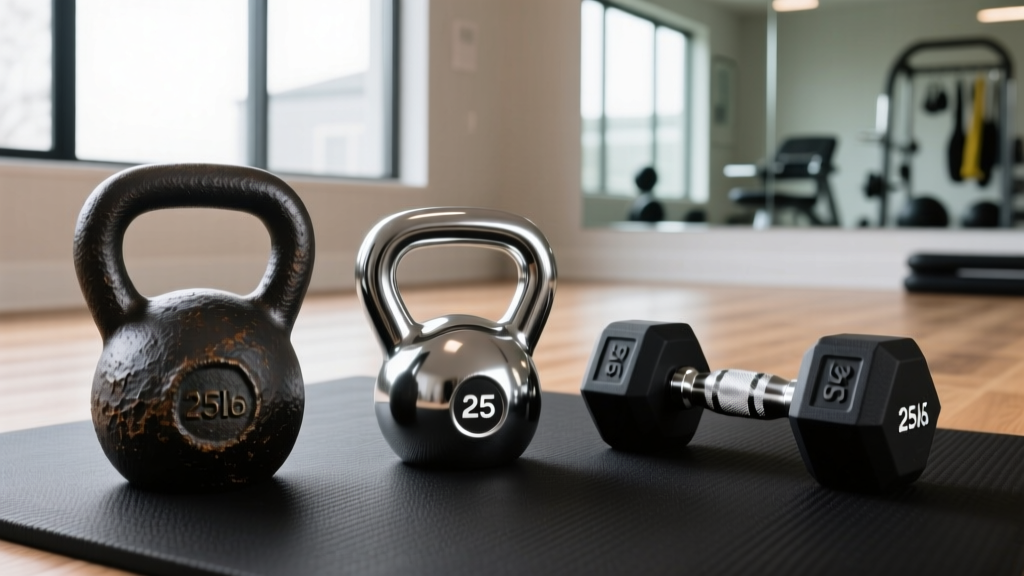
Beginner Brachioradialis Workout With Dumbbells: Neoprene Guide
Build thicker forearms at home. Follow our beginner brachioradialis workout with dumbbells and learn why neoprene-coated sets are the best home gear.

Why Neoprene Dumbbells Are the Ultimate Home Forearm Tool
When building a home gym, beginners often overlook forearm training, focusing instead on larger muscle groups like the chest or back. However, a well-developed forearm—specifically the brachioradialis—creates a powerful, athletic aesthetic and drastically improves your grip strength for compound lifts. For home environments, executing a dedicated brachioradialis workout with dumbbells requires equipment that balances durability, floor protection, and grip security. This is where neoprene-coated dumbbells shine.
Neoprene is a synthetic rubber that provides a slightly tacky, matte finish. During high-repetition forearm training, your hands will sweat heavily, causing standard cast-iron or smooth rubber dumbbells to slip. The micro-texture of neoprene ensures the handle stays locked in your palm, allowing you to reach true muscular failure rather than grip failure. Furthermore, the hexagonal shape of most neoprene dumbbells prevents them from rolling away when you drop them between sets on your home gym floor.
Expert Insight: Neoprene is highly resistant to moisture and UV degradation. If your home gym is in a garage or basement with fluctuating humidity, neoprene will not rust, chip, or emit the harsh off-gassing odors associated with cheap recycled rubber.2026 Neoprene Dumbbell Market: What to Buy
As of 2026, the pricing for neoprene-coated dumbbells has stabilized, making them one of the most cost-effective free weight investments for beginners. You can expect to pay between $1.20 and $1.80 per pound, depending on the brand and whether you are buying individual pairs or full racks. Below is a breakdown of the top models currently dominating the home fitness market.
| Brand & Model | Avg. Price Per Pound | Handle Design | Best For |
|---|---|---|---|
| CAP Barbell Neoprene Hex Set (150lb) | $1.35/lb | Contoured Chrome | Full home gym setups |
| Yes4All Neoprene Coated Hex | $1.50/lb | Ergonomic Steel | Beginners buying pairs |
| J/fit Neoprene Dumbbell Weights | $1.75/lb | Smooth Steel | Lightweight rehab/toning |
Recommendation: For a dedicated brachioradialis routine, you do not need a massive 150lb rack. The brachioradialis is a relatively small muscle group. Most beginners will see optimal growth using pairs ranging from 10 lbs to 25 lbs. Purchasing three pairs (e.g., 10lb, 15lb, 20lb) from Yes4All will cost roughly $135 and provide months of progressive overload.
Anatomy 101: Understanding the Brachioradialis
To train a muscle effectively, you must understand its biomechanics. According to the kinesiology databases at ExRx, the brachioradialis is a superficial muscle located on the lateral (thumb) side of the forearm. Unlike the wrist flexors, the brachioradialis crosses the elbow joint, making it a primary elbow flexor.
The muscle is maximally activated when the forearm is in a neutral position (palms facing each other) or a pronated position (palms facing down). When you supinate your hands (palms facing up, like a standard bicep curl), the biceps brachii takes over the majority of the load, leaving the brachioradialis under-stimulated. Therefore, your exercise selection must strictly utilize hammer and reverse grips.
Step-by-Step Brachioradialis Workout With Dumbbells
Perform this routine twice a week, ideally at the end of your back or bicep workouts. Rest 60 to 90 seconds between sets.
Step 1: The Strict Hammer Curl
The hammer curl is the foundational mass-builder for the lateral forearm.
- Setup: Stand tall with a neoprene dumbbell in each hand, arms fully extended, palms facing your torso.
- Execution: Keep your elbows pinned to your ribs. Curl the weights up toward your shoulders in a smooth, controlled motion.
- Tempo: Use a 2-1-2 tempo. Take 2 seconds to lift, hold for 1 second at the top with a hard squeeze, and take 2 seconds to lower the weight.
- Volume: 3 sets of 10-12 repetitions.
Step 2: Cross-Body Hammer Curls
This variation shifts the angle of pull, targeting the brachioradialis alongside the brachialis (the muscle sitting beneath the bicep that pushes it up, creating a thicker arm profile).
- Setup: Same starting position as the standard hammer curl.
- Execution: Instead of curling straight up, curl the dumbbell diagonally across your torso toward the opposite shoulder. Alternate arms with each rep.
- Form Check: Do not allow your torso to twist. The movement should happen entirely at the elbow joint.
- Volume: 3 sets of 8-10 repetitions per arm.
Step 3: Pronated Reverse Curls
This is the ultimate finisher. The American Council on Exercise (ACE) notes that reverse curls heavily tax the extensor muscles and the brachioradialis, but grip fatigue is often the limiting factor.
- Setup: Hold the neoprene dumbbells with a pronated (overhand) grip, palms facing the floor.
- Execution: Curl the weights upward while keeping the wrists completely rigid. Do not let your wrists curl backward at the top of the movement.
- Weight Selection: Drop the weight by 20-30% compared to your hammer curls. If you used 20lb dumbbells for hammer curls, use 15lbs for reverse curls.
- Volume: 2 sets to absolute failure.
During reverse curls, your fingers may give out before your brachioradialis reaches muscular failure. This is why the tacky grip of neoprene dumbbells is crucial. If you still experience grip slip, wrap your thumb over the top of the handle (a 'suicide grip' is not recommended for heavy lifts, but for light, strict reverse curls, a thumbless grip can sometimes reduce forearm flexor fatigue, forcing the brachioradialis to work harder). However, for beginners, always prioritize a secure, wrapped thumb.
Overcoming the "Fixed-Weight" Plateau
One of the main drawbacks of neoprene dumbbells is that they are fixed-weight; you cannot easily micro-load by adding 1.25lb plates like you can with an adjustable barbell. Once you can easily perform 3 sets of 15 reps with your 20lb neoprene dumbbells, you must use advanced intensity techniques to continue stimulating the brachioradialis without buying heavier weights immediately.
- Eccentric Overloads: Use two hands to cheat the weight up, then lower it strictly with one arm over a 4-second count.
- Bottom-Half Partials: After reaching failure on full-range hammer curls, perform an additional 5-8 reps only in the bottom half of the movement (from full extension to 45 degrees of flexion). The brachioradialis is highly active in this stretched position.
- Isometric Holds: At the end of your final set, hold the dumbbells at a 90-degree angle for as long as possible until your arms physically drop.
Common Beginner Form Mistakes
To ensure your brachioradialis workout with dumbbells yields results, avoid these frequent errors:
"The biggest mistake beginners make with forearm training is using momentum. Swinging the torso to heave the weight up transfers the load from the forearm to the anterior deltoid and lower back. If you have to swing, the dumbbell is too heavy."
Mistake 1: Wrist Flexion During Hammer Curls
Many beginners inadvertently curl their wrists inward at the top of a hammer curl. This recruits the wrist flexors and takes tension off the brachioradialis. Keep your wrist locked in a neutral, straight alignment with your forearm throughout the entire range of motion.
Mistake 2: Flaring the Elbows
Your elbows should act as a fixed hinge. If your elbows drift forward or flare outward during the curl, you are engaging the front deltoids. Imagine a steel rod pinning your elbows to your ribcage.
Mistake 3: Training Forearms Before Compound Lifts
Never perform this brachioradialis routine before heavy deadlifts, pull-ups, or rows. Pre-fatiguing your grip and forearm stabilizers will severely limit your performance on larger, more important compound movements. Always isolate the forearms at the very end of your training session.
Final Thoughts on Home Forearm Development
Building impressive forearms doesn't require expensive cable machines or specialized gym equipment. By investing in a high-quality set of neoprene-coated hex dumbbells and strictly adhering to the biomechanics of neutral and pronated elbow flexion, you can trigger significant hypertrophy right in your living room. Stick to the 2-1-2 tempo, respect the mind-muscle connection, and watch your grip strength and arm thickness transform over the next 12 weeks.
More gear to consider
All reviews
Neoprene Dumbbell Setup: The Best Tricep Dumbbell Exercise

Troubleshooting Dumbbell Flyes: Olympic vs Standard Plates

Barbell Collar and Clamp Types Comparison: Moving Past 'Dumbbell Squats Work Which Muscles'

Bumper vs Iron Plates & Single Dumbbell Exercises for Shoulders
Prostyle Dumbbells & Barbell Collars: Clamp Types Compared