Exercise Ball Size Guide & Buying Tips: Manduka Yoga Mat GRP
Master your home gym budget with our exercise ball size guide and buying tips, featuring a value comparison against the Manduka Yoga Mat GRP.

The Core Investment: Why Exercise Ball Sizing Dictates Value
When building a functional home gym, the stability ball (or Swiss ball) remains one of the most cost-effective tools for multi-planar core engagement, postural correction, and dynamic balance training. However, the value of this equipment is entirely negated if you purchase the wrong size. An improperly sized exercise ball alters your biomechanical alignment, reducing muscle activation in the transverse abdominis and increasing shear force on the lumbar spine. According to core stabilization research highlighted by the Mayo Clinic, proper pelvic alignment is the foundational requirement for effective core training, making precise sizing a non-negotiable aspect of your purchase.
From a budget breakdown perspective, buying a $25 ball that forces you into a compromised posterior pelvic tilt is a sunk cost. True value analysis requires looking at the intersection of your height, the ball's burst rating, material longevity, and how this purchase fits into your broader home gym ecosystem. This guide breaks down the exact sizing metrics, material costs, and budget allocations you need to make an informed purchase in 2026.
The 2026 Exercise Ball Size Chart & Biomechanical Breakdown
The golden rule of stability ball sizing is the 90-degree principle: when seated on the fully inflated ball with your feet flat on the floor, your hips and knees should form a 90-degree angle, with your thighs parallel to the ground. If your hips dip below your knees, the ball is too small; if your knees are lower than your hips, the ball is too large.
| User Height | Optimal Ball Diameter | Best Use Case | Average Price Tier (2026) |
|---|---|---|---|
| Under 5'0" (152 cm) | 45 cm (18 in) | Desk chair replacement, pediatric rehab | $18 - $25 |
| 5'1" - 5'8" (155 - 173 cm) | 55 cm (22 in) | Standard core work, yoga integration, Pilates | $22 - $35 |
| 5'9" - 6'2" (175 - 188 cm) | 65 cm (26 in) | Heavy lifting, dynamic balance, full-body circuits | $28 - $45 |
| 6'3" - 6'7" (190 - 201 cm) | 75 cm (30 in) | Tall-user ergonomics, deep stretch, heavy resistance | $35 - $55 |
| Over 6'8" (203+ cm) | 85 cm (34 in) | Bariatric support, specialized physical therapy | $45 - $70 |
The Premium Mat vs. Dynamic Ball Budget Dilemma
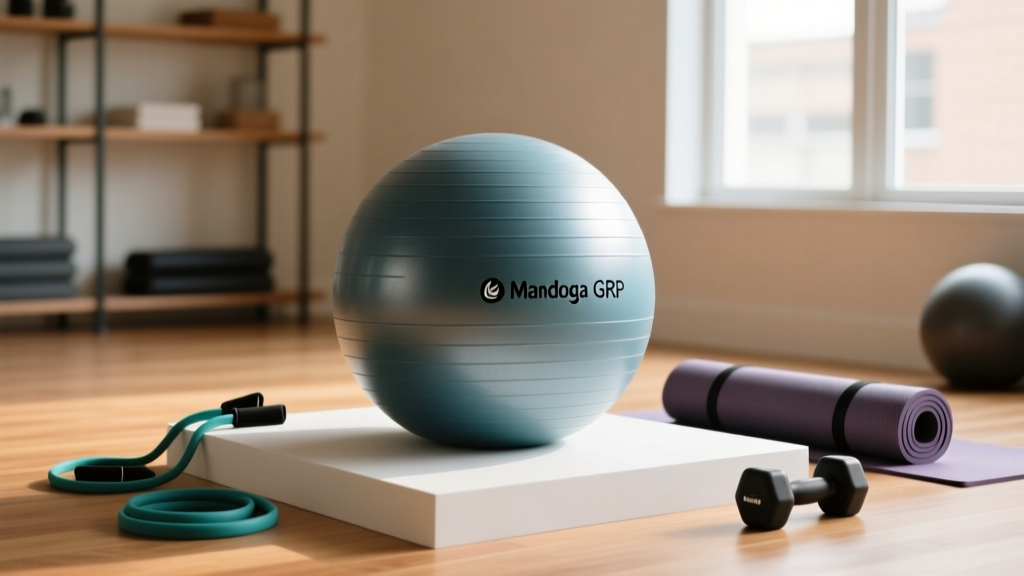
When allocating a $300 home gym budget, consumers often debate splurging on premium floor gear like the manduka yoga mat grp (retailing around $128 for its superior polyurethane grip) versus investing in a top-tier stability ball setup. This is a classic budget breakdown scenario. The manduka yoga mat grp offers unparalleled traction for hot yoga and static floor work, utilizing an open-cell polyurethane top layer that absorbs moisture to prevent slipping. It is a phenomenal, long-term investment for yogis.
However, an exercise ball provides dynamic, multi-planar core engagement that a static mat simply cannot replicate. If your primary fitness goal is core hypertrophy, spinal rehabilitation, or functional balance, the ROI on a $40 high-burst exercise ball will outpace the immediate benefits of a $128 premium mat. ACE Fitness notes that the unstable surface of a Swiss ball increases electromyographic (EMG) muscle activation in the rectus abdominis and obliques by up to 40% compared to stable floor exercises. Therefore, if your budget is strictly capped at $150, prioritize a mid-tier anti-burst stability ball ($35) and a high-density EVA foam mat ($40), saving the remaining budget for resistance bands, rather than putting all your capital into the manduka yoga mat grp right away.
Material Science & Anti-Burst Ratings: Where the Money Goes
Not all exercise balls are created equal. The price discrepancy between a $15 big-box store ball and a $45 professional-grade ball comes down to material science and burst-rating certifications.
PVC vs. TPE vs. Eco-Friendly Blends
- Virgin PVC (Polyvinyl Chloride): The industry standard for high-end balls (e.g., Trideer, DynaPro). It offers the highest tensile strength and elasticity. A 65cm PVC ball typically costs $30-$45.
- TPE (Thermoplastic Elastomer): Marketed as an eco-friendly, latex-free alternative. While better for the environment, TPE lacks the extreme stretch tolerance of PVC. It is generally 15-20% more expensive but offers lower maximum weight capacities.
- Recycled/Blended Plastics: Found in budget balls under $20. These lack uniform wall thickness, creating weak points that are prone to slow leaks and sudden ruptures.
Decoding Burst Ratings
Never buy a ball without a verified static weight rating. In 2026, reputable manufacturers test for two metrics: static load (weight pressing straight down) and dynamic load (weight in motion). Look for a minimum static burst rating of 1,200 lbs if you plan to use the ball with dumbbells or kettlebells. Heavy lifters should seek out 2,200 lb rated balls, which feature reinforced, multi-layer PVC walls. These premium anti-burst models cost roughly $10-$15 more but ensure that if punctured, the ball slowly deflates rather than exploding like a balloon.
Hidden Costs: Accessories, Pumps, and Base Rings
A thorough budget breakdown must account for the hidden costs of stability ball ownership. Many budget brands strip out essential accessories to advertise a lower base price.
- The Pump Factor: A dual-action hand pump is mandatory for reaching the high PSI required for larger balls (65cm+). If a ball does not include a quality pump, you will spend $15-$20 on a standalone unit. Avoid balls that only include a cheap, single-action tube pump.
- Base Rings and Stability Collars: If you plan to use the ball for seated desk work or heavy overhead presses, a weighted base ring ($15-$25) prevents the ball from rolling away. Some premium bundles include this, offering better overall value.
- Replacement Plugs: The plastic air plug is the most common failure point. Ensure the manufacturer includes at least two spare plugs in the box.
Step-by-Step Inflation & Sizing Verification Protocol
The most common reason consumers return exercise balls claiming they are 'the wrong size' is improper inflation. PVC requires a tempering period to stretch safely to its maximum diameter. Skipping this step results in an under-inflated ball that feels too small and places excessive stress on the seams.
The 24-Hour Tempering Rule: Never inflate a new PVC stability ball to its maximum diameter in a single session. The material needs time to acclimate to room temperature and stretch at the molecular level.
Follow this exact protocol to protect your investment:
- Unbox and Acclimate: Remove the ball from its packaging and let it sit at room temperature (around 70°F/21°C) for at least two hours. Cold PVC is brittle and prone to tearing.
- Phase 1 Inflation (80%): Use the included hand pump to inflate the ball until it is firm but still yields slightly to thumb pressure (roughly 80% of its total diameter). Insert the plug and wait 24 hours.
- Phase 2 Inflation (100%): Remove the plug and pump the ball to its final, rigid diameter. Use a tape measure to verify the circumference matches the box specifications.
- The Wall Mark Test: Sit on the ball next to a wall. Have a partner mark the wall at the exact height of your hip crease. Stand up and measure the mark from the floor. If it does not match the manufacturer's stated diameter within a 1-inch margin, add or release air accordingly.
Final Verdict: Maximizing Your Home Gym ROI
An exercise ball is a masterclass in fitness ROI, provided you respect the sizing guidelines and material thresholds. By spending $35 to $50 on a properly sized, 1,200+ lb burst-rated PVC ball, you unlock a versatile tool for core stabilization, mobility, and active recovery. While premium floor gear like the manduka yoga mat grp holds its own distinct value for dedicated yoga practitioners, the stability ball offers a broader spectrum of functional fitness applications for the budget-conscious buyer. Measure your height, verify the burst rating, follow the 24-hour inflation protocol, and your stability ball will serve as a cornerstone of your training regimen for years to come.
More gear to consider
All reviews
2026 Gear Trends: Gym Bag Yoga Mat Holder & Exercise Ball Size Guide
Yoga Block & Strap Buying Guide + How to Clean Manduka Yoga Mat

Medicine Ball Weight Guide: The Charlie Follows Yoga Mat Trap

Block & Strap Guide: Difference Between Yoga Mat and Pilates Mat

Jump Rope Types: Speed, Beaded & Yoloha Unity Cork Yoga Mat Guide