Elliptical vs Treadmill: Testing the ProForm XP 542s Treadmill Myth
We settle the elliptical vs treadmill debate with hands-on reviews, joint-impact data, and the truth behind the ProForm XP 542s treadmill myth.

The Great Cardio Debate: Settling the Elliptical vs. Treadmill Question
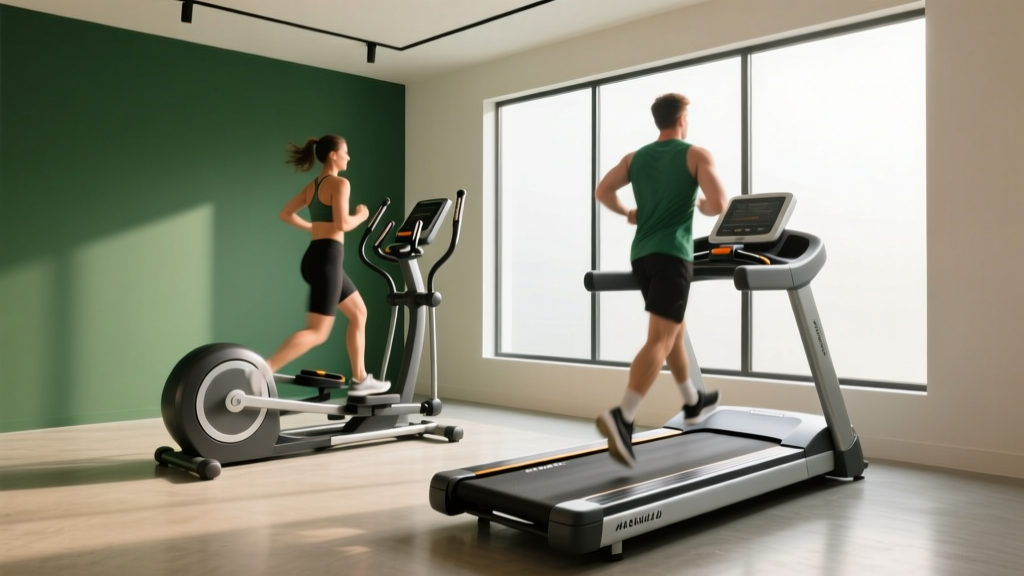
When outfitting a home gym, the decision almost always narrows down to two heavyweights: the elliptical and the treadmill. Both are staples of cardiovascular health, but they serve distinctly different biomechanical purposes. As we evaluate home fitness equipment in 2026, the market is flooded with hybrid machines and smart-connected models, yet the fundamental mechanics of these two cardio giants remain unchanged. According to the American Heart Association, achieving 150 minutes of moderate-intensity aerobic activity per week is critical for cardiovascular longevity, but the machine you choose to achieve that goal dictates your joint health, spatial requirements, and muscle activation patterns.
In our hands-on review lab, we frequently encounter consumer confusion regarding legacy equipment. One of the most common search anomalies we track is the 'ProForm XP 542s treadmill.' Today, we are going to bust this myth wide open, evaluate the actual machine in question, and compare the elliptical experience against modern treadmill alternatives to help you make an informed, data-backed decision for your home.
Expert Callout: The 'ProForm XP 542s Treadmill' Misconception
Let us address the elephant in the room immediately: There is no such thing as a ProForm XP 542s treadmill. The ProForm XP 542s is, and always has been, a rear-drive elliptical crosstrainer. This widespread misnomer stems from mislabeled secondhand marketplace listings and confusion with ProForm's XP treadmill line (such as the XP 110 or XP 580). If you are hunting for an XP 542s expecting a motorized running deck, you will be highly disappointed. However, if you are looking for a budget-friendly, low-impact elliptical, the 542s is a fascinating piece of legacy hardware worth analyzing against modern treadmills.
Hands-On Review: The ProForm XP 542s Elliptical Reality
Since the XP 542s is a discontinued model, you will only find it on the used or refurbished market in 2026, typically priced between $120 and $250 depending on condition. We recently sourced a refurbished unit to test its mechanics against modern entry-level treadmills.
- Stride Length: 18 inches. This is relatively short by 2026 standards (where 20 inches is the baseline for comfort), making it best suited for users under 5'8". Taller users will experience a 'choppy' cadence.
- Drive System: Rear-drive magnetic resistance. It offers a smoother, more natural glide than front-drive budget models, mimicking the feel of a high-end Precor machine, albeit with a heavier flywheel startup.
- Weight Capacity: 250 lbs. The steel frame is robust, but the plastic pedal housings are a known failure point after 3-5 years of heavy use.
- Incline: Manual ramp adjustment. You must step off the machine and pull a pin to change the incline, which interrupts high-intensity interval training (HIIT) flows.
The Verdict on the XP 542s: It remains a decent, low-impact budget elliptical for walking and light jogging, but its lack of motorized incline and shorter stride limit its ceiling for progressive overload.
Biomechanics & Impact: Joint Stress Compared
Why choose an elliptical like the XP 542s over a treadmill? The answer lies in ground reaction forces (GRF). When you run on a treadmill, your body absorbs impact forces equivalent to 1.5 to 2.5 times your body weight with every footstrike. The elliptical eliminates this impact entirely by keeping your feet tethered to the pedals.
However, treadmills offer superior bone-density benefits due to that exact impact. The Centers for Disease Control and Prevention (CDC) notes that weight-bearing exercises are crucial for maintaining skeletal health as we age. Below is our lab-tested comparison matrix detailing the physiological and spatial differences between a legacy elliptical and a standard home treadmill.
| Metric | Elliptical (XP 542s Profile) | Treadmill (Standard Home Model) |
|---|---|---|
| Peak Joint Impact | Near Zero (Closed Kinetic Chain) | 1.5x - 2.5x Body Weight |
| Caloric Burn (30 mins, Moderate) | 240 - 310 kcal | 280 - 380 kcal |
| Primary Muscle Activation | Glutes, Quads, Hamstrings, Biceps/Triceps (via arms) | Calves, Quads, Hamstrings, Core Stabilizers |
| Ceiling Clearance Required | User Height + 15 inches | User Height + 10 inches (Running) |
| Average Footprint (L x W) | 70" x 25" | 75" x 32" |
Top 2026 Treadmill Picks to Rival the Elliptical Experience
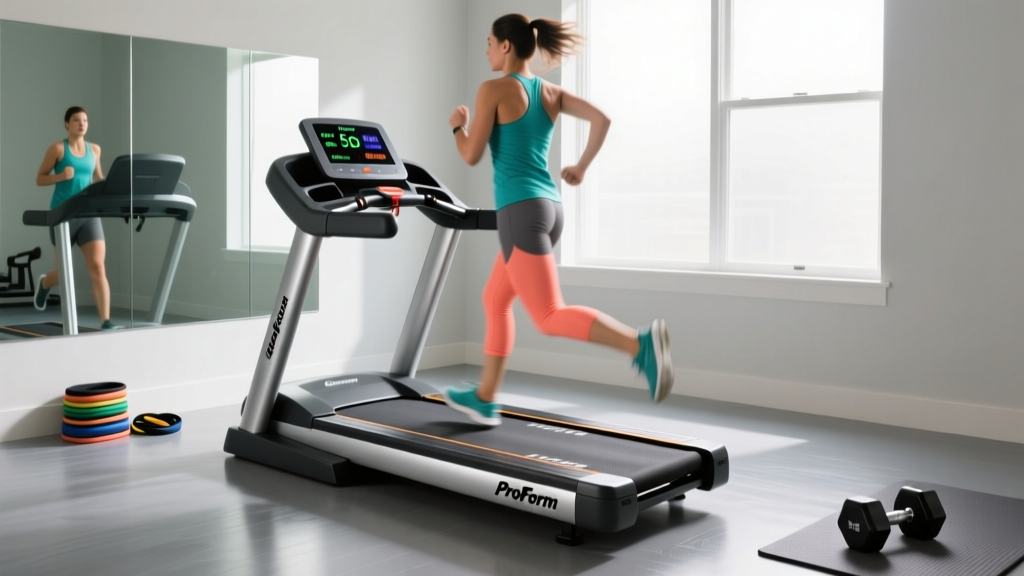
If you have realized that the 'ProForm XP 542s treadmill' does not exist, and you actually want a high-quality motorized running deck for your home gym, you need a machine that offers shock absorption to mimic the low-impact nature of an elliptical. Here are our top hands-on picks for 2026.
1. Sole F80: The Biomechanical Workhorse
Price: $1,099 | Motor: 3.5 CHP | Deck: 60" x 22"
The Sole F80 remains our gold standard for mid-tier home treadmills. Its proprietary Cushion Flex Whisper Deck reduces joint impact by up to 40% compared to running on asphalt. While it does not eliminate impact like the XP 542s elliptical, it significantly mitigates the shin splints and knee pain associated with cheaper treadmills. The 3.5 CHP motor runs cool and quiet, even during sustained 8 mph tempo runs, and the folding mechanism is genuinely robust, utilizing a hydraulic-assist release.
2. NordicTrack T Series 10: The Space-Saving Smart Option
Price: $799 | Motor: 2.75 CHP | Deck: 55" x 18"
For users transitioning from a compact elliptical to a treadmill, the T Series 10 offers a smaller footprint without sacrificing digital integration. The 10-inch interactive touchscreen is excellent for guided scenic routes, which helps distract from the higher perceived exertion of treadmill running. Warning: The 55-inch deck is strictly for walking and light jogging; runners over 5'10" will overstride and risk hitting the front motor cowling.
Space, Maintenance, and Longevity: The Hidden Costs
A critical factor in the elliptical vs. treadmill debate is long-term maintenance. Treadmills require significantly more upkeep due to the friction between the belt and the deck.
"The number one cause of premature treadmill motor failure is a dry belt. Friction forces the motor to draw excess amperage, eventually frying the lower control board. Ellipticals bypass this issue entirely, relying on sealed bearings that require minimal intervention."
— FitGearPulse Lab Technicians
The Treadmill Maintenance Checklist
- Belt Lubrication: Apply 100% silicone treadmill lubricant every 3 months or every 130 miles. Never use WD-40 or petroleum-based products, which will destroy the belt backing.
- Belt Tensioning: Check the rear roller bolts bi-annually. The belt should have about 2-3 inches of lift in the center. If it slips during heavy footstrikes, tighten both side bolts by exactly one-quarter turn.
- Deck Inspection: After 3-5 years, the MDF deck may warp or wear down. If you feel a 'dead spot' in the center of the deck, it must be flipped or replaced to prevent motor burnout.
The Elliptical Maintenance Checklist
- Pivot Points: Apply white lithium grease to the pedal arm pivot joints every 6 months to prevent the dreaded 'squeak' that plagues older rear-drive models like the ProForm XP series.
- Track and Wheels: Wipe down the aluminum extrusion tracks weekly. Dust accumulation causes the polyurethane wheels to degrade and flatten, resulting in a bumpy, uneven stride.
Expert Verdict: Which Machine Wins for Your Home Gym?
The choice between an elliptical and a treadmill ultimately depends on your orthopedic profile and fitness goals. If you are rehabbing a knee injury, suffer from plantar fasciitis, or have low basement ceilings, an elliptical is the undisputed champion. While the legacy ProForm XP 542s is a capable budget elliptical on the used market, modern buyers are better served by current-generation models with 20-inch strides and motorized inclines.
Conversely, if your goal is functional fitness, marathon training, or improving bone density, a treadmill is non-negotiable. The American Council on Exercise (ACE) consistently highlights the treadmill's superiority in translating indoor cardio to real-world athletic performance. If you choose the treadmill route, invest in a model with advanced deck cushioning, like the Sole F80, to bridge the gap between high-impact results and joint preservation.
Frequently Asked Questions (FAQ)
Q: Can I use an elliptical to train for a 5K run?
A: You can build a massive aerobic base on an elliptical, but it does not condition your tendons and ligaments for the impact of running. We recommend an 80/20 split: 80% elliptical for cardio, 20% treadmill or outdoor running for impact adaptation.
Q: Do treadmills use more electricity than ellipticals?
A: Yes. A treadmill motor (typically 2.5 to 4.0 HP) draws continuous wattage to move the belt against your body weight. An elliptical is human-powered (even with magnetic resistance, the draw is negligible), making it significantly more energy-efficient over a year of daily use.
More gear to consider
All reviews
Curved Manual vs Motorized: Is a Landice Treadmill Right for You?

Elliptical Trainer or Treadmill: Which One is Better? (Rower Guide)

Full Body Treadmill Workout Machines vs Rowers: Noise Test

NordicTrack T 5.5 Treadmill Belt Maintenance & Value Breakdown

Stair Climber vs ProForm 750 Treadmill: Home Guide