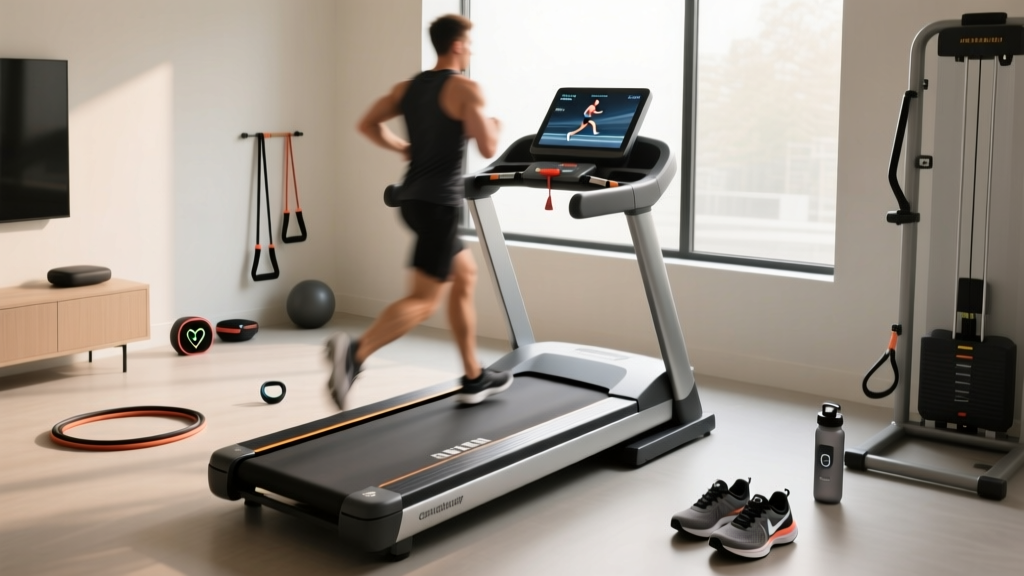
Life Fitness T3 Treadmill vs Curved Manual Treadmills: Troubleshooting & Mistakes
Compare the Life Fitness T3 treadmill with curved manual models. Learn expert troubleshooting, common user mistakes, and maintenance protocols.

The Motorized vs. Curved Manual Dilemma: Understanding Your Machine
When outfitting a high-end home gym or commercial facility, the debate between a premium motorized unit like the Life Fitness T3 treadmill and a self-powered curved manual treadmill (such as the AssaultRunner Elite or Technogym Skillmill) is a common crossroads. Both offer exceptional cardiovascular conditioning, but their mechanical architectures are fundamentally different. Consequently, the common user mistakes and troubleshooting protocols for each vary wildly.
As we navigate the fitness equipment landscape in 2026, understanding the nuanced mechanics of your cardio machine is critical for longevity, safety, and optimal performance. This guide breaks down the most frequent operational errors and provides expert-level troubleshooting steps for both the Life Fitness T3 and modern curved manual alternatives.
Quick Spec Comparison:- Life Fitness T3 (Motorized): 3.0 HP DC continuous duty motor, 20' x 60' running belt, FlexDeck Shock Absorption, MSRP ~$7,500 - $8,500.
- Curved Manual Treadmills: Non-motorized, self-powered magnetic or pure resistance, polyurethane slat belts, UHMWPE guide tracks, MSRP ~$3,000 - $6,500.
The Biomechanical Divide: Why Troubleshooting Differs
Before turning a wrench, it is vital to understand how your body interacts with the machine. According to a comprehensive biomechanical analysis published in the National Institutes of Health (NIH), running on a curved non-motorized treadmill significantly alters stride mechanics, resulting in greater activation of the posterior chain (hamstrings and glutes) compared to traditional motorized belts. Because the user drives the belt on a curved model, the physical wear and tear is distributed across the slat bearings and the runner's joints, whereas a motorized treadmill like the Life Fitness T3 relies on a high-torque motor and a continuous loop belt, shifting the mechanical stress to the drive system and deck.
Life Fitness T3 Treadmill: Common Mistakes & Troubleshooting
The Life Fitness T3 is a commercial-grade motorized treadmill adapted for home use. Its 3.0 HP DC motor and advanced Go or Track consoles are remarkably reliable, but improper maintenance can trigger specific error codes and premature wear.
Mistake 1: Over-Tightening the Running Belt (The 'Slip' Fallacy)
The Problem: Users notice the belt slipping during heavy sprint intervals and immediately crank the rear roller tension bolts. Over-tightening is the number one cause of premature motor burnout and elevated amp draw on the Life Fitness T3.
The Troubleshooting Fix:
- Locate the two rear roller adjustment bolts at the back end caps.
- Using a 3/16' hex key, turn both bolts clockwise by exactly one-quarter (1/4) turn.
- Test the belt at 3.0 MPH. If it still slips, repeat the 1/4 turn process.
- Expert Rule of Thumb: You should be able to lift the center of the belt roughly 2 to 3 inches off the deck. If it is drum-tight, you are suffocating the 3.0 HP motor and risking the motor control board (MCB).
Mistake 2: Ignoring FlexDeck Lubrication & Waxing
The Problem: The Life Fitness T3 utilizes the proprietary FlexDeck Shock Absorption system. Over time, friction between the phenolic-coated deck and the running belt increases. This forces the motor to work harder, often triggering an Err 3 or Err 4 (elevation/amp draw overload) on the console.
The Troubleshooting Fix:
Unlike cheap residential treadmills that require messy liquid silicone sprays, Life Fitness decks often utilize a wax-based or specialized dry lubrication system depending on the exact manufacturing year. Consult the official Life Fitness Support portal for your specific serial number. If your model requires re-waxing, you must loosen the belt, apply the manufacturer-approved wax stick to the center third of the deck, and run the machine at 2.0 MPH for five minutes to distribute the compound evenly.
Mistake 3: Misdiagnosing the Speed Sensor (Err 1)
The Problem: The console displays Err 1 and abruptly stops the belt. Users often assume the motor is dead.
The Troubleshooting Fix: Err 1 on Life Fitness models typically indicates a speed sensor failure. The T3 uses an optical sensor aligned with a toothed wheel on the motor flywheel. Dust and debris from the belt naturally accumulate in this housing, blocking the optical beam. Remove the motor hood (ensure the machine is unplugged), locate the sensor near the front roller, and clear the debris using compressed air. Realign the sensor so it sits exactly 2-3mm from the flywheel teeth.
Curved Manual Treadmills: Common Mistakes & Troubleshooting
Curved treadmills eliminate the motor, relying entirely on human kinetics and gravity. While this removes electrical troubleshooting, it introduces unique mechanical and postural challenges.
Mistake 1: The Handrail Crutch (Postural Breakdown)
The Problem: Users grip the side or front handrails during high-intensity interval training (HIIT). This fundamentally breaks the biomechanical advantage of the curved deck. Holding the rails shifts the center of gravity backward, preventing the foot from striking the optimal 'sweet spot' at the bottom of the curve, which is required to drive the belt backward.
The Fix: According to biomechanics experts featured in American Council on Exercise (ACE) resources, maintaining an upright posture with a slight forward lean from the ankles is crucial. If you feel the need to hold the rails, the resistance or your fatigue level is too high. Drop the speed, release the rails, and focus on driving the knees up to engage the posterior chain properly.
Mistake 2: Neglecting Slat Belt Tension and Track Bearings
The Problem: The belt on a curved treadmill is made of individual polyurethane or rubber slats attached to a central Kevlar or steel-reinforced belt. Over 1,000+ miles, these slats stretch and the bearings inside them can grind if dust infiltrates the UHMWPE (Ultra-High-Molecular-Weight Polyethylene) side tracks.
The Troubleshooting Fix:
- Adjusting Tension: Locate the rear tensioner block under the back shroud. Use a socket wrench to tighten the main tension bolts evenly. Warning: Over-tightening a curved belt will cause the slats to bind on the curve, creating massive friction and making the treadmill feel 'heavy' to run on.
- Track Maintenance: Wipe down the UHMWPE side tracks with a damp microfiber cloth weekly. Never use petroleum-based lubricants on the tracks, as they will degrade the plastic and ruin the glide of the slat bearings.
Head-to-Head Maintenance & Troubleshooting Matrix
| Maintenance Task | Life Fitness T3 (Motorized) | Curved Manual Treadmill |
|---|---|---|
| Belt Alignment | Adjust rear roller bolts (1/4 turns) | Self-centering via curved gravity track |
| Lubrication | Deck wax or specific silicone (Every 6 mos) | UHMWPE track wiping (Weekly); No belt lube |
| Common Error Code | Err 1 (Speed Sensor) / Err 3 (Amp Draw) | N/A (Mechanical binding or bearing grind) |
| Primary Wear Point | Deck friction, motor brushes, drive belt | Slat bearings, rear tensioner, track grooves |
When to Call a Certified Technician vs. DIY Fixes
Not every issue should be tackled with a home toolkit. Knowing when to escalate a repair saves you from voiding warranties or causing catastrophic damage to premium equipment.
DIY Safe Zones
- Cleaning the optical speed sensor on the Life Fitness T3.
- Adjusting running belt tension and alignment (motorized).
- Wiping down UHMWPE tracks and adjusting rear slat tension (curved).
- Vacuuming dust from the motor hood and console vents.
Call the Professionals
- Motor Control Board (MCB) Replacement: If your T3 trips the household circuit breaker immediately upon startup, the MCB has likely suffered a capacitor blowout. This requires high-voltage diagnostic tools.
- Inverter/Magnetic Resistance Calibration: On curved treadmills with magnetic resistance (like the Skillmill), a faulty inverter or frayed internal brake cable requires proprietary calibration software.
- Complete Slat Belt Replacement: Removing and reseating a 150-pound curved slat belt requires specialized track-alignment jigs to ensure the bearings do not bind on the apex of the curve.
Expert Insight: 'The most expensive mistake a home gym owner can make is treating a curved manual treadmill like a traditional motorized one. You cannot force a slat belt into alignment with lateral bolts, and you should never apply liquid silicone to a curved track. Respect the mechanical design of the machine, and it will easily outlast a decade of heavy use.' — Senior Fitness Equipment Technician
Final Verdict: Choosing Your Maintenance Path
Whether you are troubleshooting the advanced electronics of the Life Fitness T3 treadmill or managing the physical wear of a curved manual alternative, proactive maintenance is your best defense against downtime. The Life Fitness T3 rewards meticulous attention to deck lubrication and sensor cleanliness, offering a buttery-smooth, shock-absorbing ride for long-distance runners. Conversely, curved manual treadmills demand strict attention to slat tension and user biomechanics, providing an unparalleled, high-calorie-burn experience for athletes. By avoiding the common mistakes outlined above, you ensure your investment remains a cornerstone of your fitness regimen for years to come.
More gear to consider
All reviews
Elliptical vs Treadmill: Maintenance & Treadmill Calorie Loss

Oingo Boingo Running on a Treadmill: Walking Pad Setup Guide

Curved vs. Motorized: Which Powers Your HIIT Treadmill Workout?

How to Put Treadmill Down & Budget for Upright, Recumbent, or Spin Bikes

ProForm Intermix Acoustics 2.0 Treadmill & Compact Cardio Options