Elliptical vs Treadmill: Echelon Stride-6 Folding Treadmill Tested
We break down the true cost and value of the Echelon Stride-6 folding treadmill versus a budget elliptical to help you maximize your home gym ROI.

When outfitting a home gym in 2026, the debate between an elliptical and a treadmill usually centers on joint impact or calorie burn. However, for budget-conscious buyers, the real deciding factors are long-term value, spatial efficiency, and mechanical longevity. To provide a concrete value analysis, we are pitting a highly popular budget elliptical—the Horizon Fitness EX-59—against the Echelon Stride-6 folding treadmill. By breaking down the exact specifications, hidden maintenance costs, and failure modes of both machines, this guide will help you determine which cardio investment actually delivers the best return for your specific biomechanics and living space.
The True Cost of Ownership: 5-Year Budget Breakdown
The sticker price of a cardio machine is only the beginning of its financial footprint. Treadmills require electricity to drive a motorized belt, ongoing lubrication, and eventual deck replacement. Ellipticals rely on magnetic resistance and manual momentum, drastically altering their long-term cost profile. Below is a realistic 5-year cost projection based on current 2026 market pricing and average usage (4 hours per week).
| Cost Factor | Echelon Stride-6 Treadmill | Horizon EX-59 Elliptical |
|---|---|---|
| Upfront MSRP (Average Street Price) | $549 | $599 |
| Delivery & Assembly | $150 (Heavy motor requires 2 people) | $150 (Bulky flywheel assembly) |
| 5-Year Electricity Cost | ~$85 (1.25 HP motor draw) | ~$12 (Console only) |
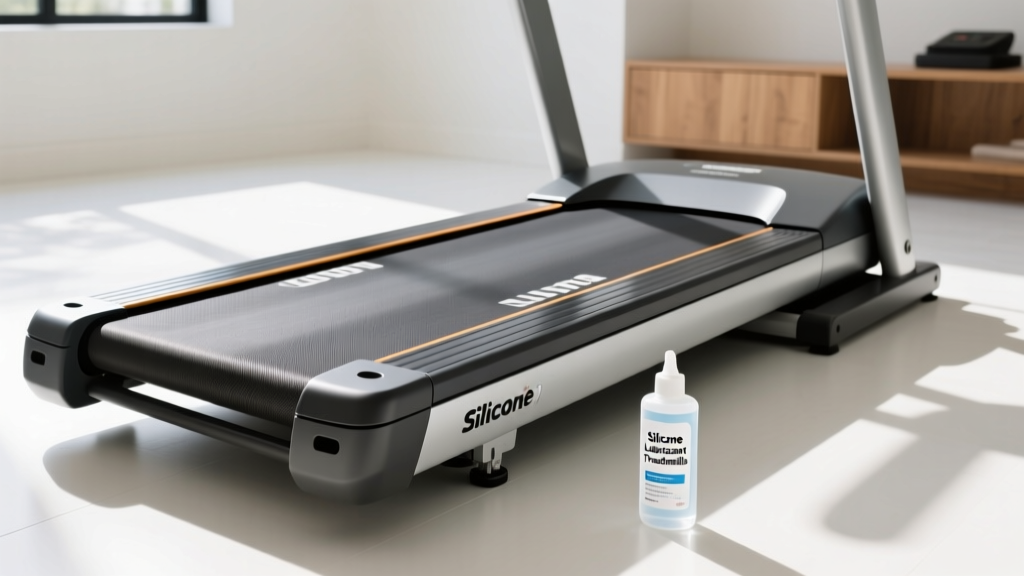
| Routine Maintenance | $45 (Silicone belt lube) | $15 (Bearing grease) |
| Estimated 5-Year Depreciation | 60% (Budget motors lose value fast) | 45% (Magnetic systems hold value) |
| Total 5-Year Net Cost | ~$829 | ~$776 |
Deep Dive: Echelon Stride-6 Folding Treadmill Value Proposition
The Echelon Stride-6 is positioned as an entry-level, space-saving walking and light-jogging machine. To understand its value, we have to look past the marketing and examine the mechanical realities of its components.
Motor and Belt Limitations
The Stride-6 is equipped with a 1.25 HP continuous-duty motor. In the 2026 fitness equipment landscape, a 1.25 HP motor is strictly categorized for walking and very light jogging. If a user weighing over 200 lbs attempts to run at 6.5 MPH for 45 continuous minutes, the motor controller board will likely overheat and trigger a thermal shutdown. Furthermore, the running surface measures 50 inches long by 18 inches wide. An 18-inch width is notably narrow; it requires strict spatial awareness and makes the machine unsuitable for sprinting or users with a wide natural gait.
Expert Insight: The Incline CaveatThe Stride-6 advertises 15 levels of incline. However, this is a manual incline. You must step off the machine, pull a physical pin at the base of the deck, and manually prop the deck up to change the elevation. If you want automated, push-button incline adjustments mid-run, you will need to upgrade to the Stride-6s model, which typically costs $200 more.
The Folding Advantage
Where the Stride-6 genuinely outshines similarly priced ellipticals is its spatial footprint. Utilizing a hydraulic drop-fold mechanism, the deck locks into a vertical position, reducing the machine's footprint to roughly 28 by 28 inches. For apartment dwellers or those converting a multi-use guest room into a gym, this folding capability is a massive functional value that static ellipticals simply cannot match.
Biomechanics vs. Budget: Which Machine Fits Your Body?
Value is irrelevant if the machine causes injury or fails to meet your physiological needs. The choice between the Stride-6 treadmill and a budget elliptical heavily depends on your joint health and fitness goals.
Joint Impact and Caloric Expenditure
Treadmills inherently involve repetitive ground-reaction forces. While the Stride-6 includes basic elastomer deck cushioning, it cannot entirely negate the impact of running, which can reach 2.5 times your body weight per stride. Conversely, ellipticals provide a closed-kinetic-chain movement, keeping your feet planted and eliminating impact shock.
According to Mayo Clinic fitness experts, ellipticals are highly recommended for individuals recovering from joint injuries or those with osteoarthritis, as they offer a low-impact alternative that still elevates the heart rate effectively. However, if bone density improvement is your goal, the mild impact of a treadmill is biomechanically superior.
Regarding calorie burn, Harvard Health Publishing data indicates that a 155-pound person burns approximately 324 calories in 30 minutes on an elliptical, compared to 288 calories walking at a brisk 4.0 MPH pace on a treadmill. To match the elliptical's caloric output on the Stride-6, you must utilize the manual incline or increase your speed to a jog, which pushes the 1.25 HP motor to its thermal limits.
Maintenance Realities and Common Failure Modes
Budget cardio machines require proactive maintenance to survive past their 1-year warranties. Understanding how these machines fail will help you protect your investment.
- Treadmill Deck Delamination: On the Stride-6, failing to apply 100% silicone lubricant under the belt every 3 months (or every 150 miles) will cause excessive friction. This friction melts the adhesive holding the deck's phenolic coating, leading to permanent deck warping and eventual motor burnout.
- Elliptical Pivot Bearing Wear: Budget ellipticals like the EX-59 use standard bushings and sealed bearings at the pedal arm joints. Over time, sweat and dust infiltrate these joints, causing a rhythmic 'squeak-click' noise. While easily fixed with lithium grease, ignoring it will result in the crank arm stripping the axle.
- Console Ribbon Cables: Both machines route thin ribbon cables through the main upright mast. If you aggressively shake the console during heavy exertion, or if the machine is placed in a humid environment, these cables can fatigue or corrode, resulting in dead heart-rate sensors or flickering displays.
The Final Verdict: Where Should Your Money Go?
The decision between the Echelon Stride-6 folding treadmill and a budget elliptical ultimately comes down to your living situation, body mechanics, and workout intensity.
Choose the Echelon Stride-6 Folding Treadmill If:
- Space is your primary constraint: You need a machine that can be folded and rolled into a closet or corner after use.
- You are a walker or light jogger: Your primary routine consists of walking at 3.0 to 4.5 MPH, perhaps while watching TV or taking a virtual meeting.
- You weigh under 220 lbs: Staying well below the 300 lb maximum weight capacity ensures the 1.25 HP motor operates efficiently without overheating.
- You prioritize bone density: You want the mild impact of weight-bearing exercise to maintain skeletal health.
Choose a Budget Elliptical (e.g., Horizon EX-59) If:
- You have joint sensitivities: You need zero-impact, fluid motion to protect your knees, hips, or lower back.
- You want higher caloric burn at lower perceived exertion: The ability to use push-pull handlebars engages the upper body, spiking the heart rate without requiring high-impact landings.
- You want lower long-term maintenance: You prefer a machine that doesn't require routine belt lubrication or deck inspections.
- You have dedicated floor space: You have a permanent 70-by-25-inch footprint available and do not need to fold the equipment away.
More gear to consider
All reviews
Beat Shin Pain on Treadmill: Home Stair Climber Guide
Pro Form Folding Treadmill vs Walking Pads: 2026 Review

Curved vs Motorized Treadmill Setup: Testing 200 m on Treadmill

Curved vs Motorized: Weighted Vest Incline Treadmill Guide

ProForm XP 580s Treadmill vs Elliptical: Maintenance