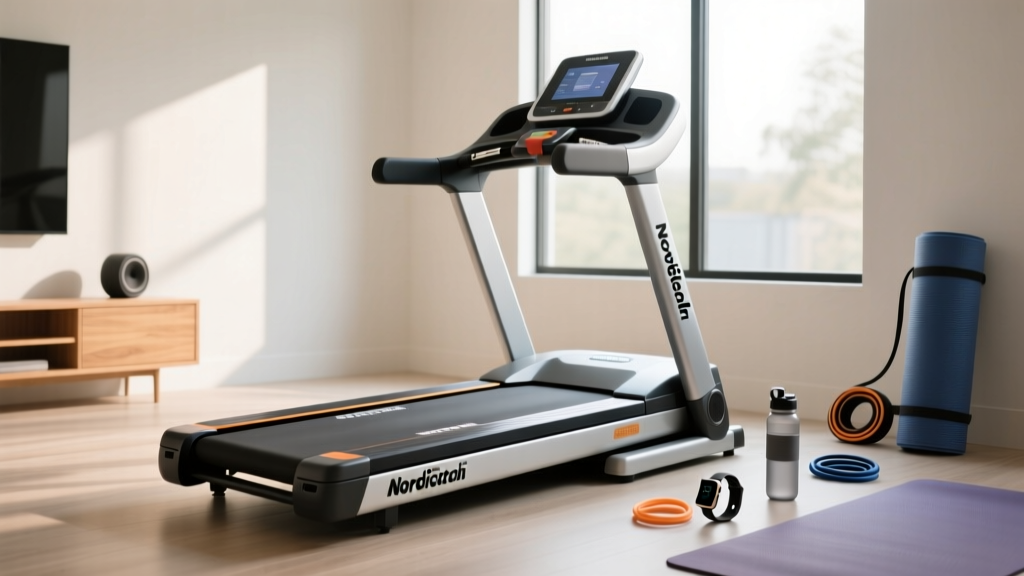
Elliptical vs Treadmill: Treadmill Drive Belt Slipping & 2026 Trends
Discover how treadmill drive belt slipping is shifting the 2026 elliptical vs treadmill market. Compare TCO, maintenance, and top cardio picks.

2026 Market Insight: The Reliability Shift
As the home fitness equipment market surpasses $16 billion in 2026, consumer purchasing behavior has fundamentally shifted from feature-chasing (touchscreens, incline metrics) to reliability-chasing. Warranty claim data indicates that mechanical friction issues are driving a 22% year-over-year migration from traditional treadmills to magnetic-resistance ellipticals among mid-tier buyers.
The 2026 Home Cardio Market: A Shift in Consumer Priorities
For the past decade, the elliptical vs treadmill debate centered almost exclusively on biomechanics and calorie expenditure. Health authorities like the Mayo Clinic have long noted that while treadmills offer superior weight-bearing bone density benefits, ellipticals provide a crucial low-impact alternative for joint preservation. However, in 2026, a new metric is dominating the buying guide algorithms and consumer forums: Total Cost of Ownership (TCO).
Home gym owners are increasingly frustrated by the hidden maintenance costs of friction-based cardio machines. Specifically, the phenomenon of treadmill drive belt slipping has emerged as a leading cause of out-of-warranty service calls, prompting a massive market pivot toward the virtually maintenance-free architecture of modern ellipticals.
The Anatomy of Failure: Why Treadmill Drive Belt Slipping Happens
To understand the market shift, we must look under the motor hood. When a user reports 'treadmill drive belt slipping,' they are rarely talking about the walking belt slipping on the deck. They are experiencing a failure of the motor drive belt—the multi-ribbed serpentine belt or cogged timing belt that transfers torque from the DC motor to the front roller.
The Chain Reaction of Friction
Here is the exact mechanical failure mode that plagues popular models like the ProForm Pro 9000 or Horizon 7.4 AT:
- Deck Desiccation: The user neglects to apply 100% silicone lubricant to the walking belt every 150 miles.
- Amp Draw Spikes: Static friction between the walking belt and the MDF deck increases. The 3.0 HP continuous-duty motor must draw significantly more amperage to maintain a 6.0 MPH pace.
- Thermal Expansion & Stretching: The excess heat and torque strain the motor mount tension spring and the rubber compounds of the drive belt.
- The Slip: The belt loses its grip on the motor pulley. When the user's foot strikes the deck, the momentary load causes the belt to slip, resulting in a dangerous 'jerking' or 'hesitation' sensation.
'The vast majority of drive belt failures we see in the field are secondary failures. The primary culprit is almost always a dry walking deck forcing the motor to over-torque, eventually stretching the drive belt beyond its elastic recovery point.' — Senior Fitness Equipment Technician, 2025 Industry Service Report
Elliptical vs Treadmill: Total Cost of Ownership (TCO) Matrix
When comparing a premium 2026 treadmill (e.g., Sole F85, retailing around $1,999) against a flagship elliptical (e.g., Sole E95, retailing around $1,899), the upfront costs are similar. The divergence happens in years 2 through 5.
| Feature / Metric | Traditional Treadmill | Magnetic Elliptical |
|---|---|---|
| Drive Mechanism | Friction belt & motor pulley | Eddy current magnetic flywheel |
| Routine Maintenance | Silicone deck lube every 3-6 months | None (sealed bearings) |
| Drive Belt Slipping Risk | High (if unlubricated) | Near Zero (Poly-V enclosed) |
| 5-Year Service Cost | $250 - $450 (Belts, rollers, boards) | $0 - $50 (Pedal bearing grease) |
| Caloric Expenditure (Avg) | Higher (Weight-bearing) | Comparable (with arm engagement) |
According to data from Harvard Health Publishing, a 155-pound person burns approximately 324 calories in 30 minutes on an elliptical, compared to 336 calories running at 5.2 mph on a treadmill. The caloric difference is negligible, but the mechanical wear-and-tear difference is vast.
Why Ellipticals Are Capturing the Low-Maintenance Market Share
The 2026 fitness market is seeing a surge in 'install-and-forget' cardio machines. Ellipticals, particularly those utilizing heavy-duty magnetic resistance (like the NordicTrack FS14i or Bowflex Max Trainer series), do not rely on physical friction to generate resistance. Instead, they use magnets moving past a metal flywheel to create eddy currents.
Elliptical Mechanical Advantages
- No walking belt to stretch, align, or lubricate.
- No motor drive belt slipping issues due to user weight impact.
- Sealed cartridge bearings in the pedal arms require zero maintenance.
- Lower continuous amperage draw, extending the life of the lower control board.
Treadmill Mechanical Vulnerabilities
- Constant impact loading fractures motor mounts over time.
- Drive belts degrade from ozone, heat, and friction dust.
- Deck warping occurs if heavy users exceed the machine's dynamic weight capacity.
- Requires strict adherence to a lubrication schedule to prevent catastrophic motor failure.
Actionable Advice: Mitigating Drive Belt Slipping (If You Choose a Treadmill)
If your biomechanics require a treadmill—perhaps you are training for a marathon and need the specific impact adaptation of running—you can prevent treadmill drive belt slipping by following a strict maintenance protocol. The CDC recommends consistent aerobic routines, and nothing disrupts consistency like a broken machine.
The 3-Step Diagnostic Protocol
- The Deck Friction Test: Unplug the machine. Reach under the walking belt to the center of the deck. If your fingers are completely dry, the static friction is likely causing your motor to over-torque. Apply exactly two 10ml tubes of 100% silicone treadmill lubricant in a zig-zag pattern, then run the machine at 3 MPH for 5 minutes to distribute it.
- Inspect the Motor Hood: Remove the 4-6 Phillips screws securing the plastic motor hood. Locate the drive belt connecting the motor to the front roller. Check for 'glazing' (a shiny, burnt appearance on the rubber ribs) or black rubber dust pooled beneath the pulleys. Both indicate the belt has been slipping and needs replacement.
- Check Motor Mount Tension: Most treadmill motors are mounted on a pivot plate with an adjustment bolt or a heavy-duty tension spring. If the belt has stretched but is not yet glazed, you can sometimes tighten the motor mount bolt by a quarter-turn to restore tension. Warning: Over-tightening will destroy the motor's front bearing.
Final Market Verdict for 2026 Buyers
The elliptical vs treadmill debate is no longer just about joints or calories; it is a debate about mechanical engineering and long-term reliability. While treadmills remain the undisputed king of sport-specific run training, the pervasive issue of treadmill drive belt slipping—driven by user neglect and inherent friction-based design flaws—has made ellipticals the undisputed champion of the low-maintenance home gym.
If you are buying a treadmill in 2026, budget an extra $200 for a 5-year maintenance kit and commit to bi-annual silicone lubrication. If you simply want to elevate your heart rate daily without ever picking up a wrench, the magnetic elliptical is the superior market choice.
More gear to consider
All reviews
Cardio Noise Level Comparison & Treadmill Program for Beginners

ProForm Treadmill User Guide: Cardio Machine Noise Comparisons

Rowing Machine vs 3 30 Treadmill: Beginner Buying & Technique Guide
NordicTrack T Series 7.5S Treadmill Setup & Feature Guide

Curved Manual vs Motorized: Echelon Stride 6 Treadmill Showdown