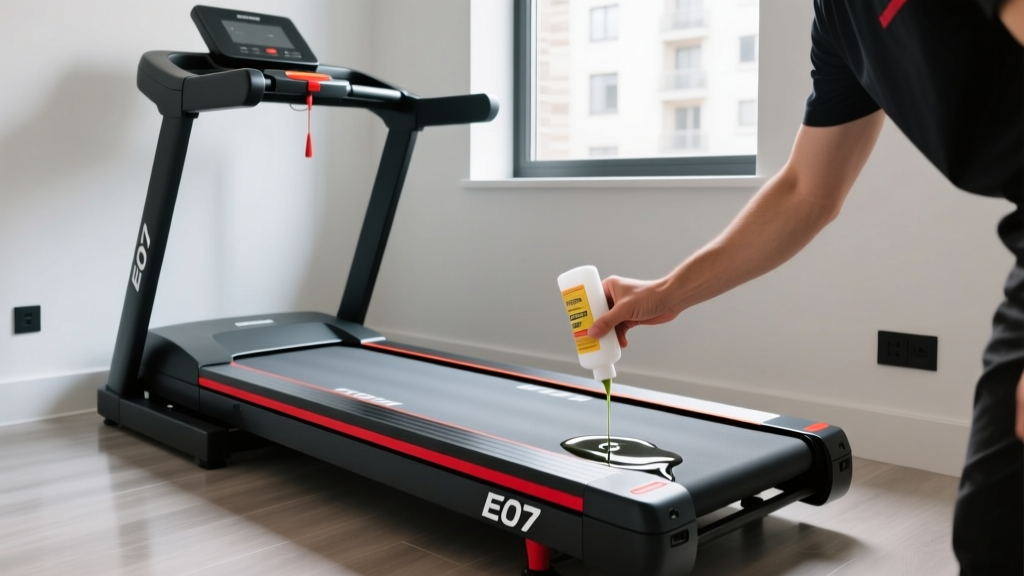
E07 Treadmill Belt Maintenance for Small Space Layouts
Learn how to maintain and lubricate your E07 treadmill belt in tight spaces. Discover layout tips for maintenance access and prevent motor strain.

The Spatial Paradox: Storage Footprint vs. Maintenance Access
When designing a home gym in a compact apartment or multi-use room, the E07 treadmill is frequently the centerpiece of space optimization strategies. Its foldable deck and ultra-slim profile allow it to slide under beds, tuck into narrow closets, or sit flush against a wall. However, this aggressive space-saving approach creates a hidden problem: the maintenance paradox. While you have optimized the room for storage and active use, you have likely eliminated the physical clearance required to properly maintain and lubricate the treadmill belt.
According to ergonomic and safety guidelines highlighted by the American Council on Exercise (ACE), home fitness equipment requires specific clearance zones not just for user safety, but for routine servicing. When an E07 treadmill is pushed flush into a corner alcove, accessing the belt edges for lubrication becomes nearly impossible without completely relocating the machine—a heavy, cumbersome task that leads most owners to simply skip maintenance altogether.
Warning: The Hidden Cost of Zero-Clearance LayoutsFailing to lubricate your treadmill belt due to poor spatial planning increases deck friction by up to 40%. This directly strains the drive motor, shortens the lifespan of the control board, and is the leading cause of premature belt snapping.
Decoding the 'E07' Error: A Layout and Friction Problem
In the cardio equipment repair industry, 'E07' is a dual-meaning term. It refers to the popular compact E07 treadmill model, but it is also one of the most notorious LED console error codes across generic and branded compact treadmills. An E07 error code typically indicates a motor communication fault, incline sensor failure, or a thermal shutoff triggered by excessive amp draw.
The Physics of Belt Friction and Motor Strain
When you optimize your room layout by shoving the treadmill against a wall, dust, pet hair, and debris accumulate on the unaccessible side of the belt. This debris works its way under the deck, drying out the factory-applied silicone. As the belt dries, the coefficient of friction between the belt and the phenolic deck increases.
- Normal Amp Draw (Well-Lubricated): 4 to 6 Amps at 3.0 MPH walking speed.
- Moderate Friction (Needs Lube): 8 to 10 Amps at 3.0 MPH.
- Severe Friction (E07 Error Imminent): 14+ Amps. The motor controller detects the spike, overheats, and triggers a thermal shutoff to prevent a fire, throwing the E07 fault code.
By designing your room layout with a dedicated 'service corridor,' you can prevent the very friction that causes these catastrophic motor faults.
Layout Matrix: Clearance Requirements for Compact Treadmills
To properly integrate an E07 treadmill into a small room, you must plan for three distinct spatial footprints. The table below outlines the exact measurements required for a functional, maintainable home gym layout.
| Layout Zone | Left/Right Clearance | Rear Clearance | Purpose & Maintenance Impact |
|---|---|---|---|
| Storage Footprint | 0 - 2 inches | 1 inch | Maximum space saving. Machine is folded or pushed flush. Zero maintenance access. |
| Active Use Footprint | 18 inches (min) | 24 inches | Required for user safety and emergency dismounts. Allows basic visual belt inspection. |
| Maintenance Footprint | 24 - 30 inches | 36 inches | Required to lift belt edges, insert lube applicators, and use a clamp meter on the power cord. |
Pro Tip: If your room cannot accommodate the Maintenance Footprint on both sides, adopt an 'Asymmetrical Corner Layout.' Push the right side of the treadmill within 4 inches of the wall, but leave a full 30-inch clearance on the left side. This allows you to access the belt from the left, slide the lubricant wand under the deck across the entire width, and service the machine without moving it.
Step-by-Step Belt Lubrication in Restricted Zones
If your E07 treadmill is situated in a tight layout, follow this specialized procedure to lubricate the belt without needing to drag the 100-pound machine into the center of the room. For a comprehensive visual guide on general belt care, you can also refer to this detailed treadmill lubrication tutorial.
- The Asymmetrical Shift: Ensure you have at least 24 inches of clearance on the primary maintenance side. Unplug the machine from the wall to eliminate shock hazards in the confined space.
- The Lift Test: Reach under the center of the belt from the open side. You should be able to lift the belt 2 to 3 inches off the deck. If it is tighter, use an Allen wrench to loosen the rear roller adjustment bolt on the open side by exactly one-quarter turn.
- Debris Extraction: Before applying new lubricant, use a vacuum with a crevice tool to suck out dust from the open edge. In tight spaces, static electricity binds dust to the deck; a microfiber cloth wrapped around a yardstick can wipe the deep center of the deck.
- Applying the Silicone: Use a 100% pure liquid silicone treadmill lubricant with an extended applicator wand. Squeeze exactly 0.5 ounces (about half a standard squeeze bottle) in a zig-zag pattern across the width of the deck, reaching as far toward the wall-bound side as possible.
- Distribution Cycle: Plug the treadmill back in. Stand on the side rails, start the machine at 2.0 MPH, and carefully walk on the belt for 3 minutes. The friction will heat the silicone, allowing it to spread evenly across the entire deck, including the hard-to-reach side near the wall.
Deck Inspection: Phenolic Coating and Edge Cases
Space constraints often force users to walk slightly off-center on compact treadmills like the E07, leading to asymmetrical wear patterns. When you have the belt lifted for lubrication, you must inspect the deck's phenolic coating.
"A worn phenolic deck will absorb silicone lubricant like a sponge, leaving the surface dry and increasing friction. If you run your hand across the exposed deck and it feels rough like sandpaper rather than smooth like glass, no amount of lubrication will save your motor. The deck must be replaced, or the E07 error code will become a permanent fixture on your console."
— Cardio Equipment Repair Technician Guidelines
If your layout forces the treadmill onto an uneven floor (common in older apartments with sloping hardwood), the belt will naturally track toward the lower side. This causes the belt edge to rub against the side rail, stripping the rubber and creating a secondary source of friction. Always use a carpenter's level during installation and place high-density EVA foam mats under the lower side to ensure a perfectly level running surface.
Selecting the Right Lubricant for Tight-Deck Systems
Not all silicone lubricants are created equal, and choosing the wrong one in a poorly ventilated, tight space can lead to respiratory irritation and belt degradation.
- Use 100% Liquid Silicone: Specifically formulated for fitness equipment. Brands like Spot X or generic 100% silicone treadmill lube are ideal.
- Avoid Aerosol Sprays: Aerosols contain petroleum-based propellants (like butane or propane) that chemically break down the urethane and PVC compounds in the treadmill belt. Furthermore, spraying aerosols in a tight corner layout will result in overspray on your walls and furniture.
- Never Use WD-40: Standard WD-40 is a solvent and degreaser, not a lubricant. It will strip the remaining factory silicone, destroy the deck coating, and void your warranty.
Summary: Designing for the Lifecycle of Your Equipment
Space optimization is not just about how small a footprint your cardio machine leaves when folded; it is about designing a room layout that supports the entire lifecycle of the equipment. By implementing an asymmetrical clearance zone, utilizing the correct 100% liquid silicone, and monitoring your motor's amp draw, you can keep your E07 treadmill running silently and efficiently for years. Proper spatial planning ensures that when it comes time for maintenance, you won't be forced to tear apart your entire home gym just to oil a belt. For further insights on selecting equipment that fits your spatial and lifestyle needs, consult the Consumer Reports Treadmill Buying Guide to ensure your next purchase aligns with your room's unique dimensions.
More gear to consider
All reviews
Treadmill Plug Adapter Noise: Troubleshooting Cardio Machine Hum
Does Pokemon Go Work on a Treadmill? Rowing Machine Setup Guide
Treadmill Broken Belt? Switch to Rowing: Buying Guide & Technique

YMCA Treadmills vs Rowers: 2026 Buying & Technique Guide

Under Desk Treadmill Review: Maintenance vs Barry's Treadmill
