
Space Optimization: Storing the Titan Circus Dumbbell & Standard Sets
Optimize your gym layout with space-saving dumbbell racks. Learn how to store standard sets alongside the Titan Circus Dumbbell efficiently.

The 2026 Hybrid Gym Challenge: Modern garage gyms are no longer single-discipline spaces. The rise of hybrid strongman-hypertrophy programming means lifters are juggling standard adjustable dumbbells alongside awkward odd objects. Nowhere is this more apparent than with the Titan Circus Dumbbell—a staple for overhead pressing events that completely breaks traditional storage logic.
Designing a functional, space-optimized layout for a mixed-modality gym requires more than just shoving heavy metal into a corner. When you introduce strongman implements into a space originally designed for bodybuilding or powerlifting, standard storage solutions fail both aesthetically and structurally. This guide provides a comprehensive framework for integrating the Titan Circus Dumbbell into your gym layout without sacrificing floor space, safety, or workflow efficiency.
The Geometry Clash: Why Standard 3-Tier Racks Fail
The most common mistake lifters make is attempting to force odd objects onto commercial-style 3-tier dumbbell racks. To understand why this is a critical failure point, we must look at the dimensional data. According to equipment specifications listed on Titan Fitness, the geometry of a circus dumbbell is fundamentally incompatible with standard tier heights.
| Implement Type | Globe Diameter | Overall Length | Handle Thickness | Standard Rack Compatibility |
|---|---|---|---|---|
| Standard Hex Dumbbell (50lb) | ~6.5 inches | ~13 inches | 1.1 inches | Perfect Fit (All Tiers) |
| Adjustable Dumbbell (e.g., Nuobell) | ~7.5 inches | ~16 inches | 1.3 inches | Top Tier Only |
| Titan Circus Dumbbell (Empty/Loaded) | 14.0 inches | ~26 inches | 1.75 inches | FAIL: Overhang & Tipping Hazard |
Standard 3-tier racks feature tier heights of roughly 8.5, 10.5, and 12.5 inches. A 14-inch globe will physically not sit inside these trays. Attempting to rest it on top of the rack shifts the center of gravity dangerously high and outward, creating a severe tipping hazard—especially when the implement is loaded with lead shot or sand to reach competition weights of 50 to 100+ pounds.
Strategic Zoning: The 'Active Drop' vs. 'Static Storage' Method
Facility design principles outlined by the National Strength and Conditioning Association (NSCA) emphasize the separation of active movement zones from static storage areas to prevent tripping hazards and equipment damage. For the circus dumbbell, we apply the Active Drop vs. Static Storage framework.
1. The Static Storage Zone (Vertical Integration)
Because the circus dumbbell cannot go on a traditional A-frame or horizontal rack, you must utilize vertical power rack integrations.
- The Utility Shelf Method: Mount a heavy-duty utility shelf (such as the Rogue Monster Utility Shelf or Titan's equivalent) to the uprights of your power rack at a height of 48 inches. This keeps the 26-inch long implement off the floor, utilizes 'dead air' space inside the rack, and keeps the center of gravity anchored to the rack's bolted base.
- Sandbag/Implement Pegs: Install 2-inch steel storage pegs on the exterior of your rack uprights. While typically used for resistance bands, heavy-duty pegs spaced 18 inches apart can cradle the thick 1.75-inch handle of the circus dumbbell securely.
2. The Active Drop Zone (Floor Layout)
When performing circus dumbbell presses or cleans, you will inevitably need to drop the implement. Standard rubber gym tiles will shatter under the point-load impact of a 14-inch steel globe dropped from overhead.
⚠️ Critical Flooring Requirement: Never drop a loaded circus dumbbell on standard interlocking EVA foam tiles or thin rubber mats. You must construct a dedicated drop zone using 3/4-inch thick, vulcanized horse stall mats (typically 4x6 feet, costing around $50-$60 each) placed directly over concrete or a plywood subfloor.
Traffic Flow and Clearance Metrics
Space optimization is not just about storing the item; it is about how you move around it. Experts at Garage Gym Reviews frequently highlight that poor clearance metrics lead to abandoned equipment. If an implement is difficult to access or blocks your primary walking path, it becomes a $150 paperweight.
- The 36-Inch Rule: Maintain a minimum 36-inch clearance walkway between your dumbbell rack and any active lifting platform. The Titan Circus Dumbbell is 26 inches long; if left on the floor in a narrow aisle, it leaves less than 10 inches of toe-room, creating a massive trip hazard.
- The Corner Wedge Strategy: Utilize 90-degree corners for odd-object floor storage. Build a simple wooden or steel 'V' cradle that wedges into the corner. This prevents the spherical globe from rolling into the center of the gym while utilizing space that is normally dead real estate for standard rectangular racks.
- Overhead Swing Radius: When mapping out your layout, account for the 26-inch length of the dumbbell plus your arm length. You need a minimum 6-foot radius of clear space around your pressing zone to avoid striking walls or standard dumbbell racks during the clean-and-press movement.
Cost Breakdown: Building the Hybrid Storage Layout
Upgrading your storage to accommodate both standard sets and strongman odd objects requires a strategic budget. Below is a realistic 2026 pricing breakdown for a complete, space-optimized hybrid storage setup.
| Component | Function | Estimated Cost |
|---|---|---|
| Titan 3-Tier Dumbbell Rack (Standard) | Stores hex/urethane sets up to 100lbs | $229.00 |
| Heavy-Duty Rack Utility Shelf | Elevated storage for Circus Dumbbell | $120.00 - $160.00 |
| 4x6' Vulcanized Horse Stall Mat | Dedicated Active Drop Zone | $55.00 |
| Custom Steel Corner Cradle (DIY/Welded) | Floor-level anti-roll storage | $40.00 (Materials) |
| Total Layout Investment | Complete Space Optimization | $444.00 - $484.00 |
Maintenance and Edge Cases
Storing odd objects introduces unique maintenance requirements that standard dumbbells do not. If your Titan Circus Dumbbell is the fillable variety (using sand or lead shot), the storage environment matters immensely.
Pro-Tip on Moisture Control: If you store your fillable circus dumbbell on a utility shelf in an unclimate-controlled garage, temperature fluctuations will cause condensation inside the globe. Over time, this degrades the internal welds and causes the filler material to clump, altering the balance of the implement. Always store fillable odd objects in a climate-stable zone, or ensure the plug is sealed with marine-grade silicone.
Handling the Thick Grip Degradation
The 1.75-inch handle of the circus dumbbell is often knurled or coated. When stored on steel utility shelves, the bare metal-on-metal contact will strip the knurling or chip the powder coat. Wrap the storage contact points of your utility shelf with high-density UHMW (Ultra-High Molecular Weight) polyethylene tape or slide a piece of heavy-duty PVC pipe over the shelf lip to create a protective, friction-reducing cradle.
Final Layout Verdict
Integrating the Titan Circus Dumbbell into a space-optimized gym layout requires abandoning the idea that 'everything must go on a rack.' By leveraging vertical power rack attachments for static storage, engineering dedicated drop zones with vulcanized rubber, and respecting strict traffic flow clearances, you can maintain a pristine, safe, and highly functional hybrid training environment. Stop letting awkward geometry dictate your gym's workflow—adapt the space to the implement.
More gear to consider
All reviews
Power Rack vs Squat Stand: Lower Chest Workouts with Dumbbells

2026 Dumbbell Rack Market: The Iso Lateral Skull Crusher Effect

Adjustable Dumbbell Setup for Your Upper Body Dumbbell Workout Program

Bumper vs Iron Plates & Single Dumbbell Exercises for Shoulders
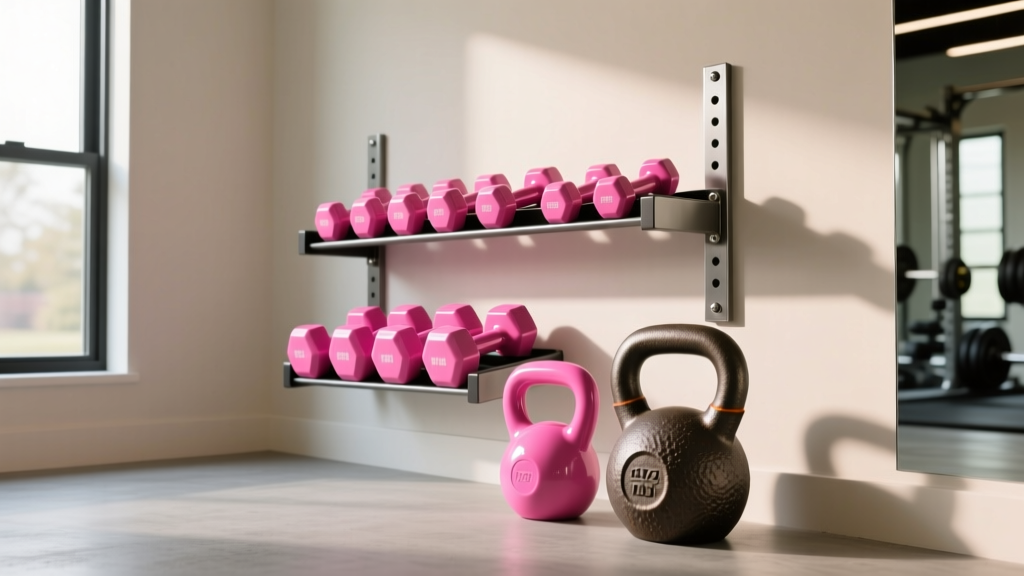
Space-Saving Layouts: Kettlebells & Pink Dumbbell Set With Rack
