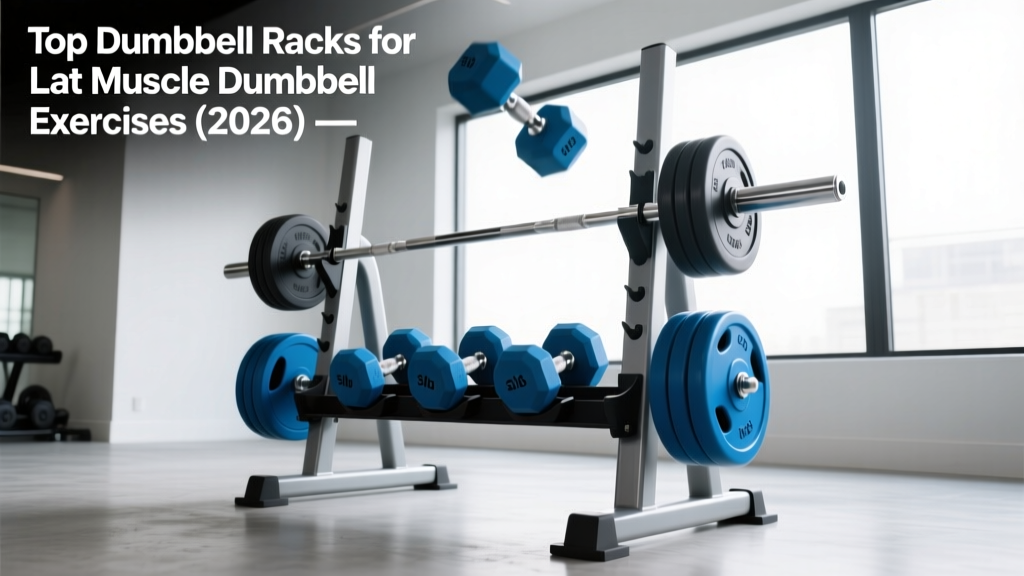
Top Dumbbell Racks for Lat Muscle Dumbbell Exercises (2026)
Discover the best dumbbell racks for heavy lat muscle dumbbell exercises. Our 2026 hands-on review covers safety, specs, and workflow optimization.

The Hidden Biomechanics of Dumbbell Storage for Back Day
When building a massive back, the setup is just as critical as the pull. If you are serious about lat muscle dumbbell exercises—like heavy single-arm rows, dumbbell pullovers, and Meadows rows—your equipment storage directly impacts your injury risk and workout efficiency. Most commercial gyms and home setups rely on standard 3-tier A-frame racks. While these save floor space, they introduce a severe biomechanical flaw for heavy pulling days: the bottom tier.
Bending over to hoist a 90 lb or 100 lb hex dumbbell from a bottom shelf positioned just 8 inches off the floor places immense shear force on the lumbar spine before your working set even begins. According to ExRx.net's kinesiology breakdown of the dumbbell row, maintaining a neutral spine is paramount during the hip-hinge. Fumbling to clean a heavy dumbbell from a low, poorly angled rack compromises this neutral position, turning your setup into an unplanned, unbraced stiff-legged deadlift.
⚠️ Expert Safety Warning: Never round your lower back to retrieve heavy dumbbells from the bottom tier of a standard rack. Always execute a strict hip-hinge or squat to retrieve weights over 50 lbs. If your rack design forces you to compromise your posture, it is time to upgrade your storage solution.In this 2026 hands-on review, we evaluate the best dumbbell racks and storage solutions specifically optimized for the workflow, safety, and heavy loads required for elite lat muscle dumbbell exercises.
Hands-On Reviews: Top Storage Solutions for Heavy Pulls
1. Titan Fitness Single-Tier Heavy Duty Dumbbell Rack
Best For: Heavy single-arm rows and low-tier safety.
When your primary focus is moving massive weight on unilateral lat exercises, a single-tier rack is a game-changer. The Titan Fitness Single-Tier Heavy Duty Rack sits at an ergonomic 24-inch height, constructed from 11-gauge steel. During our testing with 120 lb urethane hex dumbbells, the low profile allowed us to grip the handle, brace the core, and lift with a safe, neutral spine.
- Dimensions: 41" W x 24" H x 22" D
- Capacity: 8 pairs (up to 50-120 lb range)
- Price (2026): $189.99
The Verdict: While it lacks the vertical storage density of a 3-tier unit, the single-tier design completely eliminates the dangerous bottom-shelf reach. For a dedicated heavy-pulling station, this is the safest option on the market.
2. Rogue Fitness 3-Tier Dumbbell Rack (1015 Model)
Best For: Comprehensive home gyms with full 5-100 lb sets.
Rogue’s 1015 model remains the gold standard for high-capacity storage. Featuring a 52-inch footprint and laser-cut 11-gauge steel, it holds 10 pairs securely. The cradles are spaced perfectly for Rogue’s Urethane Hex Dumbbells, preventing the annoying 'clack' and roll that occurs on cheaper, flat-shelf racks.
- Dimensions: 52" W x 36" H x 28" D
- Capacity: 10 pairs (Max 1,500 lbs total distributed)
- Price (2026): $695.00
The Verdict: The top tier is perfectly positioned for heavy lat pulls, allowing you to grab your 80s or 90s with minimal spinal flexion. However, the bottom tier is strictly for lighter accessories (10-30 lbs) used for rear delt flyes or tricep kickbacks. Do not store your heavy rowing dumbbells on the bottom shelf.
3. Rep Fitness DB-5000 3-Tier Rack
Best For: Ergonomic retrieval and drop-set workflows.
The Rep Fitness DB-5000 introduces a subtle but highly effective design tweak: angled shelves with high-density polyurethane saddles. This 15-degree inward tilt means the dumbbell handles naturally present themselves to your hand. When executing drop sets on dumbbell pullovers—a fantastic ACE Fitness recommended back movement for lat isolation—the ability to quickly and safely re-rack and grab the next weight down without looking is invaluable.
- Dimensions: 51" W x 38" H x 27" D
- Capacity: 10 pairs
- Price (2026): $449.99
The Verdict: The DB-5000 offers the best balance of premium ergonomics and mid-range pricing. The rubberized saddles also protect the knurling and coating of your dumbbells from long-term degradation.
Comparison Matrix: Heavy-Duty Rack Specs
| Model | Tiers | Steel Gauge | Footprint | Lat-Workflow Score |
|---|---|---|---|---|
| Titan Single-Tier | 1 | 11-Gauge | 41" x 22" | 9.5/10 (Heavy Pulls) |
| Rogue 1015 | 3 | 11-Gauge | 52" x 28" | 8.0/10 (Top Tier Only) |
| Rep DB-5000 | 3 | 12-Gauge | 51" x 27" | 8.8/10 (Drop Sets) |
Workflow Optimization: Organizing for Lat Supersets
Having the right rack is only half the battle; how you load it dictates the flow of your workout. For hypertrophy-focused lat muscle dumbbell exercises, organization is key to maintaining time-under-tension and minimizing rest periods.
The 'Heavy-Pull' Top Tier Strategy
If you are using a 3-tier rack, reserve the top tier exclusively for heavy pulling weights (e.g., 60 lbs to 120 lbs). This tier sits at roughly 34 to 38 inches high, aligning perfectly with your hips. You can execute a micro-hinge, grip the dumbbell, and immediately transition into a braced single-arm row on a nearby bench without spinal compromise.
The Mid-Tier Accessory Zone
Use the middle tier (approx. 20-24 inches high) for moderate weights used in bilateral movements like chest-supported dumbbell rows or renegade rows. Because you are picking up two lighter dumbbells simultaneously (e.g., 40s or 50s), the slight bend required to reach the middle shelf is easily managed with a standard squat or hip-hinge.
The Bottom Tier: Isolation and Rehab
Keep the bottom tier strictly for weights under 30 lbs. These are reserved for straight-arm dumbbell pullovers (performed lying on a bench, where retrieval height matters less) or posterior chain isolation work like rear-delt flyes.
Long-Term Maintenance and Failure Modes
Dumbbell racks endure brutal abuse. A 100 lb dumbbell dropped onto a steel shelf from even a few inches high generates hundreds of pounds of localized impact force. Over time, this leads to specific failure modes you must monitor:
- Saddle Degradation: Cheaper racks use PVC or hard plastic cradles. These will crack within 18 months under heavy hex dumbbells. Always look for racks with UHMW plastic, polyurethane, or thick rubber saddles (like the Rogue and Rep models reviewed above).
- Weld Fatigue: Inspect the gussets where the horizontal shelf beams meet the vertical uprights. If you notice hairline fractures in the powder coat near the welds, the rack is overloaded or suffering from asymmetric loading (e.g., storing all 100s on one side of the rack).
- Hardware Loosening: The vibration from dropping heavy iron or urethane dumbbells will slowly back out carriage bolts. Make it a habit to take a socket wrench to your rack's hardware every 6 months to ensure structural rigidity.
Frequently Asked Questions
Can I use a squat rack attachment for dumbbell storage?
Yes, but with caveats. Many lifters use peg-style dumbbell holders that slide into the uprights of a power rack. While this saves floor space, retrieving a heavy dumbbell from a peg requires you to lift it up and over the pin, which is highly awkward and dangerous for heavy lat exercises. Dedicated shelved racks with open fronts are vastly superior for heavy pulling workflows.
Do I need a 3-tier rack if I only train for strength?
No. If your programming revolves around heavy, low-rep lat muscle dumbbell exercises (like 5x5 heavy single-arm rows), a single-tier or low-profile dual-tier rack is actually superior. It forces you to curate a smaller collection of heavy dumbbells (e.g., 60s, 80s, 100s) and keeps them all at a safe, ergonomic lifting height.
What is the best dumbbell shape for rack storage?
Hexagonal urethane dumbbells are the undisputed king of rack storage. Round dumbbells require individual saddles or lips on the shelves to prevent rolling, which limits how closely you can pack them. Hex dumbbells sit flush against one another, maximizing the linear footage of your rack and preventing the loud, distracting clanking of metal-on-metal during busy workout sessions.
More gear to consider
All reviews
Olympic Barbell Setup: Weight, Knurling & Dumbbells Movie Myths

Master the Dumbbell Bench Press with Neoprene Home Weights
Bumper vs Iron Plates: Close Grip Dumbbell Press Triceps Loading
Power Rack vs Squat Rack vs Stand for Heavy Dumbbell Press Weight

Space-Saving Racks for an Upper Back Workout With Dumbbells (2026)
