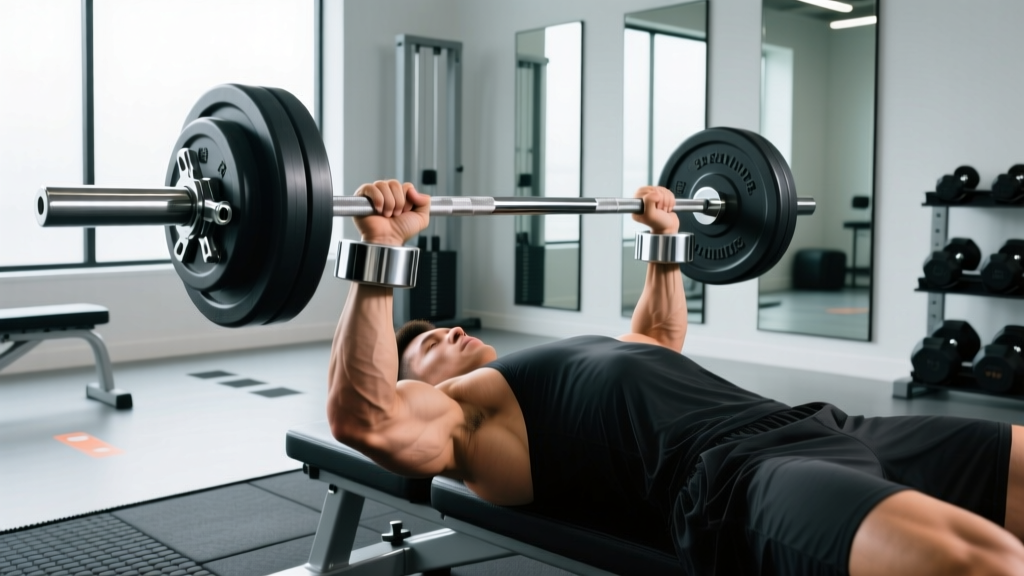
Barbell Collars vs Clamps: Securing the Incline Bench Dumbbell Row
Compare barbell collars and dumbbell clamps to secure your incline bench dumbbell row. We test lock-jaw, aluminum, and spring types for 2026.

The modern home gym in 2026 has largely shifted away from bulky fixed-weight dumbbell racks toward space-saving Olympic loadable dumbbell handles. While this transition saves space and money, it introduces a critical safety and performance variable: how you secure the plates. When executing a heavy, unilateral movement like the incline bench dumbbell row, the lateral forces and asymmetrical torque placed on the sleeve can turn a poorly secured loadable dumbbell into a dangerous projectile.
Choosing between traditional barbell collars and specialized dumbbell clamps is no longer just a matter of convenience; it is a matter of biomechanical security. In this head-to-head comparison, we break down the engineering, failure modes, and real-world performance of the market’s leading collar and clamp types, specifically analyzing how they hold up under the rigorous demands of angled pulling movements.
The Biomechanics of Unilateral Pulling
To understand why collar selection matters, we must look at the physics of the incline bench dumbbell row. Unlike a barbell bent-over row, where the weight is distributed evenly across a horizontal plane, the incline dumbbell row isolates one side of the latissimus dorsi. The lifter pulls the dumbbell toward their hip at a 45-degree angle, often allowing the weight to brush against the torso or the bench pad at the bottom of the eccentric phase.
This creates two distinct forces on the dumbbell sleeve:
- Pendulum Momentum: As the dumbbell is rowed upward, the plates experience lateral inertia, pushing them outward against the collar.
- Impact Shock: When the dumbbell grazes the incline bench or the lifter’s ribcage, micro-impacts send shockwaves down the sleeve, which can compress and dislodge inferior clipping mechanisms.
If you are using a 50mm Olympic loadable dumbbell handle, standard spring clips are virtually useless against these forces. According to equipment testing data featured by BarBend’s comprehensive barbell collar guide, standard spring clips provide less than 15 pounds of lateral clamping force, which is easily overcome by a 60-pound plate shifting during a heavy row.
Head-to-Head: Collar and Clamp Mechanisms
The market is currently dominated by three primary mechanisms. Below is a comparison matrix detailing their engineering specifications and ideal use cases.
| Mechanism Type | Material | Avg. Clamping Force | Weight (per pair) | Best Application | Price Range (2026) |
|---|---|---|---|---|---|
| Spring Clip | Steel Wire | 10 - 15 lbs | 0.5 lbs | Light isolation, warm-ups | $8 - $15 |
| Polymer Lock-Jaw | Reinforced Nylon | 80 - 120 lbs | 0.6 lbs | Dynamic dumbbell movements | $30 - $45 |
| Aluminum Competition | Machined Aircraft Aluminum | 150+ lbs | 1.2 - 1.5 lbs | Heavy barbell & loadable DBs | $65 - $90 |
The Stress Test: Incline Bench Dumbbell Row
To evaluate these mechanisms, we simulate the exact conditions of a heavy incline bench dumbbell row using 50mm Olympic loadable dumbbell handles loaded with 80 pounds of bumper plates.
⚠️ The 45-Degree Tilt Warning: During the incline row, the dumbbell sleeve is rarely perfectly horizontal. When tilted at 45 degrees, gravity pulls the plates down the sleeve. If the collar lacks an internal positive-locking mechanism (like a gear or a threaded screw), the entire collar-and-plate assembly can slide off the sleeve simultaneously.Spring Clips: The Immediate Failure
When using standard spring clips on an incline row, the lateral brush against the bench pad compresses the spring. Upon release, the clip loses its grip on the 50mm sleeve. By the third rep of a heavy set, the plates audibly rattle, and the center of gravity shifts, forcing the lifter to compensate with their rotator cuff and bicep rather than isolating the lat.
Polymer Lock-Jaw Clamps: The Unilateral Specialist
Polymer clamps, specifically those utilizing a positive-locking gear system, excel here. Because they snap shut with interlocking teeth, they do not rely on continuous outward tension. When the dumbbell strikes the bench during the row, the impact does not compromise the clamp’s grip. They are lightweight, meaning they don’t add unnecessary bulk to an already thick dumbbell handle, preserving your grip strength for the pulling phase.
Aluminum Competition Collars: The Heavyweight Standard
Aluminum collars use a threaded screw or a cam-lever to apply immense inward pressure, often featuring an internal urethane lining that grips the steel sleeve. While they offer the highest clamping force, their bulk can be a drawback. On a shorter loadable dumbbell handle, the wide profile of an aluminum barbell collar might eat up valuable sleeve space, limiting the number of plates you can load for your incline bench dumbbell row.
2026 Market Leaders: Exact Models and Pricing
If you are upgrading your gym’s security protocols, these are the specific models that dominate the current landscape.
Rogue AH-1 Aluminum Collars
Priced at approximately $75 per pair, the Rogue AH-1 Aluminum Collars are the gold standard for barbell security. Machined from high-quality aluminum with a proprietary urethane insert, they provide over 150 pounds of clamping force. Verdict for Dumbbell Rows: Excellent for heavy, low-rep rows where sleeve space is not an issue. However, the cam-lever can occasionally catch on the bench pad during deep eccentric stretches.
Lock-Jaw Pro Dumbbell Collars
Retailing around $35, the Lock-Jaw Pro series utilizes a reinforced nylon polymer with a positive-locking tooth mechanism. They are specifically contoured to fit snugly against plates without the wide footprint of a barbell collar. Verdict for Dumbbell Rows: The undisputed champion for loadable dumbbells. The low profile prevents bench-snagging, and the positive lock completely negates the pendulum effect of the incline row.
Bull Clamp Premium Barbell Collars
At $85, Bull Clamps use a unique threaded screw mechanism that applies 360-degree even pressure. They are virtually indestructible and will never slip. Verdict for Dumbbell Rows: Overkill for most dumbbell work, but if you are performing explosive, high-momentum unilateral rows or kipping movements, the threaded screw guarantees zero lateral shift.
Step-by-Step Secure Loading Protocol
To maximize the lifespan of your collars and ensure absolute safety during your incline bench dumbbell row, follow this loading sequence:
- Sleeve Prep: Wipe the dumbbell sleeve with a microfiber cloth to remove chalk and sweat. Moisture reduces the friction coefficient of urethane-lined aluminum collars by up to 40%.
- Plate Seating: Load the plates and tap the dumbbell vertically on a rubber mat to ensure all plates are flush against the inner sleeve lip.
- Collar Placement: Slide the collar on, leaving exactly 1/8th of an inch of space between the collar and the outer plate.
- Engagement: Lock the cam-lever or snap the polymer teeth. If using a threaded collar, tighten until you feel resistance, then add a quarter-turn.
- The Shake Test: Before lying on the incline bench, hold the dumbbell and give it one sharp, violent shake horizontally. If you hear metallic clicking, re-seat the collar.
Final Verdict: Matching the Clamp to the Movement
The incline bench dumbbell row is a foundational hypertrophy movement that demands strict form and absolute equipment reliability. While traditional barbell collars like the Rogue AH-1 offer unparalleled raw clamping force for heavy barbell deadlifts and squats, their bulky profiles make them suboptimal for the tight clearances required during unilateral dumbbell rowing.
For lifters utilizing 50mm Olympic loadable dumbbells in 2026, investing in a dedicated set of polymer positive-lock clamps is the most practical, safe, and performance-enhancing upgrade you can make. By eliminating lateral plate shift, you ensure that 100% of your muscular output is directed into the latissimus dorsi, rather than wasted on stabilizing a shifting center of mass.
More gear to consider
All reviews
2026 Trends: Loadable Gear for Back Exercises for Men with Dumbbells

Beyond the Water Dumbbell Workout: Cast Iron vs Competition Kettlebell Guide

Olympic vs Standard Plates: Racks & Dumbbell Pullover Machine Guide

Beyond the Best Beginner Dumbbell Workout: Barbell Knurling & Weight

Olympic vs Standard Plates & How to Squat with Dumbbells for Glutes
