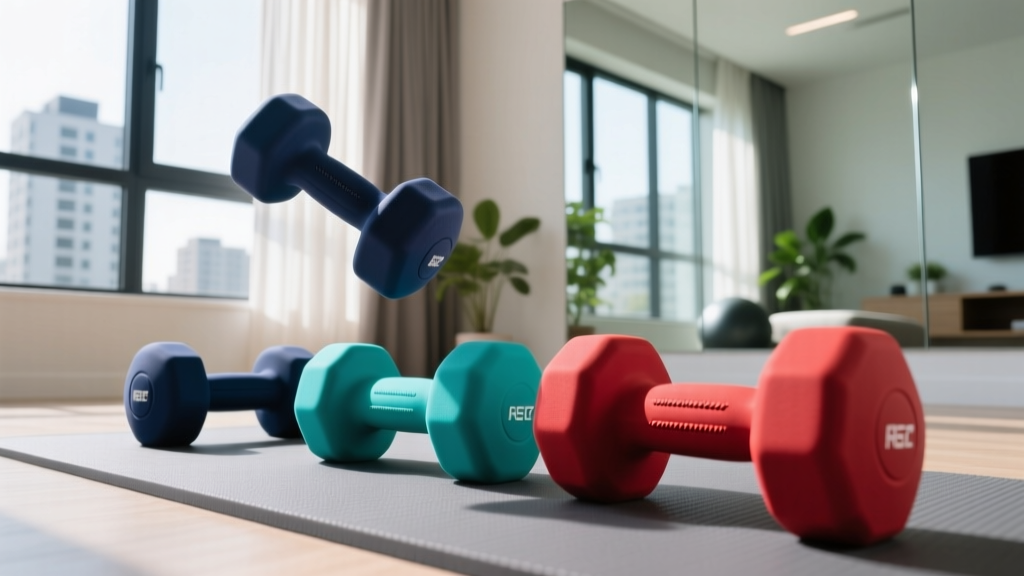
Top Dumbbell Racks for Circuit Training With Dumbbells in 2026
Expert hands-on reviews of the best dumbbell racks for circuit training with dumbbells, featuring storage frameworks, safety tips, and 2026 top picks.

When designing a high-intensity workout space, most lifters obsess over the weights themselves but treat storage as an afterthought. However, if your primary modality is circuit training with dumbbells, your rack is not just a storage unit; it is a critical piece of flow-state equipment. Fumbling through a cluttered A-frame rack while your heart rate spikes and your rest timer ticks down ruins the efficacy of AMRAPs (As Many Rounds As Possible) and EMOMs (Every Minute on the Minute).
In 2026, the shift toward high-density, fast-transition garage and commercial gyms has forced manufacturers to rethink dumbbell storage. Standard vertical A-frames are out; wide-footprint, tiered, and horizontal low-profile racks are in. Below, we break down the biomechanics of equipment retrieval, review the top three racks on the market, and provide a spatial framework to optimize your training environment.
The Hidden Bottleneck: Why Standard A-Frames Fail Circuits
Traditional A-frame racks save floor space, but they introduce severe ergonomic and safety bottlenecks during high-intensity interval training. According to facility layout guidelines emphasized by the National Strength and Conditioning Association (NSCA), equipment placement must minimize tripping hazards and allow for unobstructed movement patterns during fatigued states.
During circuit training with dumbbells, you are often swapping weights every 45 to 60 seconds. An A-frame forces you to stack heavier weights on the bottom and lighter ones on top, requiring you to bend and reach awkwardly while fatigued. Furthermore, the narrow base of an A-frame becomes a tipping hazard if a user accidentally bumps it while carrying a heavy pair of hex dumbbells. For circuits, you need wide, tiered, or horizontal visibility where every weight is visible and accessible without overlapping.
Expert Insight: The 3-Second Rule
In a true metabolic conditioning circuit, your transition time between exercises should not exceed 3 to 5 seconds. If it takes you longer to locate, grip, and lift your next pair of dumbbells off the rack, your storage solution is actively sabotaging your cardiovascular stimulus.
Hands-On Review: Top 3 Racks for Fast Transitions
We tested dozens of storage solutions over the past six months, evaluating them specifically for retrieval speed, footprint efficiency, and long-term durability under heavy commercial and garage gym use.
1. Rogue 3-Tier Dumbbell Rack (120' Model)
Price: $895.00 | Capacity: 12 Pairs | Footprint: 120' L x 34' H x 32' D
The 120-inch Rogue 3-Tier is the gold standard for high-volume circuit training. Constructed from 11-gauge steel, it features a massive 120-inch horizontal footprint that allows you to lay out 12 pairs of dumbbells (ranging from 5 to 50 lbs) with zero overlap. The tiered design angles the saddles slightly upward, giving you instant visual confirmation of the weight markings.
- Pros: Unmatched stability; UHMW plastic liners protect knurled handles; holds heavy loads without frame flex.
- Cons: Requires a massive 10-foot wall space; overkill for home gyms with limited square footage.
2. Rep Fitness PR-4000 3-Tier Dumbbell Storage Attachment
Price: $249.99 | Capacity: 6 Pairs | Footprint: Integrated into Power Rack
If your circuit training with dumbbells happens inside or immediately adjacent to a power rack, the Rep Fitness 3-Tier attachment is a masterclass in space optimization. It mounts directly to the uprights of the PR-4000 or PR-5000 series, keeping your dumbbells inside your designated 'drop zone.' It holds up to six pairs securely and utilizes angled steel trays rather than plastic saddles, meaning it will never crack under the impact of carelessly dropped weights.
- Pros: Zero additional floor footprint; incredibly cost-effective; angled trays prevent rolling.
- Cons: Limited to 6 pairs; requires ownership of a compatible Rep Fitness power rack.
3. Eleiko Horizontal Dumbbell Rack (5-Pair)
Price: $1,145.00 | Capacity: 5 Pairs | Footprint: 58' L x 31' H x 28' D
For premium commercial spaces or high-end home studios, the Eleiko Horizontal Rack offers a low-profile, waist-height retrieval system. This eliminates spinal flexion (bending over) during weight selection, which is crucial when your lower back is pumped and fatigued from kettlebell swings or dumbbell rows. The urethane-lined saddles are perfectly contoured for Eleiko's proprietary dumbbells but work well with most premium hex and round urethane models.
- Pros: Ergonomic waist-height retrieval; premium aesthetic; zero spinal loading during selection.
- Cons: Extremely expensive; low capacity (only 5 pairs); takes up premium floor space.
Comparison Matrix: Footprint vs. Retrieval Speed
Choosing the right rack requires balancing your available square footage against the volume of weights your circuits demand. Use the matrix below to identify your ideal match.
| Model | Max Pairs | Floor Space Req. | Retrieval Ergonomics | Best For |
|---|---|---|---|---|
| Rogue 120' 3-Tier | 12 | High (10 ft wall) | Excellent (Tiered) | Full Garage Gyms |
| Rep PR-4000 Attach. | 6 | Zero (Rack Mounted) | Good (Chest/Waist) | Space-Constrained |
| Eleiko Horizontal | 5 | Medium (5 ft wall) | Superior (Waist) | Premium Studios |
The 'Drop Zone' Framework: Configuring Your Space
Having the right rack is only 50% of the equation. How you position it dictates the success of your circuit training with dumbbells. The American Council on Exercise (ACE) frequently highlights the importance of spatial awareness and safe movement corridors in group and individual fitness environments. We recommend implementing the 36-Inch Drop Zone Framework:
- The 36-Inch Corridor: Never place your dumbbell rack flush against a wall if you are performing exercises in front of it. Leave a minimum 36-inch corridor between the rack and your workout mat. This allows you to step back, grab the weights, and step forward without clipping your heels on the rack's base feet.
- Matting Continuity: Your 3/4-inch vulcanized rubber horse-stall mats must extend under the rack and at least 4 feet outward. During the final, exhausting rounds of a circuit, users rarely 'place' dumbbells back on the rack; they drop them near the rack. If the floor is unprotected concrete or wood, the vibration and equipment damage will be catastrophic.
- Visual Anchoring: Position the rack directly behind your primary monitor or whiteboard where you track your circuit times. This creates a single focal point, reducing cognitive load when you are searching for your next set of weights.
Common Failure Modes in Budget Racks (And How to Avoid Them)
When evaluating budget storage solutions (typically under $150), our teardowns revealed three critical failure modes that compromise safety during high-intensity workouts:
1. Polyurethane Saddle Hydrolysis
Cheaper racks use injection-molded plastic or low-grade polyurethane saddles to cradle the dumbbells. In humid garage environments, these materials undergo hydrolysis, becoming brittle and snapping under the dynamic load of a 50 lb dumbbell being slammed into the rack. Always look for UHMW (Ultra-High Molecular Weight) plastic liners or bare steel trays with welded lips.
2. Weld Fatigue on Extended Moment Arms
Budget 3-tier racks often use long, unsupported steel arms to hold the top tier. When users drop heavy dumbbells onto the top tier, the shockwave travels down the moment arm, eventually causing micro-fractures at the primary vertical weld joints. If you buy a tiered rack, ensure the horizontal arms are supported by diagonal gussets triangulated back to the main vertical post.
3. Rubber-on-Urethane Degradation
Some racks use cheap rubber lining to prevent metal-on-metal contact. However, cheap rubber off-gasses and chemically reacts with premium urethane dumbbells, leaving permanent black scuff marks and degrading the dumbbell's outer casing. If your rack has rubber lining, verify it is high-density vulcanized rubber, or simply strip it and use bare steel.
Frequently Asked Questions
Can I use a kettlebell rack for dumbbell circuit training?
While physically possible, it is highly discouraged. Kettlebell racks feature wide, flat shelves designed for the broad base of a kettlebell. Dumbbells, particularly hex models, require contoured saddles or narrow tray lips to prevent them from rolling off when bumped. Using a kettlebell rack for dumbbells introduces a severe rolling and crushing hazard to your feet during fast-paced circuits.
What is the ideal height for the bottom tier of a dumbbell rack?
For biomechanical efficiency, the bottom tier should sit no lower than 18 inches from the floor. This prevents excessive lumbar flexion (rounding of the lower back) when picking up heavy pairs (e.g., 70+ lbs) at the end of a grueling circuit. If your rack's bottom tier is at 6 inches, reserve it exclusively for lightweight warm-up pairs (5-15 lbs).
How do I clean urethane dumbbells that have left marks on my rack?
Use a mild isopropyl alcohol solution (70%) and a microfiber cloth. Avoid harsh degreasers or bleach, which will dry out and crack the urethane coating on your dumbbells. For more detailed maintenance protocols on fitness equipment materials, resources like ExRx.net provide excellent foundational guidelines on equipment care and biomechanical safety.
More gear to consider
All reviews
Rubber Hex vs Urethane Dumbbells: Value for Dumbbell Donkey Kicks
How to Find Dumbbells at Both Gyms: Bumper vs Iron Plate Layouts

Barbell Guide: Weight, Knurling & Biceps Dumbbell Workout Fixes
Titan Dumbbells Hands-On: Best Loadable Plate Picks 2026

Beyond the 10 Pound Dumbbell Workout: 2026 Kettlebell Market Trends