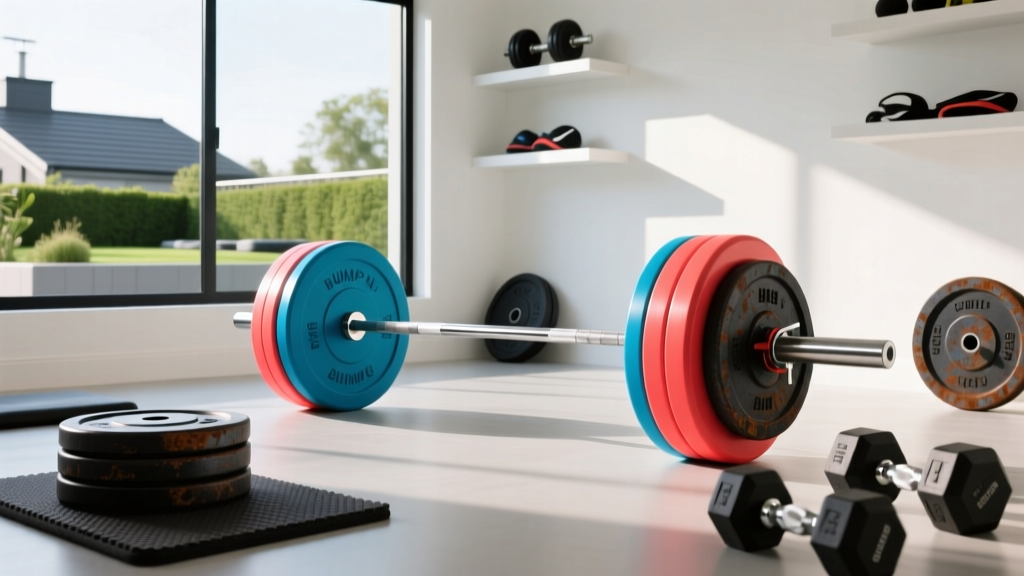
Dumbbell Push Jerks to Barbells: Troubleshooting Weight & Knurling
Transitioning from dumbbell push jerks to the barbell? Troubleshoot grip and timing faults by choosing the right Olympic barbell weight and knurling.

The Dumbbell to Barbell Transition: Why Your Push Jerk Stalls
Mastering dumbbell push jerks is a fantastic way to build unilateral overhead stability, correct muscle imbalances, and develop explosive triple extension without the immediate technical barrier of a barbell. However, when lifters transition from heavy dumbbells to the standard 20kg Olympic barbell, they frequently encounter a wall. The timing feels off, the grip slips during the catch, and the bar path feels erratic.
This is rarely a pure strength deficit. In 90% of cases, the fault lies in a mismatch between the lifter's technique and their equipment—specifically, the barbell's weight distribution, shaft diameter, and knurling pattern. According to biomechanical analyses of Olympic lifting mechanics outlined by ExRx, the dip-and-drive phase of the push jerk requires precise management of the bar's center of mass and elastic energy. If your barbell is designed for powerlifting rather than weightlifting, your dumbbell-honed timing will completely fall apart.
This troubleshooting guide will help you diagnose your technique faults and select the correct Olympic barbell weight and knurling to bridge the gap between dumbbells and the big bar.
⚠️ Critical Warning: The Power Bar Trap
Many commercial gyms only stock 29mm or 28.5mm powerlifting bars (like the Rogue Ohio Power Bar). These bars feature aggressive 'mountain' knurling and high tensile strength (205k+ PSI) designed to eliminate whip. Using a stiff power bar for push jerks will jar your wrists on the catch and ruin the elastic rebound timing you need to replicate the fluid feel of dumbbell push jerks.
Troubleshooting Grip Slippage: Decoding Barbell Knurling
When you perform dumbbell push jerks, the independent handles allow your wrists to rotate naturally into a comfortable, semi-supinated position during the drive and catch. A barbell locks your wrists into a fixed, extended position, placing immense sheer force on the calluses and grip during the violent deceleration of the catch phase.
If you are experiencing grip slippage or torn hands, your barbell's knurling is likely the culprit. Knurling is categorized by its peak geometry:
- Hill: Smooth, rounded peaks. Gentle on the hands but can feel slippery under heavy loads or high sweat conditions.
- Volcano: The gold standard for Olympic weightlifting. The peaks are cratered, providing a massive surface area for grip without acting like a cheese grater on your skin during the clean or jerk catch.
- Mountain: Sharp, aggressive peaks. Excellent for deadlifts and low-rep powerlifting, but will tear your hands open during high-rep Olympic complexes or heavy jerk catches.
Knurling Matrix for the Push Jerk
| Knurl Type | Best For | Push Jerk Performance | Example 2026 Model |
|---|---|---|---|
| Volcano | Olympic Weightlifting | Optimal grip without skin tearing on the catch | Rogue 28mm Olympic WL Bar |
| Hill | Beginners / High Volume | Very comfortable, but may require chalk for 1RM attempts | Eleiko Olympic WL Training Bar |
| Mountain | Powerlifting | Poor: Causes micro-tears during the jerk dip and catch | Standard Commercial Power Bar |
For a deep dive into how knurl depth affects grip security, refer to the manufacturing specifications on the Rogue 28mm Olympic Weightlifting Bar product page, which details their proprietary volcanic knurl machining process.
Troubleshooting Timing and Whip: Shaft Diameter and Tensile Strength
The most jarring difference between dumbbell push jerks and barbell push jerks is the concept of 'whip'—the elastic deformation of the barbell during the dip and drive. Dumbbells are rigid; the weight moves exactly when your legs drive. A proper Olympic barbell bends, storing kinetic energy that helps propel the bar upward if you time your drive correctly.
The 28mm Standard
Men's Olympic weightlifting bars feature a 28mm shaft diameter, while power bars are 29mm, and multi-purpose bars sit at 28.5mm. That single millimeter drastically alters the bar's tensile strength and whip profile. A 28mm shaft with a tensile strength of around 190,000 PSI provides the exact amount of flex needed to assist the lifter out of the dip.
'If your push jerk feels like you are pressing through mud, you are likely fighting the bar's stiffness rather than riding its whip. The bar should rebound off your shoulders as your hips reach full extension.'
Weight Considerations: 20kg vs. 15kg
Female lifters and juniors transitioning from dumbbells should utilize the 15kg Women's Olympic bar. It features a 25mm shaft (easier to hook grip) and a shorter sleeve length, which changes the rotational inertia of the plates. Attempting to force a 15kg technique onto a 20kg bar will result in forward bar drift during the catch phase.
2026 Diagnostic Flowchart: Fixing Your Push Jerk Faults
Use this step-by-step diagnostic guide to identify whether your missed lifts are a technique error or an equipment mismatch.
- Symptom: Bar drifts forward during the drive, causing you to chase the lift.
Equipment Check: Are you using a bar with center knurling? IWF-certified bars have a smooth center ring, while IPF power bars have aggressive center knurl that grips the shirt, altering the bar's resting position on the traps.
Fix: Switch to a dedicated Olympic bar with a smooth center or mild center knurl. - Symptom: Wrists and elbows ache severely after the catch.
Equipment Check: Is the shaft diameter 29mm?
Fix: The thick shaft is preventing proper wrist extension and rack position. Downsize to a 28mm Olympic bar to allow the wrists to stack naturally over the elbows. - Symptom: You consistently press the bar out early (strict press) instead of catching it in a partial squat.
Equipment Check: Is the bar too stiff (205k+ PSI)?
Fix: A stiff bar doesn't provide the visual and tactile cue of 'whip' off the shoulders. Upgrade to a bar with ~190k PSI to train your nervous system to wait for the bar's rebound before dropping under it.
Top Barbell Recommendations for the Push Jerk (2026 Market)
If your troubleshooting points to an equipment failure, here are the top-tier Olympic barbells currently dominating the market, specifically chosen for their jerk-friendly weight and knurling profiles.
1. The Gold Standard: Rogue 28mm Olympic Weightlifting Bar
Priced around $325 in 2026, this bar features a 190,000 PSI steel shaft and Rogue's refined volcano knurl. It offers the perfect balance of whip for the dip-and-drive and grip security for the catch. It is the definitive bridge for lifters moving past dumbbell push jerks.
2. The Premium Choice: Eleiko Olympic WL Training Bar
At over $1,100, Eleiko remains the pinnacle of weightlifting engineering. Their proprietary hardened chrome and unique 'Hill' knurl pattern provide unparalleled comfort for high-volume jerk blocks and complexes, making it ideal for lifters with sensitive hands or those rehabbing grip tears.
3. The Budget Contender: Rep Fitness PR-28
Coming in at roughly $299, the PR-28 offers a true 28mm shaft and decent whip. While the knurling is slightly less refined than Rogue's volcano pattern, it is a massive upgrade over generic commercial gym power bars and perfectly adequate for intermediate lifters mastering the barbell push jerk.
Final Thoughts on the Transition
Dumbbell push jerks are an invaluable tool for hypertrophy and addressing asymmetries, but they cannot perfectly simulate the rotational inertia, whip, and fixed grip of a barbell. By understanding the critical roles of shaft diameter, tensile strength, and knurl geometry, you can stop blaming your programming and start optimizing your equipment. Ensure your barbell is built for the dynamic demands of Olympic weightlifting, and your overhead numbers will finally reflect your true explosive power.
More gear to consider
All reviews
What Does Dumbbell Lateral Raise Work? & Collar Types

2026 Olympic Barbell Buying Guide: Weight, Knurling, and the Supinated Dumbbell Row

Push Ups With Dumbbells: Loadable Hex Value Breakdown
How Heavy Is The Thomas Inch Dumbbell? Grip History & Barbell Collar Troubleshooting

Bumper vs Iron Plates: Space & Dumbbell Exercises for Belly Fat