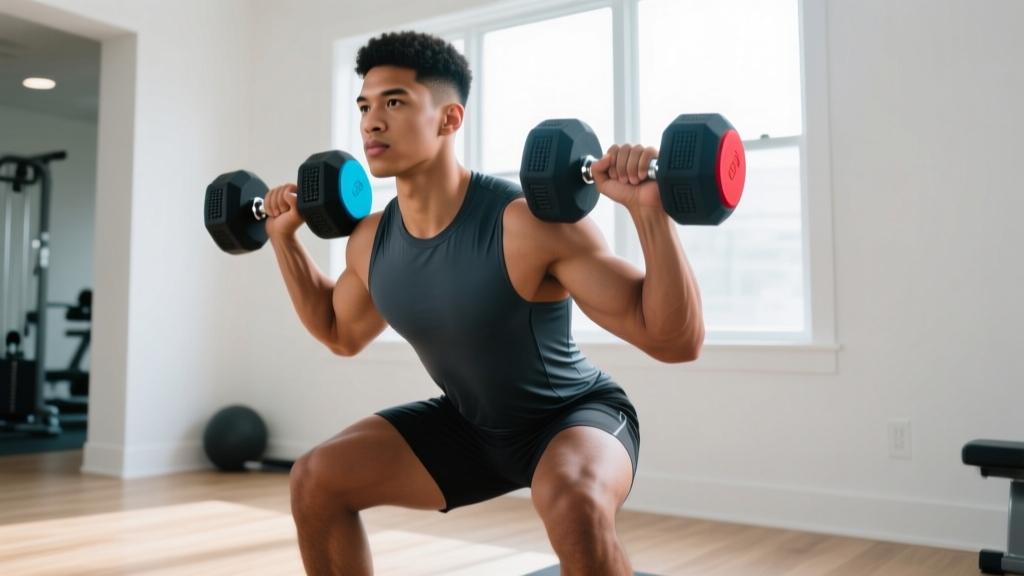
Beginner Guide: Dumbbell on Shoulder Squats With Neoprene
Learn how to perform dumbbell on shoulder squats safely at home. Our beginner guide covers step-by-step form and choosing the best neoprene weights.

The Ultimate Home Leg Builder: Dumbbell on Shoulder Squats
If you are building a home gym and want to develop serious leg strength without investing in a massive power rack and barbell setup, the dumbbell on shoulder squat (often called the front-rack or shoulder-racked squat) is your best option. Unlike the goblet squat, which limits your loading potential due to arm fatigue, resting the dumbbells directly on your shoulders allows you to lift heavier weight, target the quadriceps more intensely, and maintain a more upright torso.
However, executing this movement comfortably at home requires the right equipment. This is where neoprene coated dumbbells become an absolute game-changer. In this comprehensive 2026 guide, we will break down exactly why neoprene is the superior coating for home use, how to select the right weight, and provide a step-by-step masterclass on perfecting your form.
Equipment Spotlight: For beginners, we recommend the CAP Barbell Neoprene Hex Dumbbell (SDN Series) or Yes4All Neoprene Coated Hex Dumbbells. As of early 2026, expect to pay between $1.80 and $2.50 per pound for high-quality neoprene options.Why Neoprene Coated Dumbbells are Non-Negotiable for Home Use
When performing dumbbell on shoulder squats, the equipment literally rests against your body and your home's flooring. Neoprene (polychloroprene) is a synthetic rubber that offers distinct advantages over cast iron, urethane, and cheap recycled rubber.
1. Collarbone and Shoulder Comfort
Resting a bare cast-iron hex dumbbell on your anterior deltoid and clavicle can cause severe bruising and nerve compression. Neoprene provides a dense, slightly forgiving cushion that absorbs the pressure of the knurled handle and the hard edges of the hex heads, making the 'shelf' position significantly more comfortable.
2. Floor and Equipment Protection
Home gyms are often located in spare bedrooms, garages, or basements with laminate, hardwood, or epoxy flooring. Neoprene is non-marking and shock-absorbent. If you need to drop the dumbbells safely after a grueling set, a 20lb neoprene dumbbell will not crack your floorboards or chip the dumbbell heads like bare iron would.
3. Odor and Temperature Control
Cheap rubber dumbbells off-gas a toxic, tire-like smell that can linger in a poorly ventilated home gym for months. Neoprene is virtually odorless. Furthermore, neoprene does not get freezing cold in an uninsulated garage during winter, unlike bare metal or urethane.
Step-by-Step: Executing the Dumbbell on Shoulder Squat
Proper biomechanics are critical to prevent lower back strain and wrist pain. According to exercise mechanics outlined by ExRx.net, the front-loaded squat shifts the center of gravity forward, demanding immense core stability and upright posture.
Step 1: The Clean to the Rack Position
Do not try to curl the dumbbells to your shoulders. Instead, use a 'hang clean' motion:
- Stand with feet shoulder-width apart, holding a dumbbell in each hand.
- Hinge at the hips slightly, then explosively extend your hips and knees.
- Use this momentum to pull the dumbbells upward, quickly rotating your elbows under the weights.
- Catch the dumbbells on the front of your shoulders.
Step 2: Establishing the 'Shelf'
The dumbbell handle should rest diagonally across the palm and base of your fingers, not just the fingertips. Your elbows must point straight forward and slightly up. This creates a muscular 'shelf' with your anterior deltoids. Keep your wrists as neutral as possible to avoid extension strain.
Step 3: The Descent (Eccentric Phase)
Take a deep breath into your belly (Valsalva maneuver) to brace your core. Initiate the movement by breaking at the knees and hips simultaneously. Lower yourself under control for a 3-second eccentric count. Aim to crease your hips just below parallel to your knees, keeping your torso completely vertical.
Step 4: The Ascent (Concentric Phase)
Drive through the mid-foot. Imagine pushing the floor away from you. Keep your elbows high; if your elbows drop, the dumbbells will pull you forward, turning the squat into a 'good morning' and placing dangerous shear force on your lumbar spine.
Form Warning: If you feel your lower back rounding or your heels lifting off the ground, you are either descending too quickly or lacking ankle dorsiflexion mobility. Elevate your heels on small 5lb plates or wear weightlifting shoes to instantly correct the heel lift.Material Comparison: Neoprene vs. Other Dumbbell Coatings
Not all dumbbells are created equal. Here is how neoprene stacks up against other common home gym options in 2026:
| Coating Material | Shoulder Comfort | Floor Safety | Price per Pound (Avg) | Best For |
|---|---|---|---|---|
| Neoprene | Excellent (Soft cushion) | Excellent (Non-marking) | $1.80 - $2.50 | Home shoulder squats, light drops |
| Urethane | Good (Firm but smooth) | Excellent (Highly durable) | $2.50 - $4.00+ | Commercial gyms, heavy drops |
| Recycled Rubber | Fair (Hard, can smell) | Good (Bouncy) | $1.20 - $1.80 | Budget garage gyms |
| Bare Cast Iron | Poor (Bruising) | Poor (Chips floors) | $1.00 - $1.50 | Traditional lifting, farmers walks |
Programming: Weight Selection and Progression
Beginners often overestimate the weight they can handle on shoulder squats because the core and upper back become the limiting factors, not the legs. The Mayo Clinic emphasizes that mastering squat mechanics with lighter resistance is paramount before adding load.
Recommended Starting Weights
- Beginner Women: Start with 10 lb to 15 lb dumbbells per hand (20-30 lbs total).
- Beginner Men: Start with 15 lb to 25 lb dumbbells per hand (30-50 lbs total).
4-Week Progression Framework
- Week 1 (Neuromuscular Adaptation): 3 sets of 8 reps. Focus purely on the 3-second descent and keeping elbows high. Rest 90 seconds between sets.
- Week 2 (Volume Accumulation): 3 sets of 10 reps. Same weight. Focus on breathing and core bracing.
- Week 3 (Intensity Bump): Increase weight by 5 lbs per hand. 4 sets of 6 reps. Rest 2 minutes between sets.
- Week 4 (Deload & Form Check): Drop weight back to Week 1 levels. 2 sets of 12 reps. Focus on fluid, unbroken movements.
Troubleshooting Common Form Breakdowns
Even with the best neoprene dumbbells, beginners encounter specific mechanical hurdles. Here is how to solve them:
Issue 1: Wrist Pain in the Rack Position
The Cause: You are letting the heavy hex head of the dumbbell pull your wrist into extreme extension.
The Fix: Squeeze the handle tightly and imagine 'punching' the ceiling with your knuckles. The handle should rest closer to the heel of your palm, directly over the forearm bones, rather than up by the fingers.
Issue 2: The 'Good Morning' Forward Lean
The Cause: Weak thoracic extensors or dropping the elbows during the ascent.
The Fix: Before you descend, pull your shoulder blades down and back (scapular depression). Keep your gaze fixed on a point on the wall at eye level. If your chest drops, terminate the set.
Issue 3: Grip Fatigue Before Leg Fatigue
The Cause: Neoprene coatings cover up the aggressive knurling found on bare metal dumbbells. While this saves your collarbones, it makes the handle slightly slick if your hands are sweaty.
The Fix: Use a basic liquid chalk or gym chalk ball. Alternatively, ensure you are purchasing neoprene dumbbells with a contoured or slightly textured ergonomic handle, like the Bowflex SelectTech 552 (which features a neoprene/rubber hybrid grip) or specialized ergonomic fixed dumbbells.
'The shoulder-racked squat is one of the most functional movements a home-gym athlete can perform. It builds the legs, bulletproofs the core, and teaches the body to move heavy loads while maintaining a neutral spine.' — Home Gym Biomechanics Review, 2025
Frequently Asked Questions
Can I do dumbbell on shoulder squats with adjustable dumbbells?
Yes, but with caution. Adjustable dumbbells (like PowerBlocks or Nuobells) are often longer and bulkier than fixed hex dumbbells. This can make the rack position feel cumbersome and increase the risk of the dumbbells colliding with your chin or each other at the top of the movement. Fixed neoprene hex dumbbells are much more compact and ergonomic for this specific lift.
Will neoprene dumbbells degrade if I leave them in a hot garage?
High-quality neoprene is highly resistant to UV rays, ozone, and temperature extremes. Unlike cheap PVC-filled vinyl dumbbells that can melt or split in high heat, true polychloroprene neoprene will easily survive in a non-climate-controlled garage for a decade or more without degrading.
How do I clean my neoprene dumbbells?
Neoprene is non-porous, making it incredibly hygienic. Simply wipe them down with a microfiber cloth and a mild solution of water and dish soap, or a standard gym equipment wipe. Avoid harsh bleach-based cleaners, which can dry out and discolor the neoprene coating over time.
Final Thoughts
Mastering dumbbell on shoulder squats is a milestone for any home-gym beginner. By pairing meticulous, step-by-step form cues with the joint-friendly, floor-safe properties of neoprene coated dumbbells, you set yourself up for years of safe, effective lower-body training. Invest in a quality pair of 15lb and 25lb neoprene hex dumbbells, clear some floor space, and start building your foundation today.
For more expert equipment reviews and biomechanical guides, explore our comprehensive dumbbell buying guides to ensure your home gym is stocked with the best gear available in 2026.
More gear to consider
All reviews
Past the Heaviest Dumbbell Curl: Bumper vs Iron Plate Value Guide
Power Rack vs Squat Rack vs Squat Stand: What's a Dumbbell Row Setup?
Power Rack vs Squat Rack vs Stand: Alternate Dumbbell Snatch Guide

Olympic vs Standard Plates & the Decline Dumbbell Triceps Extension
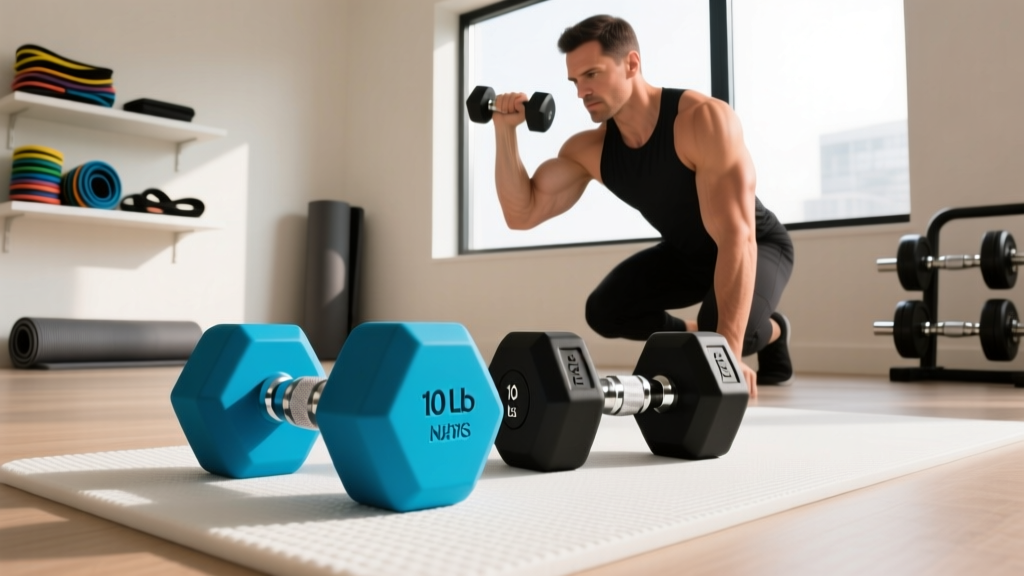
Neoprene Dumbbell Buying Guide & Exercises with 10 lb Dumbbells
