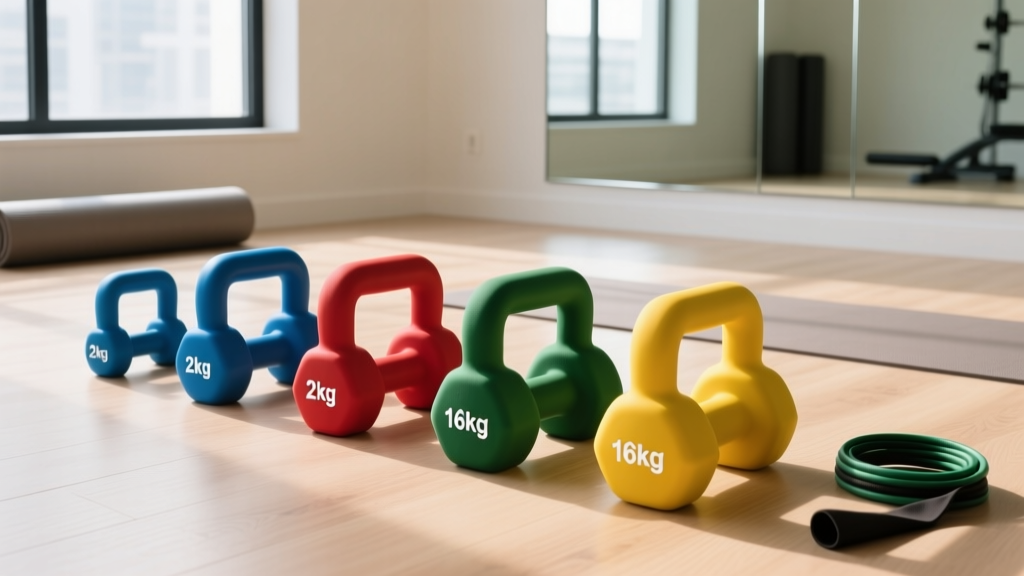
What Dumbbell Weight Should I Start With? Neoprene Sets Compared
Discover what dumbbell weight to start with using our exercise matrix. We compare top neoprene dumbbells for home use to help you build the perfect rack.

The Starting Weight Matrix: Where Do You Belong?
Figuring out exactly what dumbbell weight you should start with is the most common hurdle for home gym beginners. The answer isn't a single number; it depends entirely on the biomechanics of the exercise and your current baseline strength. According to strength training guidelines from the Mayo Clinic, beginners should select a weight that fatigues the target muscle after 12 to 15 repetitions with proper form. If you can easily exceed 15 reps, the weight is too light; if you break form before 8 reps, it is too heavy.
Furthermore, the Cleveland Clinic emphasizes starting lighter to master neuromuscular patterns before progressing to heavier loads. To eliminate the guesswork, we have synthesized industry standards into a practical starting matrix for fixed-weight neoprene dumbbells.
| Exercise Category | Specific Movement | Beginner Male (Start) | Beginner Female (Start) | Primary Muscle Group |
|---|---|---|---|---|
| Isolation (Small Muscle) | Lateral Raises | 5 - 8 lbs | 3 - 5 lbs | Lateral Deltoids |
| Isolation (Small Muscle) | Bicep Curls | 10 - 15 lbs | 5 - 8 lbs | Biceps Brachii |
| Isolation (Large Muscle) | Tricep Overhead Extension | 15 - 20 lbs | 8 - 12 lbs | Triceps |
| Compound (Upper Body) | Dumbbell Floor Press | 20 - 30 lbs | 10 - 15 lbs | Pectorals / Triceps |
| Compound (Lower Body) | Goblet Squats | 25 - 35 lbs | 15 - 25 lbs | Quads / Glutes / Core |
| Compound (Posterior) | Romanian Deadlifts (RDLs) | 30 - 40 lbs | 20 - 30 lbs | Hamstrings / Glutes |
Head-to-Head: Top 3 Neoprene Dumbbells for Home Gyms
Neoprene (polychloroprene) is a synthetic rubber that offers a tactile, non-slip grip and protects hardwood floors from minor scuffs. However, not all neoprene coatings are created equal. In 2026, the market has stabilized, and pricing generally ranges from $1.50 to $2.20 per pound. Here is how the top three contenders stack up in a head-to-head comparison.
1. Yes4All Neoprene Coated Dumbbells (Best Overall Value)
Yes4All dominates the entry-level home gym market. Their neoprene dumbbells feature a solid cast-iron core encased in a 2mm layer of relatively soft neoprene (Shore A hardness rating of roughly 60). This softer coating provides excellent grip friction, even when your hands are sweaty.
- Handle Diameter: 35mm (Straight, non-contoured)
- Price per Pound (2026): ~$1.65/lb
- Pros: Highly affordable, softer grip, true-to-weight calibration (within 2% variance).
- Cons: The straight handle lacks ergonomic contouring; the soft neoprene can dent if dropped on concrete from waist height.
2. Amazon Basics Neoprene Dumbbells (Best for High-Rep Cardio)
Amazon Basics utilizes a slightly harder neoprene compound (Shore A 70) and a hexagonal head design. The harder rubber makes these more resistant to tearing and abrasion, which is ideal for high-rep circuit training or P90X-style workouts where the dumbbells are frequently set down and picked up.
- Handle Diameter: 38mm (Slightly contoured)
- Price per Pound (2026): ~$1.85/lb
- Pros: Hex shape prevents rolling away, highly durable coating, excellent knurling beneath the rubber.
- Cons: The harder neoprene feels slightly more 'plasticky' and can be slippery if you don't use chalk during heavy sets.
3. CAP Barbell Neoprene Series (Best Ergonomics)
CAP Barbell targets the serious home lifter who wants the floor protection of rubber but the feel of a commercial gym dumbbell. Their handles feature deep, aggressive knurling that is only partially smoothed by the neoprene coating, resulting in superior grip security for heavy goblet squats and lunges.
- Handle Diameter: 36mm (Ergonomically tapered)
- Price per Pound (2026): ~$2.10/lb
- Pros: Premium handle feel, highly accurate weight calibration, robust 2.5mm coating thickness.
- Cons: Highest price point of the three; the aggressive knurling can cause calluses during high-rep lateral raises.
Material Science: The Truth About Neoprene Coatings
Many buyers assume all rubber-coated dumbbells are identical, but the chemical composition of the coating dictates its lifespan and user experience. Here are three critical material realities you must know before purchasing:
The 'Blooming' Effect
Cheaper neoprene dumbbells often develop a chalky white residue after 12 to 18 months, especially in humid environments like garage gyms. This is known as 'blooming'—a process where calcium carbonate and stearic acid (used as mold release agents during manufacturing) migrate to the surface. Solution: Wipe them down with a microfiber cloth and a 50/50 mix of white vinegar and water. Never use bleach, which degrades the polychloroprene chains.
Off-Gassing and VOCs
Brand new neoprene dumbbells emit volatile organic compounds (VOCs) that smell like a tire shop. While the Cleveland Clinic notes that general household air quality is paramount for respiratory health, the off-gassing from fitness equipment is typically harmless but pungent. Unbox your dumbbells in a well-ventilated area or garage for 72 hours before bringing them into a bedroom or basement gym.
Shore A Hardness and Grip Fatigue
The Shore A scale measures rubber hardness. A rating of 50-60 (like Yes4All) feels almost like a pencil eraser, conforming to your hand and reducing grip fatigue. A rating of 70-80 (like some commercial hex dumbbells) feels like a car tire, offering maximum durability but requiring more forearm activation to maintain grip.
Expert Insight: If you suffer from arthritis or joint pain in your hands, always opt for a lower Shore A rating (softer neoprene). The slight compression of the rubber absorbs micro-vibrations and reduces sheer stress on the metacarpophalangeal joints during heavy presses.
The 'Neoprene Trap': When to Switch to Adjustable
Warning: The Fixed Weight CeilingNeoprene dumbbells are exceptional for isolation movements and light-to-moderate compound lifts. However, they fall into a financial trap once you progress past 25 pounds per hand. Buying fixed neoprene dumbbells in 30, 35, 40, and 50 lb increments will cost upwards of $350 to $500 and consume massive amounts of floor space.
The 2026 Buying Strategy:
Use neoprene fixed dumbbells for your 'light' and 'medium' weight tiers (e.g., 5 lbs, 10 lbs, 15 lbs, and 20 lbs). Once your goblet squats and floor presses require more than 25 lbs, pivot your budget toward an adjustable dumbbell system (like the Nuobell or Bowflex SelectTech). Adjustable sets cost roughly $2.50 to $3.50 per pound but replace up to 15 pairs of fixed weights, making them the only logical choice for heavy progressive overload in a home gym.
Frequently Asked Questions
Can I use neoprene dumbbells for outdoor workouts?
Yes, but with caveats. Neoprene is water-resistant and will not rust if left in the rain. However, prolonged exposure to direct UV sunlight will cause the polychloroprene to break down, leading to cracking, fading, and a chalky texture within a single summer. Store them indoors or in a shaded, covered bin when not in use.
Will neoprene dumbbells damage my hardwood floors?
Neoprene provides a slight cushion and will protect floors from minor scuffs during controlled sets. However, neoprene is not as shock-absorbent as thick virgin rubber bumper plates. Dropping a 30 lb neoprene dumbbell from chest height onto hardwood will likely dent the wood and crack the dumbbell's internal cast-iron core. Always use a 3/4-inch horse stall mat or dedicated gym flooring for drop-heavy exercises.
How do I know when it is time to increase my dumbbell weight?
Apply the 'Double Progression' method. If your goal is 3 sets of 12 reps with 15 lb dumbbells, stick with 15 lbs until you can complete all 3 sets of 12 reps with perfect form and a 1-second pause at the top of the movement. Once you achieve this, increase the weight by 5 lbs and drop your rep target back down to 8. This ensures you are applying progressive overload safely, aligning with the Mayo Clinic's recommendations for continuous muscular adaptation.
More gear to consider
All reviews
Upgrading From Wood Dumbbells: Olympic Barbell Knurling Mistakes

Home Gym Setup: Neoprene Dumbbells vs Dumbbell Shoulder Press Machine

Power Rack vs Squat Rack vs Stand: Dumbbell Chest Routine Setup

Dumbbell Goblet Squat Care: Urethane vs Rubber Hex Longevity

How Many Dumbbell Curls Should I Do? & Olympic Barbell Buying Guide
