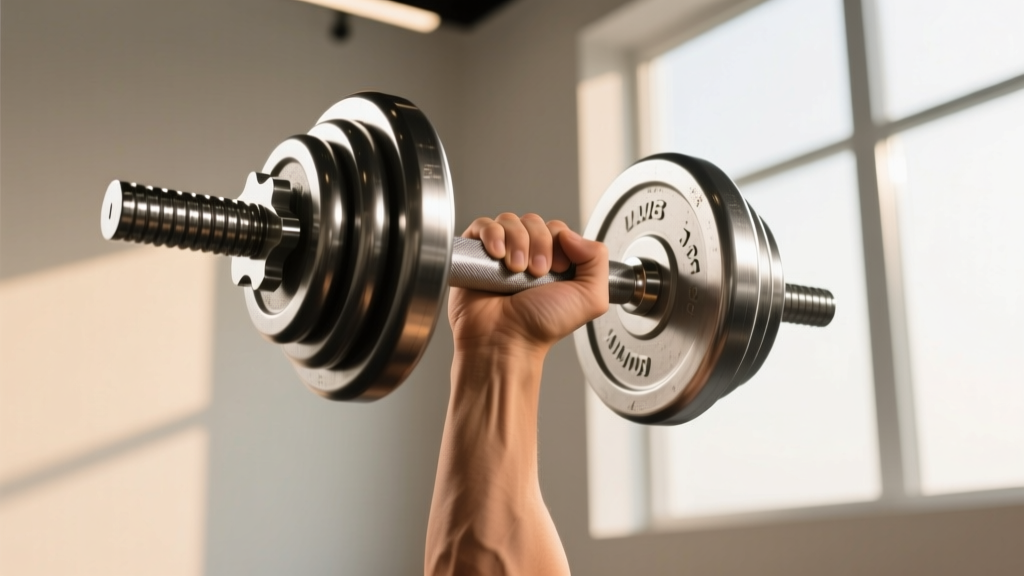
Beyond Dumbbell Exercises at Home: Bumper vs Iron Plate 2026 Trends
As lifters outgrow dumbbell exercises at home, 2026 market trends reveal a shift to barbells. We analyze bumper plate vs iron plate costs and specs.

For millions of lifters, the fitness journey begins with adjustable dumbbells. Mastering dumbbell exercises at home builds a crucial foundation in hypertrophy, joint stability, and unilateral strength. However, as we progress deeper into 2026, a distinct market trend has emerged across the home gym sector: the progressive overload ceiling of the home dumbbell rack. Once lifters surpass the 50-pound to 90-pound per-hand threshold, the biomechanical demand inevitably shifts toward heavy barbell compound movements. This transition sparks a critical purchasing decision for the upgrading home gym owner: navigating the complex bumper plate vs iron plate market.
As a senior equipment analyst for FitGearPulse, I have tracked the supply chain shifts, material science advancements, and pricing fluctuations defining the 2026 weight plate landscape. The days of simply buying whatever cast iron is cheapest are over. Today's home lifters are highly educated on durometer ratings, barbell whip dynamics, and subfloor vibration transfer. Below is our comprehensive market analysis and buyer's framework for transitioning from dumbbells to a premium barbell plate setup.
2026 Market Shift Insight: Over the past 18 months, the price-per-pound gap between premium virgin rubber bumpers and urethane-coated iron plates has narrowed to an all-time low of roughly $1.40 per pound. Driven by stabilized raw rubber imports and increased domestic urethane casting, the market is shifting away from 'crumb' rubber toward hybrid home gyms that prioritize low-noise, high-density iron and virgin rubber alternatives.Material Science: Virgin Rubber vs. Cast Iron & Urethane
To make an informed purchasing decision, one must understand the material engineering that dictates a plate's performance, lifespan, and impact on your home gym flooring. The industry categorizes plates not just by weight, but by their Shore A Durometer hardness scale.
The Bumper Plate Spectrum
Bumper plates are engineered to be dropped from overhead, adhering to the International Weightlifting Federation (IWF) standard of a 450mm diameter across all weights. However, the rubber composition varies wildly:
- Crumb Rubber (Shore A ~75): Made from recycled tires bound with urethane. These plates are highly bouncy, produce a distinct 'earthy' odor that can linger in enclosed home gyms, and feature a wider profile. They are the budget entry point but are losing market share in 2026 due to durability concerns.
- Virgin Rubber (Shore A 85-90): The gold standard for Olympic weightlifting. Virgin rubber offers a 'dead bounce' (absorbing kinetic energy rather than returning it), features a much thinner profile, and eliminates the off-gassing odors associated with crumb rubber. Models like the Rogue HG 2.0 and Titan Fitness Elite Bumpers dominate this space.
The Iron Plate Evolution
Cast iron remains the undisputed king of powerlifting and traditional bodybuilding due to its ultra-thin profile and zero-bounce characteristics. However, raw cast iron is prone to oxidation (rust) and generates severe acoustic shock when loaded onto a barbell. The 2026 market has heavily favored Urethane-Coated Iron. Urethane is a premium polymer that resists UV degradation, prevents rust, and reduces acoustic clatter by approximately 15% compared to raw iron, making it highly desirable for residential environments where noise complaints are a genuine threat.
2026 Pricing & Specification Matrix
The following data table reflects Q1 2026 average market pricing and specifications across top-tier home gym equipment manufacturers. Prices are calculated per pound based on standard 45lb/20kg plate pairs.
| Plate Category | Material Composition | 2026 Avg Cost (per lb) | Shore A Hardness | Vibration Dampening |
|---|---|---|---|---|
| Crumb Rubber Bumper | Recycled Rubber / Urethane Binder | $2.10 - $2.60 | 75A (High Bounce) | High |
| Virgin Rubber Bumper | 100% Virgin Rubber / Steel Hub | $3.20 - $4.80 | 85A - 90A (Dead Bounce) | Very High |
| Standard Cast Iron | Grey Cast Iron / Machined | $1.60 - $2.20 | N/A (Rigid) | Low |
| Urethane-Coated Iron | Cast Iron Core / Urethane Shell | $3.80 - $5.50 | N/A (Rigid Core) | Medium |
| Calibrated Steel (IPF) | High-Density Steel / Painted | $9.00 - $12.00 | N/A (Rigid) | None |
Biomechanics of Sleeve Loading: Moment of Inertia
When transitioning from dumbbell exercises at home to heavy barbell work, lifters rarely consider how plate thickness alters the physics of the lift. This concept, known as the moment of inertia, is critical for advanced lifters.
Because iron plates are significantly thinner (e.g., a 45lb Rogue Deep Dish is roughly 1.3 inches thick), they keep the mass closer to the barbell's collar. Bumper plates, particularly crumb rubber, can exceed 3.5 inches in thickness for a 45lb plate. This pushes the load further outward along the sleeve. In practical terms, loading a barbell with thick bumpers increases the rotational inertia and enhances the 'whip' effect of the barbell during the second pull of a clean and jerk. Conversely, for heavy deadlifts, powerlifters prefer the tight, dense mass distribution of thin iron plates to minimize bar sway off the floor.
The 10-Pound Plate Failure Mode
A critical edge case in the bumper plate market is the 10-pound (or 5kg) plate. Because IWF standards mandate all bumper plates share a 450mm diameter, a 10lb plate must achieve this massive footprint with minimal mass. In low-durometer rubber, this results in a plate that is highly susceptible to 'taco-ing' (folding inward) or tearing around the steel hub if dropped independently. The 2026 market has seen a massive shift toward 'technique plates' (10lb and 15lb) made from solid cast aluminum or high-density urethane to solve this structural failure mode, though they carry a premium price tag of up to $8.00 per pound.
Facility, Flooring, and Safety Standards
Upgrading your home gym requires more than just buying plates; it requires respecting the structural limits of your home. The National Strength and Conditioning Association emphasizes that dropping weights, even with bumper plates, generates severe kinetic energy that can fracture concrete subfloors or compromise residential floor joists if not properly mitigated with specialized lifting platforms and horse stall mats.
Furthermore, the American Council on Exercise notes that home gym environments require specialized considerations for noise and vibration transfer. Dropping raw iron plates in a garage or basement gym will transmit acoustic shockwaves through the foundation of the house. If your home gym is located on an upper floor or shares a wall with neighbors, virgin rubber bumpers or urethane-coated iron plates are not just a luxury—they are a structural necessity to maintain household harmony and prevent drywall cracking.
Expert Note on Equipment Longevity: 'Never drop a barbell loaded only with 10lb or 15lb bumper plates. The surface area-to-weight ratio is too low, and the plates will absorb the entirety of the impact force, leading to hub blowouts and bent Olympic barbell sleeves. Always pair lightweight bumpers with a 45lb plate to distribute the kinetic load.'
The Upgrader's Decision Framework
How should you allocate your budget when moving beyond dumbbells? Use this 2026 decision matrix based on your primary training modality:
- The Olympic Weightlifter (Snatch, Clean & Jerk): You must purchase Virgin Rubber Bumper Plates (Shore A 85+). The dead bounce is non-negotiable for safety when missing lifts overhead, and the IWF diameter allows you to drop the bar from any height. Budget accordingly for a high-quality steel hub.
- The Powerlifter (Squat, Bench, Deadlift): Opt for Standard Cast Iron or Calibrated Steel. You do not drop weights from overhead. The thin profile allows you to load the barbell past 500 lbs without running out of sleeve space, and the rigid mass distribution provides a stable, predictable pull off the floor.
- The Hybrid Athlete (CrossFit, General Strength): Invest in Urethane-Coated Iron paired with a set of 10lb and 15lb aluminum technique bumpers. This gives you the acoustic dampening and rust resistance of urethane for heavy strength cycles, while the technique plates allow you to safely learn Olympic movements without destroying your barbell or your floor.
Conclusion
The transition from mastering dumbbell exercises at home to building a comprehensive barbell setup is a major milestone in any lifter's career. As the 2026 market continues to refine material sciences, the gap between premium bumpers and coated iron is closing, giving home gym owners more power to tailor their equipment to their exact biomechanical and environmental needs. By understanding durometer ratings, moment of inertia, and subfloor impact limits, you can invest in a plate package that will safely support your progressive overload for decades to come.
More gear to consider
All reviews
Barbell Shrugs vs Dumbbell Shrugs: EZ Curl Bar vs Straight Bar Value
Beyond the Women's Upper Body Dumbbell Workout: Barbell Collars Guide

Dumbbell Exercises for Women Over 50: Bumper vs Iron Plate Care

Olympic Barbell Buying Guide: Weight, Knurling & JM Press Dumbbells

Loadable Dumbbells vs Bowflex Dumbbells Set: Maintenance Guide