
Step-by-Step Dumbbell Core Exercise Guide for Neoprene Sets
Master your first dumbbell core exercise with our beginner guide. Learn how to use neoprene-coated weights safely at home for better stability and grip.

Building a resilient midsection goes far beyond endless bodyweight crunches. To develop true functional stability, you need to introduce external resistance. For beginners building a home gym, integrating a dumbbell core exercise into your weekly routine is one of the most effective ways to target the deep stabilizers of the spine, including the transverse abdominis and multifidus muscles. But not all dumbbells are created equal when it comes to core work.
Neoprene-coated dumbbells have become the gold standard for at-home core training. Their micro-textured surface provides a secure grip even when your hands get sweaty, and their floor-friendly coating protects your hardwood or laminate surfaces from accidental drops during dynamic movements. In this step-by-step guide, we will break down exactly how to select, use, and maintain neoprene dumbbells for foundational core training.
Why Neoprene Dumbbells Are Ideal for Beginner Core Training
Neoprene (scientifically known as polychloroprene) is a synthetic rubber that offers a unique tactile advantage. When performing a demanding dumbbell core exercise, your forearms and hands often fatigue before your abdominal muscles do. Bare cast iron or smooth urethane can become slippery, forcing you to over-grip and inadvertently raising your blood pressure. Neoprene’s slight porosity absorbs moisture and provides a friction-rich surface, allowing you to relax your grip and focus entirely on core bracing.
💡 Equipment Insight: As of 2026, high-quality neoprene dumbbell sets from reputable brands like Yes4All and CAP Barbell typically cost between $1.50 and $2.20 per pound. A beginner core-focused pair (5 lbs to 10 lbs) will generally cost between $15 and $40, making it one of the most cost-effective investments for your home gym.Selecting Your Starting Weight: A Data-Driven Approach
One of the most common mistakes beginners make is choosing a weight that is too heavy, leading to lumbar hyperextension and compromised form. According to Harvard Health Publishing, core training should prioritize endurance and stability over sheer maximal load. Use the matrix below to select the correct neoprene dumbbell weight based on the biomechanics of the movement.
| Weight Range | Best For | Biomechanical Reason |
|---|---|---|
| 3 lbs – 5 lbs | Extended Lever Movements (Dead Bugs, Overhead Marches) | Holding weight at arm's length increases torque on the shoulder and core, requiring lighter loads to maintain spinal neutrality. |
| 8 lbs – 10 lbs | Close-Grip Rotational Work (Russian Twists, Woodchoppers) | Weight is held closer to the body's center of mass, allowing for slightly heavier loads to challenge the obliques safely. |
| 12 lbs – 15 lbs | Anti-Extension / Posterior Chain (Weighted Bird-Dogs) | Heavier loads challenge the lower back and glute stabilizers during unilateral contralateral movements. |
The Step-by-Step Beginner Dumbbell Core Exercise Routine
Perform this circuit 2 to 3 times per week. Complete 3 rounds of the following exercises, resting 45 seconds between rounds. Focus on the mind-muscle connection and deliberate breathing.
1. The Neoprene Dead Bug (Anti-Extension)
The dead bug is a foundational movement that teaches you to dissociate hip movement from lumbar spine movement. Adding dumbbells shifts your center of mass, forcing your rectus abdominis to work significantly harder to keep your lower back pinned to the floor.
- Setup: Lie on your back holding a 3 lb or 5 lb neoprene dumbbell in each hand. Extend your arms straight toward the ceiling. Bring your legs to a tabletop position (knees bent at 90 degrees, shins parallel to the floor).
- Execution: Inhale deeply, bracing your core as if preparing for a punch. Slowly lower your right arm and left leg toward the floor simultaneously.
- The Cue: Stop lowering the moment your lower back begins to arch off the floor. Exhale forcefully as you pull your arm and leg back to the starting position.
- Reps: 10 to 12 total alternating repetitions.
2. The Lever-Reach Russian Twist (Rotational)
Rotational core exercises target the internal and external obliques. The neoprene coating is crucial here, as you will be gripping the head of a single dumbbell, and sweaty palms can easily cause a slip.
- Setup: Sit on the floor, knees bent, feet hovering slightly off the ground. Hold a single 8 lb or 10 lb neoprene dumbbell vertically by the top head with both hands.
- Execution: Lean back to a 45-degree angle until you feel your abs engage. Rotate your torso to tap the bottom of the dumbbell on the floor to your right side.
- The Cue: Follow the dumbbell with your eyes to ensure your thoracic spine (upper back) is rotating, not just your shoulders.
- Reps: 16 to 20 total taps (8 to 10 per side).
3. Weighted Bird-Dog (Posterior Chain Stability)
According to Mayo Clinic's guide to core strength, a balanced core routine must address the posterior muscles (erector spinae, glutes) to prevent postural imbalances. The weighted bird-dog is exceptional for this.
- Setup: Get on all fours (quadruped position). Hold a 5 lb to 8 lb neoprene dumbbell in your right hand, knuckles facing the floor.
- Execution: Simultaneously extend your right arm forward and your left leg straight back.
- The Cue: Imagine balancing a glass of water on your lower back. Do not let your hips rock side-to-side. The neoprene grip will help you stabilize the weight without excessive wrist strain.
- Reps: 8 to 10 slow, controlled reps per side.
Troubleshooting Common Form Failures
Even with the best equipment, poor biomechanics will derail your progress. Watch out for these specific failure modes:
- Lumbar Hyperextension (Arching): If your lower back leaves the floor during the Dead Bug, the lever arm is too long. Bend your elbows slightly or drop to a lighter 3 lb dumbbell until your transverse abdominis builds adequate endurance.
- Cervical Flexion (Neck Craning): Beginners often tuck their chin to their chest during Russian Twists, straining the cervical spine. Keep your neck in a neutral alignment with your thoracic spine.
- The Valsalva Error: Holding your breath during high-rep core endurance work spikes blood pressure. Adopt a rhythmic breathing pattern: exhale on the exertion (the concentric phase) and inhale on the return.
Maintaining Your Neoprene Coating for Longevity
Neoprene is highly durable, but it is not invincible. The material is susceptible to degradation from prolonged UV exposure and the acidic nature of human sweat (sebum). If left unwiped, the salts and oils from your hands will eventually cause the rubber to dry out, chalk, and flake off, leaving you with a rusty, unevenly weighted iron core.
Pro-Tip for Equipment Care: Never use bleach, alcohol-based sanitizers, or harsh degreasers on neoprene dumbbells. These chemicals break down the polychloroprene bonds. Instead, wipe your dumbbells down after every session with a microfiber cloth lightly dampened with water and a drop of mild dish soap. Store them on a rack away from direct sunlight to ensure they last a decade or more.
Final Thoughts on Your Core Journey
Mastering a foundational dumbbell core exercise is about patience, consistency, and choosing the right tools for the job. Neoprene-coated dumbbells bridge the gap between accessibility and performance, offering the tactile feedback and safety required for beginners to push their limits at home. Start light, prioritize spinal neutrality, and let the mechanics of the movement build a functional, injury-resistant midsection.
More gear to consider
All reviews
Olympic vs Standard Plates: Setup for Squats & Dumbbell Goblet Squats

Best Adjustable Dumbbell Set Review & Comparison 2026
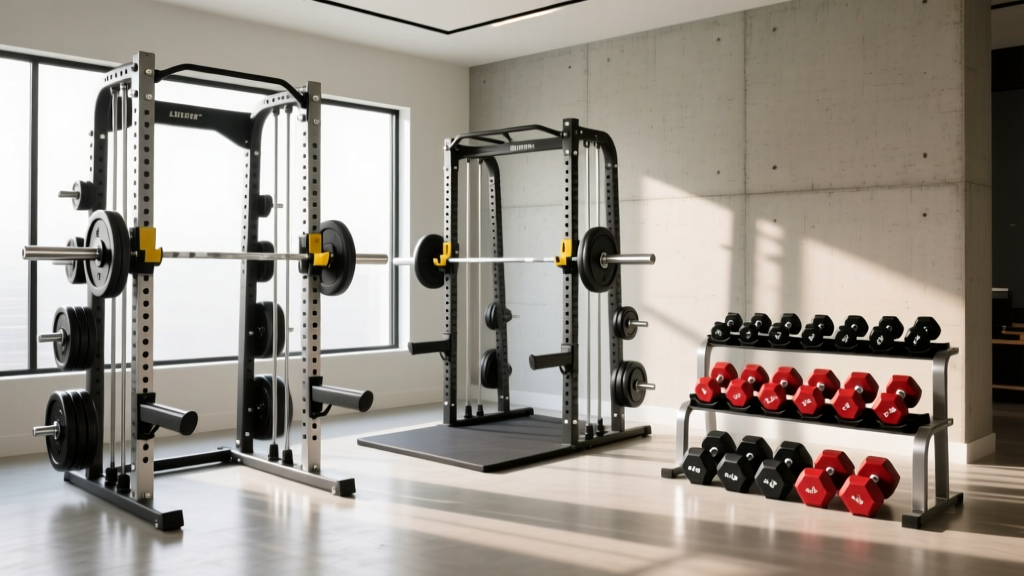
5 Day Dumbbell Split Upgrade: Power Rack vs Squat Rack vs Stand

What Is a Good Starting Dumbbell Weight for Neoprene Home Sets?

Loadable Dumbbell Setups for Every Biceps Exercise Using Dumbbells
