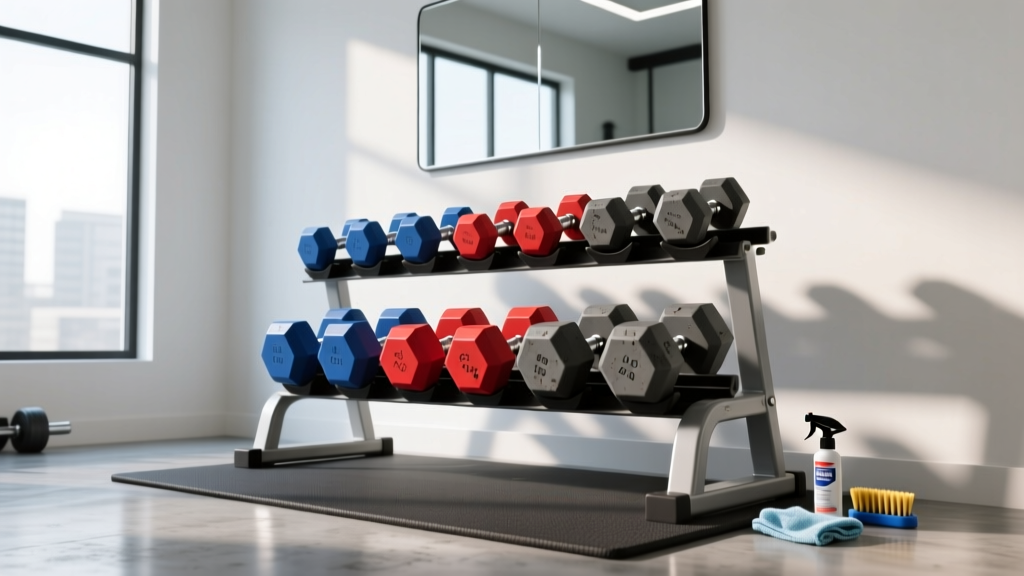
Dumbbell Challenge Survival: Rack Storage and Maintenance Care
Protect your gear during a daily dumbbell challenge. Learn expert rack storage solutions, maintenance protocols, and longevity tips for heavy use.

The Hidden Toll of a Daily Dumbbell Challenge on Your Gear
Committing to a high-volume fitness program like a 30-day or 90-day dumbbell challenge is an excellent way to build muscle, improve conditioning, and establish discipline. However, while most lifters focus on their recovery, nutrition, and programming, they completely overlook the physical toll these daily sessions take on their equipment. When you are performing daily drop sets, rapid loading and unloading, and sweating profusely over your gear, your dumbbell rack and storage solutions absorb a massive amount of abuse.
Without a proactive maintenance care routine, the structural integrity of your storage racks can degrade rapidly. Welds can develop micro-fractures from repeated vibration, shelf padding can tear, and corrosive sweat can eat through powder coatings. In this guide, we break down the exact storage solutions, maintenance protocols, and longevity tips you need to ensure your dumbbell rack survives your toughest dumbbell challenge cycles in 2026 and beyond.
⚠️ Equipment Warning: Human sweat contains high concentrations of sodium chloride and lactic acid. When sweat drips onto steel rack components and is left to dry, it accelerates oxidation (rust) by up to 40% compared to standard ambient humidity. Always wipe down storage contact points immediately after high-intensity challenge workouts.Selecting High-Durability Storage for High-Volume Cycles
Not all dumbbell racks are engineered to withstand the repetitive stress of a daily dumbbell challenge. Budget-friendly A-frame racks, while space-efficient, often suffer from joint loosening and weld fatigue when subjected to the dynamic loading of heavy hex or urethane dumbbells. For high-frequency training, horizontal tier racks or heavy-duty angled shelves are vastly superior due to their lower center of gravity and reinforced gusset plates.
| Rack Model | Design Type | Max Capacity | Est. Price (2026) | Challenge Durability |
|---|---|---|---|---|
| REP Fitness 5-Tier Dumbbell Rack | Horizontal Flat | 1,000+ lbs | $299 - $349 | Excellent (Commercial-grade steel) |
| Rogue Fitness 3-Tier Dumbbell Rack | Angled Shelf | 1,500+ lbs | $495 - $650 | Superior (Heavy-gauge uprights) |
| CAP Barbell A-Frame Rack | Vertical A-Frame | 400 lbs | $89 - $110 | Poor (Prone to tipping/weld stress) |
According to equipment safety guidelines emphasized by the National Strength and Conditioning Association (NSCA), selecting equipment with a wide base and a load capacity that exceeds your maximum expected weight by at least 25% is critical for preventing tip-overs and structural failures in high-traffic or high-use environments.
The 4-Step Rack Maintenance Protocol
To ensure your dumbbell storage solutions last through multiple challenge cycles, implement this strict maintenance routine. This goes beyond simple dusting and addresses the mechanical and chemical wear that occurs during intense training blocks.
- Weekly Bolt Torque Verification: The vibration from dropping heavy dumbbells onto adjacent benches or the floor travels through the rack frame, gradually backing out structural bolts. Every Sunday, use a calibrated torque wrench to check all frame bolts. For standard 5/16-inch and 3/8-inch structural hardware on racks like the REP or Rogue models, tighten to 40-50 ft-lbs. Do not overtighten, as this can strip the threads or crack the weld nuts.
- Bi-Weekly Chemical Decontamination: Mix a solution of 10% isopropyl alcohol and 90% distilled water in a spray bottle. Lightly mist a microfiber cloth (never spray directly onto the rack to avoid liquid seeping into bolt holes) and wipe down all shelf surfaces and uprights. This neutralizes the acidic salts from sweat without degrading the powder coat or urethane shelf linings.
- Monthly Weld and Gusset Inspection: Use a high-lumen flashlight to inspect the interior corners of the rack's gusset plates. Look for hairline fractures, paint bubbling, or rust streaks. Paint bubbling is often the first visual indicator of subsurface rust or metal fatigue. If detected, sand the area lightly and apply a cold-galvanizing compound or rust-inhibiting enamel immediately.
- Quarterly Glide and Foot Pad Replacement: The rubber or UHMW plastic feet on your rack absorb the brunt of floor impacts. Check for flattening or tearing. If your rack sits on a hard surface, replace worn feet to prevent steel-on-concrete contact, which can chip your floor and destabilize the rack during heavy loading.
Shelf Material Care: Urethane vs. Rubber vs. Bare Steel
The material of your dumbbells dictates how you must care for the rack shelves. If you are using urethane dumbbells (common in high-end home gyms), bare steel shelves are acceptable, but they will eventually scuff the urethane. Applying a layer of heavy-duty adhesive rubber matting (like 3/8-inch stall mats cut to size) to the shelves will absorb impact noise and protect both the rack and the weights. If you use rubber-coated dumbbells, be aware that cheap rubber off-gasses sulfur compounds that can actually corrode bare steel shelves over time. For rubber dumbbells, powder-coated or zinc-plated shelves are mandatory for long-term storage.
Load Distribution and Floor Protection Strategies
How you store your dumbbells during a grueling challenge directly impacts the lifespan of the rack and your flooring. The American Council on Exercise (ACE) frequently highlights the importance of proper equipment spacing and load management to maintain a safe training environment.
"Always load your heaviest dumbbells on the bottom tier of a horizontal rack. Placing 100lb+ dumbbells on the top tier raises the center of gravity, increasing the risk of a forward tip-over when a user aggressively pulls the weight from the shelf during a fatigued state."
- The 2-Inch Rule: Ensure there is at least 2 inches of lateral space between stored dumbbells. During a high-fatigue dumbbell challenge, your grip strength and spatial awareness diminish. Cramped storage leads to knuckle scraping against adjacent weights, causing user injury and chipping the rack's side rails.
- Decoupling the Rack from the Floor: Never place a heavily loaded dumbbell rack directly on hardwood or luxury vinyl plank (LVP) flooring. The static load of a fully loaded 5-tier rack can exceed 1,200 lbs, concentrated on four small feet. This will permanently dent or crack LVP. Always place the rack on a 3/4-inch thick high-density EVA foam or vulcanized rubber mat that extends at least 6 inches beyond the rack's footprint to distribute the PSI.
- Asymmetrical Loading Avoidance: If you own an odd number of heavy dumbbells (e.g., a single 80lb dumbbell for unilateral work), store it in the dead center of the bottom tier. Asymmetrical loading on one side of a tier rack can warp the cross-members over months of sustained stress.
Troubleshooting Mid-Challenge Rack Failures
Even with meticulous care, high-volume training can expose weaknesses in your storage solutions. Here is how to troubleshoot common issues without interrupting your dumbbell challenge progress.
Issue: Squeaking or Groaning When Loading Weights
Diagnosis: Metal-on-metal friction at the bolt joints or the rack feet shifting against the floor mat.
Solution: Do not use WD-40, as it attracts dust and degrades rubber. Apply a few drops of PTFE-based (Teflon) dry lubricant or 3-in-One silicone spray directly into the bolt head crevices. For floor squeaks, place a thin strip of cork underlay beneath the rack's rubber feet.
Issue: Visible Sagging in the Middle of a Shelf Tier
Diagnosis: The cross-member has yielded to the sustained static load, a common failure mode in budget racks holding 50lb+ hex dumbbells continuously.
Solution: Immediately redistribute the weight. If the steel is permanently bent, the structural integrity is compromised. You must retire the rack or reinforce the underside of the sagging tier by bolting a 2x2-inch steel square tube beneath the existing shelf for supplemental support.
Final Thoughts on Gear Longevity
A dumbbell challenge is a test of your physical endurance, but it is equally a stress test for your home gym infrastructure. By investing in a commercial-grade horizontal rack, adhering to a strict torque and cleaning schedule, and practicing intelligent load distribution, you ensure that your dumbbell storage solutions remain safe, functional, and aesthetically pleasing. Remember, as noted by equipment manufacturers like Rogue Fitness, the longevity of your gear is directly proportional to the quality of its daily maintenance. Treat your rack with the same respect you give your training program, and it will support you through every rep of every challenge you undertake.
More gear to consider
All reviews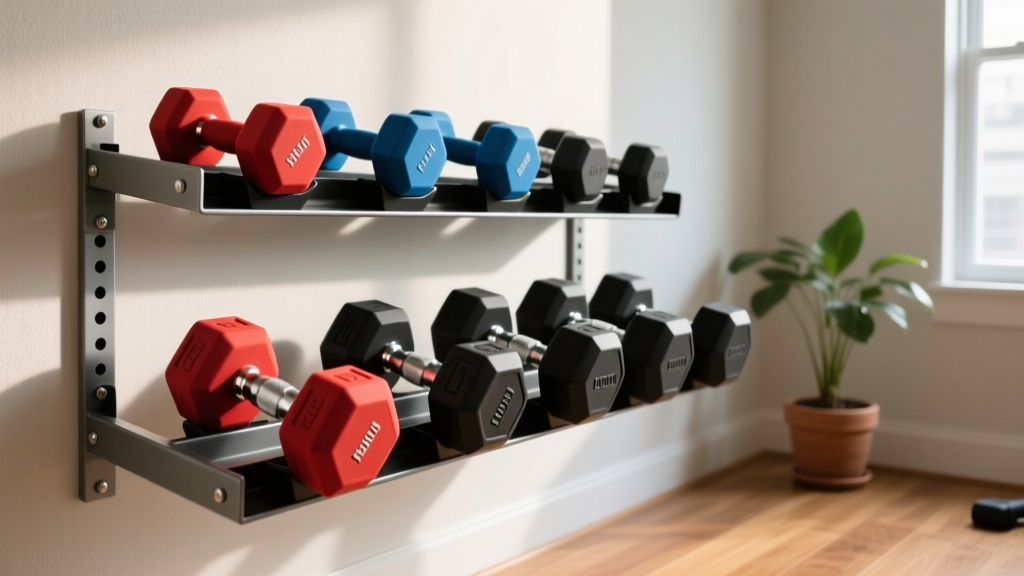
Quad Exercises at Home with Dumbbells: Neoprene Setup Guide

Urethane vs Rubber Hex: Space Layouts for Heavy Dumbbell Rows

Best Adjustable Dumbbells for Bigger Arms: 2026 Guide & Review
Loadable Dumbbells: The 2026 Lat Pulldown Dumbbell Alternative
Power Rack vs Squat Rack vs Stand: Dumbbell Deadlift for Back
