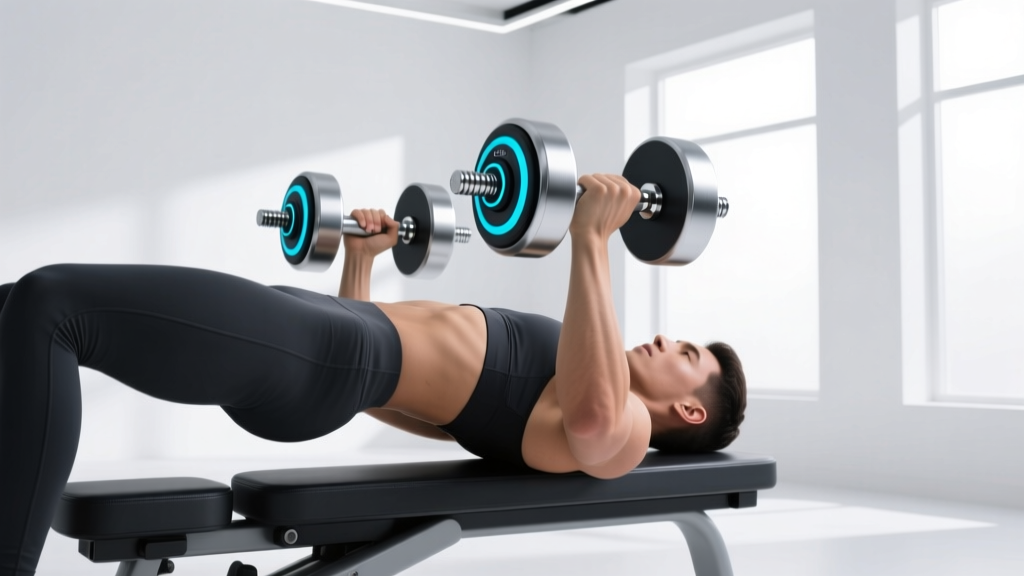
Fix Your Dumbbell Bridge: 2026 Adjustable Dumbbell Guide
Master the dumbbell bridge with our 2026 troubleshooting guide. Compare top adjustable dumbbells for pelvic loading, fix form errors, and avoid bruising.

The Biomechanics of the Dumbbell Bridge: Why Your Gear Matters
The dumbbell bridge is a foundational hip-hinge movement essential for gluteus maximus hypertrophy and posterior chain development. Unlike barbell hip thrusts, which require a dedicated bench and specialized padding, the floor-based dumbbell bridge offers unparalleled convenience for home gym setups. However, as home lifters push their progressive overload into the 50-to-80-pound range, a hidden point of failure emerges: the adjustable dumbbell itself.
Most adjustable dumbbells are engineered for vertical pressing, pulling, and floor presses. They are rarely evaluated for pelvic loading. When you place a mechanical, multi-part dumbbell across your hip crease, minor design flaws—such as sharp plastic dials, asymmetric weight distribution, or blocky urethane cages—transform from minor annoyances into severe biomechanical bottlenecks. According to EXRX biomechanics guidelines, maintaining a neutral pelvis and continuous tension is critical for glute activation, but gear-induced pain forces lifters into lumbar hyperextension to escape the pressure.
In this 2026 troubleshooting guide, we dissect the most common dumbbell bridge mistakes, analyze how your equipment might be sabotaging your gains, and compare the top adjustable dumbbells on the market specifically through the lens of hip-hinge comfort and mechanical stability.
⚠️ Anatomical Warning: Nerve Compression
Placing a heavy dumbbell directly on the Anterior Superior Iliac Spine (ASIS)—the bony prominence of your hip bones—can compress the lateral femoral cutaneous nerve. This leads to a condition called meralgia paresthetica, characterized by burning, tingling, and numbness in the outer thigh. Proper placement is always 1.5 to 2 inches inferior to the ASIS, resting on the muscular shelf of the lower abdomen.
Top 4 Dumbbell Bridge Mistakes (And How to Fix Them)
Before blaming your equipment, we must rule out technical errors. Here are the most frequent troubleshooting scenarios we see in home gyms, combining both form cues and gear mismatches.
1. Pelvic Bruising from 'Blocky' Cages
The Mistake: Using square or rectangular adjustable dumbbells (like the PowerBlock Elite series) for bridges. The flat, rigid edges concentrate the load onto a smaller surface area of the pelvis, causing severe bruising at weights as low as 35 lbs per hand.
The Fix: Switch to cylindrical adjustable dumbbells with rounded weight plates. If you only own block-style dumbbells, you must use a high-density closed-cell foam pad (minimum 1.5 inches thick) to disperse the sheer force.
2. Asymmetric Weight Shifting Mid-Repetition
The Mistake: Experiencing a sudden rotational pull on your hips at the top of the bridge lockout. This is a common failure mode with dial-based adjustable dumbbells if the internal weight plates are not fully seated or if the locking mechanism has worn down over years of use.
The Fix: Before every set, perform a 'shake test' over a rubber mat. If you hear internal rattling, the selector pin or dial housing is compromised. For dial systems, ensure the dial clicks perfectly into the numbered groove; a half-turn offset will cause the weight to shift dynamically as you extend your hips.
3. Grip Fatigue Preceding Glute Failure
The Mistake: Squeezing the dumbbell handle with a full, tight grip (thumb wrapped). By the time you reach the 12th rep, your forearm flexors are burning, but your glutes still have 3 reps left in the tank.
The Fix: Adopt a thumbless (false) grip for the dumbbell bridge. Hook your fingers over the top of the handle and let your thumb rest on the same side as your fingers. This removes the forearm flexors from the equation and allows you to use your arms simply as 'hooks' holding the weight to your pelvis.
4. Lumbar Hyperextension to Escape Pain
The Mistake: Arching the lower back excessively at the top of the movement. As noted by ACE Fitness exercise guidelines, the bridge should be driven by posterior pelvic tilt. Lifters often arch their lumbar spine to pull the bony hip structures away from a poorly placed, uncomfortable dumbbell.
The Fix: Tuck your chin, brace your core, and focus on driving the pubic bone toward the ceiling. If pain persists, your dumbbell's handle length or housing is digging into your abdomen, requiring a gear upgrade.
2026 Adjustable Dumbbell Comparison: The 'Bridge-Test' Matrix
To determine which adjustable dumbbells actually perform well for pelvic loading, we evaluated four top-selling 2026 models based on handle ergonomics, edge sharpness, weight distribution, and pelvic comfort.
| Model | Handle Length | Pelvic Comfort | Shift Risk | 2026 Price |
|---|---|---|---|---|
| Nuobell 552 | 5.5 inches | Excellent (Rounded) | Very Low | $399 - $429 |
| Bowflex SelectTech 552 | 4.5 inches | Poor (Plastic Dials) | Moderate | $349 |
| PowerBlock Elite | 4.0 inches | Terrible (Square Cage) | None (Solid) | $329 |
| Core Home Fitness | 5.0 inches | Good (Smooth Plates) | Low | $299 |
Deep Dive: Nuobell vs. Bowflex SelectTech for Hip Loading
When troubleshooting the dumbbell bridge, the Nuobell 552 emerges as the undisputed champion for home lifters focusing on lower body hypertrophy. Unlike traditional adjustable models, Nuobell utilizes a twisting handle mechanism that leaves the weight plates completely smooth and rounded on the outer edges. When resting across the pelvis, the Nuobell mimics the feel of a traditional rubber hex dumbbell. The 5.5-inch knurled handle provides ample room for a wider, more stable grip, preventing the knuckles from scraping against the thighs during the descent.
Conversely, the Bowflex SelectTech 552 presents significant troubleshooting hurdles for bridges. The bulky plastic dial housings extend past the weight plates. When placed on the hips, these hard plastic edges dig directly into the lower abdomen and ASIS. Furthermore, following Bowflex's corporate restructuring over the past few years, sourcing replacement selector dials for worn-out units has become a known friction point in 2026. If your SelectTech dials develop 'play', the weight plates will rattle and shift during the bridge lockout, creating an unstable, asymmetric load that forces your core stabilizers into overdrive.
'The limiting factor in a dumbbell bridge should always be glute fatigue, never pelvic pain or grip failure. If you are modifying your range of motion to avoid the sharp edge of an adjustable dumbbell cage, you are leaving mechanical tension on the table.'
Troubleshooting Your Setup: Padding and Placement
Even with the most bridge-friendly adjustable dumbbells like the Nuobell or Core Home Fitness, lifting north of 60 lbs requires external padding. However, not all padding is created equal. Here is a step-by-step protocol to troubleshoot your padding setup.
- Ditch the Standard Yoga Mat: Standard PVC or TPE yoga mats are roughly 3mm to 5mm thick. At 50 lbs, the foam compresses entirely, offering zero protection against the steel or urethane handle of the dumbbell.
- Avoid Open-Cell EVA Foam: Many cheap gym pads use open-cell EVA foam. While soft to the touch, EVA foam bottoms out under heavy, concentrated loads like a dumbbell bridge, leading to handle bruising.
- Invest in Closed-Cell Airex or High-Density TPE: You need a pad that is at least 1.5 inches thick with a closed-cell structure. Closed-cell foam resists compression, creating a true barrier that disperses the dumbbell's pressure across a wider surface area of the pelvis.
- The 'Folded Towel' Hack: If you lack a proper hip pad, fold a dense cotton bath towel exactly three times. Cotton fibers do not compress as easily as cheap foam, providing a surprisingly effective makeshift bridge pad.
Exact Placement Measurements
To troubleshoot lower back pain during the bridge, evaluate your dumbbell placement. Use your fingers to locate your ASIS (the front points of your hip bones). Measure exactly 1.5 to 2 inches down (toward your feet) from the ASIS. This is the 'pelvic shelf.' Rest the dumbbell handle here. If the dumbbell is placed too high, it will roll onto your stomach during the descent; if placed too low, it will rest on the femoral crease, restricting hip flexion and ruining your stretch reflex at the bottom of the movement.
Expert Verdict: Which Adjustable Dumbbell Wins for Bridges?
If your primary training focus involves heavy hip-hinges, glute bridges, and floor-based lower body work, avoid block-style adjustable dumbbells entirely. The PowerBlock Elite, while phenomenal for floor presses and upper body work, is a troubleshooting nightmare for bridges due to its rigid, rectangular cage design.
For the best dumbbell bridge experience in 2026, the Nuobell 552 is the superior investment. Its traditional barbell-like profile, smooth outer plates, and secure twisting lock mechanism eliminate the pelvic bruising and weight-shifting anxieties that plague dial-based alternatives. Pair it with a 1.5-inch closed-cell foam pad, utilize a thumbless grip, and focus on driving through the pelvic shelf. By aligning your equipment choices with the specific biomechanical demands of the exercise, you will finally unlock the uninterrupted glute tension required for maximum hypertrophy.
More gear to consider
All reviews
Olympic vs Standard Plates for Tricep Exercises with Dumbbells

Barbell Guide: Weight, Knurling & Tricep Workout Using Dumbbells
Cast Iron vs Competition Kettlebells: No Dumbbell Bicep Workout

Power Rack vs Squat Rack vs Stand: Push Press With Dumbbells

Master the One Leg RDL Dumbbell: Power Rack vs Squat Rack vs Stand
