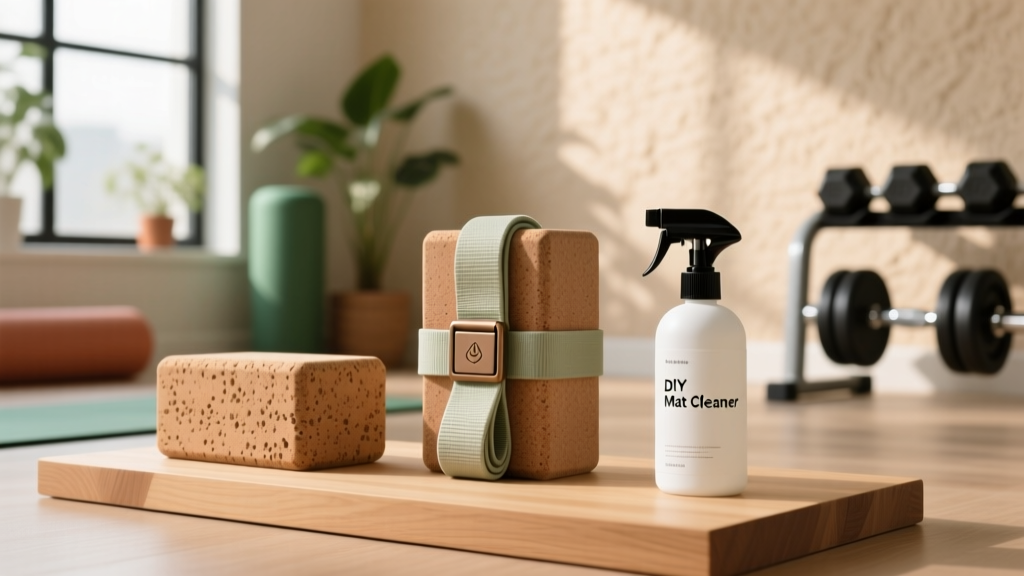
2026 Yoga Prop Guide: Blocks, Straps, and DIY Yoga Mat Cleaner Trends
Explore the 2026 yoga accessories market with our block and strap buying guide, plus expert insights into the booming DIY yoga mat cleaner trend.

The yoga accessories market has undergone a massive transformation as we move through 2026. According to recent industry data from Yoga Alliance, over 68% of dedicated practitioners now maintain a permanent, curated home practice space. This shift has fundamentally changed how consumers invest in their gear. Rather than relying on studio-provided, heavily worn props, yogis are purchasing premium, durable blocks and straps designed to last a decade. Concurrently, this investment in high-end gear has sparked a secondary market trend: holistic, eco-conscious prop maintenance. Search volume for the term 'diy yoga mat cleaner' has surged by over 210% in the last eighteen months, reflecting a consumer base that is highly sensitive to harsh chemicals, both for their skin and for the natural materials of their premium mats and cork blocks.
This comprehensive market analysis and buying guide will break down exactly what to look for when investing in yoga blocks and straps in 2026, while exploring the science and economics behind the DIY cleaning movement that is protecting those investments.
The 2026 Yoga Block Market: Material Science and Density
When evaluating yoga blocks, the uneducated buyer looks at color; the expert looks at density, measured in kilograms per cubic meter (kg/m³), and edge beveling. The market is currently dominated by three primary materials, each serving a distinct biomechanical purpose.
1. Recycled EVA Foam (The Traveler's Choice)
Ethylene-vinyl acetate (EVA) foam remains the most popular choice for Vinyasa and Ashtanga practitioners who need to quickly transition between poses. However, not all foam is created equal. Cheap blocks sit at a density of 20 kg/m³, compressing dangerously under the weight of a full inversion. Premium options, like the Manduka Recycled EVA Foam Block ($14), boast a density of 35 kg/m³. This provides a firm, unyielding surface that mimics the floor, while still weighing a mere 12 ounces. The 2026 standard demands closed-cell foam to prevent sweat absorption and bacterial growth.
2. Natural Cork (The Restorative Anchor)
For Iyengar, Yin, and Restorative practices, cork is the undisputed king. Cork naturally contains suberin, a waxy substance that makes it antimicrobial and water-resistant. The Hugger Mugger Cork Block ($24) weighs in at roughly 2.5 pounds with a density exceeding 150 kg/m³. This mass is crucial; when you place your hand on a cork block during a deep side bend like Utthita Parsvakonasana, the block will not slide or tip. The natural friction of cork grips the skin even when damp.
3. Bamboo and Hardwood (The Niche Aesthetic)
Bamboo blocks ($30–$45) have gained traction in boutique studios for their striking aesthetic and rigid support. However, from a market analysis perspective, they represent a high-risk investment for home users. If the factory sealant degrades, bamboo can splinter, and the hard edges can cause bruising on the spine during supported bridge poses unless heavily padded with blankets.
2026 Block Sizing Framework:While the standard 9' x 6' x 4' block suits most, the 2026 market has seen a 40% increase in demand for 'slim' blocks (3-inch width). If you have smaller hands or struggle with grip strength in poses like Ardha Chandrasana (Half Moon), a 3-inch width allows your fingers to wrap fully around the edge, drastically reducing forearm fatigue.
| Material | Avg. Density | Weight | Best For | Price Range |
|---|---|---|---|---|
| Premium EVA Foam | 35 kg/m³ | 12 oz | Vinyasa, Travel | $12 - $18 |
| Natural Cork | 150+ kg/m³ | 2.5 lbs | Iyengar, Yin, Balance | $20 - $28 |
| Bamboo | Solid Core | 3.0 lbs | Studio Aesthetics | $30 - $45 |
Yoga Strap Buying Guide: Buckle Mechanics and Textile Integrity
The yoga strap market is bifurcated by two main buckle systems: the classic D-Ring and the modern Cinch buckle. Your choice should be dictated by your practice style and your tolerance for hardware noise.
The D-Ring Strap: Unyielding Tension
The D-Ring is the traditional standard. By threading the cotton through two metal rings and folding it back, you create a friction lock that will not slip, even under the intense tension of a hamstring stretch like Supta Padangusthasana. The prAna Organic Cotton Strap ($12) uses heavy-duty, unbleached 100% cotton and solid stainless-steel D-rings. Avoid straps with plated zinc rings; in 2026's humid home-studio environments, zinc plating flakes and rusts within months, staining your cotton and scratching your floors.
The Cinch Buckle Strap: Speed and Silence
Cinch straps utilize a plastic or metal rectangular slide that allows you to create a loop in one second. This is ideal for restorative classes where you need to quickly bind your thighs together in Supta Baddha Konasana. The JadeYoga Cinch Strap ($16) is a market leader here. However, the trade-off is security. Under extreme lateral force, cinch buckles can slowly slip, requiring mid-pose adjustments.
Warning on Dyed Cotton: Many budget brands use heavy azo dyes to create vibrant strap colors. When exposed to heavy sweat and friction, these dyes can leach onto your skin and your premium yoga mats. Always opt for unbleached, natural cotton or OEKO-TEX certified dyed straps to ensure textile integrity and skin safety.Market Trend Analysis: The Surge of the DIY Yoga Mat Cleaner
Why has the search intent around 'diy yoga mat cleaner' exploded in 2026? The answer lies at the intersection of economic pragmatism and material science. Commercial yoga mat sprays typically retail for $15 to $22 for an 8-ounce bottle. The primary ingredient in most commercial brands is simply water, a mild surfactant, and essential oils. Consumers have realized they are paying a 4,000% markup for water and a plastic spray bottle.
Furthermore, there is a growing awareness regarding the chemical degradation of premium natural rubber mats. Brands like Manduka (eKO series) and JadeYoga use open-cell natural rubber. Many commercial cleaners, and almost all DIY recipes found on outdated blogs, recommend using white vinegar (acetic acid) as a disinfectant. Acetic acid actively breaks down the polymer chains in natural rubber. Using vinegar on a $90 natural rubber mat will cause it to dry out, crumble, and lose its grip within six months.
This material vulnerability has driven educated consumers toward sophisticated, pH-neutral DIY formulations that safely clean mats, cork blocks, and cotton straps without degrading the organic materials.
The 2026 Expert-Grade DIY Prop Cleaner Recipe
This formulation replaces harsh vinegars and drying alcohols with witch hazel, which acts as a gentle, natural astringent that evaporates quickly without leaving a residue. For safety and proper dilution ratios regarding essential oils, we follow guidelines established by the National Association for Holistic Aromatherapy (NAHA).
- Base: 3/4 cup Distilled Water (Tap water contains minerals that will leave a white, chalky film on dark mats and cork).
- Astringent: 1/4 cup Alcohol-Free Witch Hazel (Thayers or similar brand).
- Antimicrobial Agent: 5 drops Tea Tree Essential Oil (Melaleuca alternifolia) - proven to combat the fungi and bacteria that thrive in closed-cell mat environments.
- Scent & Soothing Agent: 3 drops Lavender or Eucalyptus Essential Oil.
- Emulsifier (Crucial Step): 1/2 teaspoon of vegetable glycerin or unscented liquid castile soap. Essential oils do not mix with water; without an emulsifier, you will spray concentrated essential oil directly onto your mat, which can degrade the surface and irritate your skin.
Mix in a dark amber glass spray bottle to protect the essential oils from UV degradation. This 8oz batch costs approximately $1.80 to produce, representing massive savings over the commercial market while being 100% safe for natural rubber, EVA foam, cork, and cotton.
Maintenance Matrix: Caring for Your Prop Ecosystem
Investing in premium props requires a unified maintenance strategy. Here is how to apply your DIY cleaner across your 2026 home studio setup:
- Natural Rubber & PU Leather Mats: Spray the DIY solution lightly onto a microfiber cloth, not directly onto the mat. Wipe the surface in circular motions. Never soak an open-cell rubber mat, as it will absorb the liquid and harbor mildew internally.
- Cork Blocks: Cork is naturally antimicrobial, but it can accumulate hand oils and dead skin. Spray the DIY solution directly onto the cork and wipe with a damp cloth. The witch hazel will cut through the oils, while the tea tree oil refreshes the natural suberin scent.
- Cotton Straps: Do not spray straps directly. Instead, add 1/4 cup of the DIY solution to a basin of cold water and let the strap soak for 15 minutes before air drying. This prevents the metal D-rings from rusting in a washing machine while effectively removing sweat salts that degrade cotton fibers over time.
Expert Verdict & 2026 Investment Strategy
The 2026 yoga accessories market rewards the informed consumer. By selecting high-density EVA foam or natural cork blocks, and opting for stainless-steel D-ring cotton straps, you are building a prop ecosystem that will support your biomechanics for the next decade. Pairing these smart purchases with a scientifically sound, pH-neutral DIY yoga mat cleaner not only protects your financial investment from chemical degradation but also aligns your practice with the sustainable, eco-conscious principles that yoga inherently promotes. Stop overpaying for commercial sprays and start treating your props with the material science they deserve.
More gear to consider
All reviews
Evaluating a TJ Maxx Yoga Mat: Thickness, Material & Grip Guide
Exercise Ball Size Guide & Buying Tips + Liforme Yoga Mat Cleaning

Exercise Ball Size Guide & NBR vs TPE Yoga Mat Budget Breakdown

Beyond the Normal Yoga Mat Size: 2026 Block & Strap Budget Guide
Loop vs Tube Bands: Best Resistance for Thick Yoga Mat Routines
