
Curved vs Motorized: ProForm J8 Treadmill Mistakes & Fixes
Avoid common mistakes when choosing between a curved manual treadmill and a motorized ProForm J8 treadmill. Expert troubleshooting and form fixes.

The Biomechanical Shift: Mistakes When Switching Deck Types
The debate between curved manual treadmills and traditional motorized decks is a staple in modern home gym design. While curved, non-motorized treadmills (like the TrueForm or AssaultRunner) promise a 30% higher caloric burn and a natural gait cycle, traditional motorized models like the ProForm J8 treadmill offer predictable pacing, integrated incline, and digital tracking. However, the most critical errors occur not during the purchase, but during the transition and daily operation of these two vastly different machines.
According to biomechanics research published via the National Center for Biotechnology Information (NCBI), running on a curved, non-motorized treadmill significantly alters foot-strike patterns, forcing a mid-foot or forefoot strike. When users transition from a motorized belt to a curved deck without adjusting their stride, the risk of Achilles strain and calf tightness skyrockets.
⚠️ Common Mistake: The 'Motorized Pacing' IllusionOn a motorized ProForm J8, the belt pulls your foot back, artificially increasing your cadence. On a curved manual treadmill, you are the motor. Users frequently complain that curved treadmills 'feel too slow' or 'require too much effort' at their usual motorized pace. This isn't a machine defect; it's a biomechanical reality. You must actively drive your knees and push the slat belt backward.
Motorized Troubleshooting: ProForm J8 Treadmill Specifics
The ProForm J8 treadmill is a reliable mid-tier motorized unit, typically featuring a 2.5 Continuous Horsepower (CHP) motor, a 0-10% incline range, and an 18-inch by 55-inch running surface. Despite its durability, motorized treadmills are prone to specific mechanical and electronic failures. Here is how to troubleshoot the most frequent J8 issues.
1. The 'E01' Speed Sensor Error
If your ProForm J8 console displays an E01 error code and abruptly stops, the speed sensor has lost connection with the motor controller. This is rarely a dead sensor; it is almost always a misalignment or dust issue.
- Unplug the machine and remove the motor hood (usually 4-6 Phillips head screws).
- Locate the magnetic reed switch near the front roller pulley.
- Check the gap between the magnet and the sensor. It must be exactly 2mm to 3mm. If the belt vibration has shaken the sensor loose, realign it and tighten the set screw.
- Wipe the sensor with isopropyl alcohol to remove accumulated belt dust.
2. Belt Slip vs. Motor Bogging (The Stomp Test)
When the belt hesitates underfoot, users immediately assume the belt is loose and crank the tension bolts. This is a catastrophic mistake that can destroy the 2.5 CHP motor. Instead, perform the 'Stomp Test' to isolate the issue, a technique widely recommended by repair experts at Treadmill Doctor.
- If the belt stops but the motor pulley keeps spinning: The belt is loose or lacks lubrication. Tighten the rear roller bolts by exactly one-quarter turn on each side, or apply 100% silicone treadmill lubricant.
- If the motor pulley stops spinning alongside the belt: The belt is too tight, causing excessive amp draw, or the motor control board is failing. Loosen the belt immediately to prevent motor burnout.
Curved Manual Treadmill Pitfalls and Mechanical Fixes
Curved treadmills eliminate the motor, incline motor, and electronic console, but they introduce a new set of mechanical complexities centered around the slat belt and bearing system.
Slat Belt Tension and Polyurethane Stretch
Unlike a continuous PVC belt on the ProForm J8, curved treadmills use interlocking rubber or polyurethane slats. Over 500+ miles, these slats stretch. If the belt feels 'dead' or requires excessive force to start moving, the tension is too low.
'A properly tensioned curved treadmill belt should have roughly 1.5 inches of vertical deflection when pressed firmly at the apex of the curve. Any more, and you lose energy transfer; any less, and you grind the side rails.' — Fitness Equipment Repair Standards, 2025
The Fix: Locate the tensioning bolts at the rear axle. Adjust both sides evenly by half-turns. Never over-tension a curved belt, as this will prematurely destroy the sealed cartridge bearings inside the slats, leading to a high-pitched whining noise that requires a $150+ bearing replacement kit.
Running Position Errors
The most common user error on a curved treadmill is running too far forward, near the top of the curve. This flattens the effective angle of the deck, turning the machine into a heavy, flat sled. To engage the self-paced mechanism, you must run in the 'sweet spot'—roughly 12 to 18 inches back from the front uprights, where the 15-degree downward slope naturally catches your foot strike and pulls the belt backward.
Comparison Matrix: Maintenance & Failure Modes
Understanding the long-term ownership reality of these two deck types is crucial for 2026 home gym planning. Below is a direct comparison of maintenance requirements and common failure points.
| Feature / Metric | Motorized (ProForm J8) | Curved Manual (Slat Belt) |
|---|---|---|
| Primary Drive System | 2.5 CHP DC Motor & Drive Belt | User-Generated Kinetic Force |
| Routine Maintenance | Silicone lubrication every 150 miles; belt tensioning. | Slat tensioning; vacuuming debris from side tracks. |
| Most Common Failure | Motor control board (due to belt friction/over-tension). | Slat cartridge bearings (due to over-tension or dust). |
| Average Repair Cost | $120 - $350 (Board/Sensor/Motor) | $80 - $200 (Bearings/Slat replacements) |
| Biomechanical Impact | Promotes heel-striking; artificial cadence pacing. | Forces mid-foot strike; activates posterior chain. |
Calibrating Your Stride: A Step-by-Step Correction Guide
Whether you are rehabbing an injury or optimizing for a marathon, the American College of Sports Medicine (ACSM) emphasizes that treadmill running mechanics must be actively managed to prevent overuse injuries. Use this protocol to audit your form on both machines.
💡 The 10-Minute Form AuditSet up a smartphone on a tripod at a 45-degree lateral angle. Record 10 seconds of running at the end of your warm-up (when form is fresh) and 10 seconds at the end of your workout (when fatigue sets in).
For the ProForm J8 (Motorized)
- Check for Overstriding: Pause the video when your leading foot strikes the belt. Draw a vertical line from your hip. If your foot lands significantly in front of this line, you are overstriding. This acts as a braking mechanism, sending shockwaves directly into the knee joint.
- Corrective Cue: Increase the treadmill speed by 0.2 MPH and focus on 'pulling' the ground beneath you rather than 'reaching' for it. Aim for a cadence of 170-180 steps per minute.
- Stop Holding the Rails: Holding the console or handrails at a 10% incline reduces caloric expenditure by up to 24% and ruins spinal alignment. If you must hold on, lower the incline or speed.
For the Curved Manual Treadmill
- Check Your Apex Position: Ensure your foot strike is landing on the downward slope of the curve, not the flat top. If you are on the flat top, you are doing all the work to overcome static inertia.
- Corrective Cue: Lean slightly forward from the ankles (not the waist). Imagine you are pushing the earth away from you. Your arms must drive aggressively; without a motor to set the pace, your arm swing dictates your leg turnover rate.
- Monitor Calf Fatigue: Because curved treadmills eliminate heel-striking, the calf complex and Achilles tendon take on massive loads. Limit curved treadmill sessions to 20-30 minutes for the first three weeks to allow connective tissue to adapt.
Expert Verdict: Matching the Deck to Your Training Block
Troubleshooting and form correction ultimately come down to using the right tool for the right job. The ProForm J8 treadmill remains an exceptional tool for steady-state zone 2 cardio, precise interval pacing, and users who require joint-friendly, shock-absorbing deck flex. It requires basic electronic and lubrication maintenance but rewards the user with set-and-forget consistency.
Conversely, a curved manual treadmill is a specialized conditioning tool. It demands higher mechanical sympathy regarding slat tension and bearing care, and it requires the user to possess the baseline posterior-chain strength to drive the belt. By understanding the distinct failure modes and biomechanical demands of each, you can eliminate user error, extend the lifespan of your equipment, and optimize your 2026 cardiovascular training.
More gear to consider
All reviews
Spirit XT185 Treadmill Reviews: Office Layouts vs Under-Desk Pads

Duke Treadmill Score Training: Cardio Machine Noise Comparison
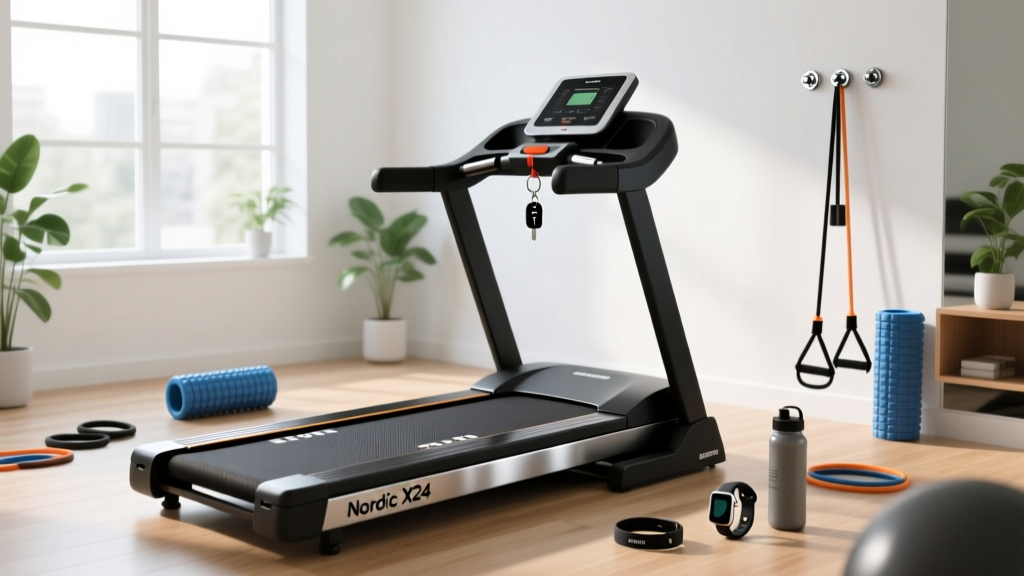
Nordic X24 Treadmill Setup & Cardio Machine Noise Level Comparison

Assembling Sole F63 Treadmill: 2026 Small Space Market Review

Beyond Treadmill Abuse Murder: Air Bike vs Assault Bike Layouts
