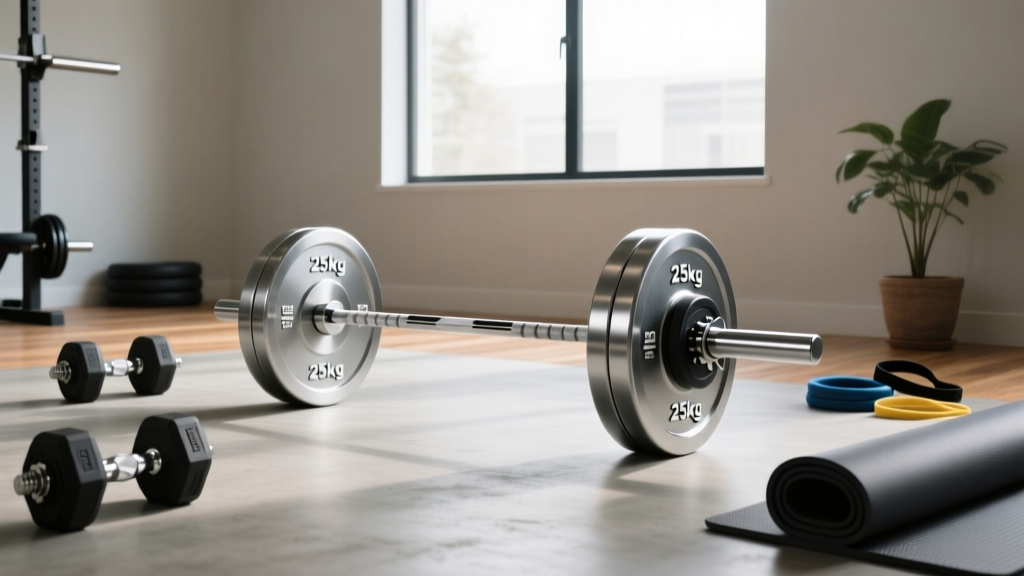
Beyond Core Strength Exercises Dumbbells: Olympic Barbell Guide
Transition from core strength exercises with dumbbells to heavy compounds. Our step-by-step Olympic barbell buying guide covers weight, knurling, and steel.

Step 1: Bridging the Gap From Dumbbells to Barbells
Mastering core strength exercises dumbbells routines—such as renegade rows, weighted Russian twists, and single-arm dumbbell pullovers—builds the crucial anti-rotation and stabilizer muscles required for heavy, systemic loading. When you perform a renegade row with 50lb dumbbells, your transverse abdominis and obliques work overtime to prevent your pelvis from rotating. This localized core stability is the perfect prerequisite for the next phase of your strength journey: heavy axial loading with an Olympic barbell.
However, transitioning from dumbbells to a 7-foot Olympic barbell introduces new biomechanical variables. A barbell demands bilateral symmetry, rigid spinal bracing (the Valsalva maneuver), and a secure grip that dumbbells simply do not test in the same way. According to Garage Gym Reviews, selecting the wrong barbell can lead to grip failure, wrist impingement, or even permanent bar deformation under heavy squats. This step-by-step guide will walk you through the exact specifications, metallurgy, and knurling patterns you need to evaluate in 2026.
Step 2: Decoding Weight, Dimensions, and Steel Quality
Not all Olympic barbells are created equal. The term 'Olympic' simply refers to the 2-inch (50mm) rotating sleeves that accept standard bumper and iron plates. The shaft itself, however, varies wildly based on the intended use case. Understanding tensile strength—measured in Pounds per Square Inch (PSI)—is the most critical factor in preventing a barbell from bending and staying bent after a heavy deadlift drop.
| Barbell Type | Total Weight | Shaft Diameter | Length | Minimum PSI | Best For |
|---|---|---|---|---|---|
| Men's Multi-Purpose | 20kg (44 lbs) | 28.5mm | 2200mm | 190,000 PSI | Squat, Bench, Deadlift, Olympic Lifts |
| Women's Olympic | 15kg (33 lbs) | 25mm | 2010mm | 165,000 PSI | Clean & Jerk, Snatch, Smaller Hands |
| Powerlifting Bar | 20kg (44 lbs) | 29mm | 2200mm | 200,000+ PSI | Heavy Squat, Bench, Deadlift (Stiff) |
Step 3: The Knurling Trinity (Hill, Mountain, and Volcano)
Knurling is the diamond-patterned machining cut into the steel shaft to provide grip. The geometry of these cuts dictates how the bar feels in your hands, especially when chalk and sweat are introduced. As a beginner moving from the smooth handles of rubber dumbbells, aggressive knurling can feel like sandpaper. Here is how to decode the three primary knurl profiles:
1. Hill Knurling (The Budget Trap)
Found on cheap import bars, the peaks of the knurl are rounded off or 'hilled.' This results in a smooth, almost slippery feel. While comfortable for high-rep bicep curls, a hill knurl provides zero security during heavy deadlifts or front squats, forcing you to over-grip and prematurely exhaust your forearms.
2. Mountain Knurling (The Aggressive Bite)
Mountain knurling features sharp, prominent peaks. Brands like Eleiko utilize this for their competition weightlifting bars. It bites deeply into the calluses of your hands, ensuring the bar does not move during explosive snatches. However, for general fitness and high-volume hypertrophy work, mountain knurling will tear up your shins and palms.
3. Volcano Knurling (The Gold Standard)
The volcano profile is achieved when the machine cuts a tiny crater into the peak of the knurl. Instead of a single sharp point, you get a rim of grip. A medium-depth volcano knurl (typically 0.031 inches deep) provides immense surface area for chalk to adhere to, offering elite grip security without shredding your skin. Rogue Fitness engineering specs highlight their Ohio Bar's volcano knurl as the benchmark for multi-purpose home gym bars.
Step 4: Center Knurl and Whip Dynamics
When buying your first Olympic barbell, you must decide if you need a center knurl. This is a small band of knurling in the exact middle of the shaft.
- With Center Knurl: Essential if you plan on doing heavy back squats or front squats. The center knurl bites into the fabric of your t-shirt or the skin of your upper back, preventing the bar from sliding down your traps during heavy sets.
- Without Center Knurl: Preferred by CrossFit athletes and Olympic weightlifters who frequently rest the bar on their clavicles during cleans. A smooth center prevents painful friction burns on the neck.
Understanding 'Whip': Whip refers to the bar's flexibility or bounce at the ends when loaded heavily. A powerlifting bar is incredibly stiff (minimal whip) to provide a stable platform for heavy bench presses. Conversely, an Olympic weightlifting bar has high whip, allowing the bar to bounce off the chest during a clean and jerk, aiding in momentum. For a beginner, a medium-whip multi-purpose bar is the most versatile choice.
Step 5: Sleeve Rotation (Bushings vs. Bearings)
Inside the sleeves of an Olympic barbell are mechanisms that allow the sleeves to spin independently of the shaft. This prevents the rotational force of bumper plates from tearing the skin off your palms during Olympic lifts.
- Bronze Bushings: Self-lubricating bronze rings that provide a smooth, slightly resistant spin. Ideal for powerlifting and general strength training where you want the bar to feel stable and not overly 'twitchy' on your back.
- Needle Bearings: Small steel needles that allow for near-frictionless, rapid spinning. Mandatory for competitive Olympic weightlifting (snatches and cleans), but generally overkill and more expensive for the average home gym user.
Step 6: 2026 Market Pricing and Model Recommendations
The fitness equipment market has stabilized in 2026, offering distinct tiers for buyers. Here are three specific models that represent the best value and performance based on your budget:
The Budget Workhorse: Titan Fitness Performance Olympic Bar
Price: ~$189.99
Specs: 190k PSI, 28.5mm shaft, dual knurl marks, bushing system.
Verdict: An excellent entry-level bar that vastly outperforms generic Amazon alternatives. The knurl is slightly more 'mountain' than 'volcano,' so it will feel aggressive to beginners used to neoprene dumbbells, but it offers undeniable value.
The Industry Standard: Rogue Ohio Bar (Black Zinc or Cerakote)
Price: $295.00
Specs: 190k PSI, 28.5mm shaft, composite bushings, signature volcano knurl.
Verdict: The undisputed king of multi-purpose bars. The Cerakote finish (originally used in firearms) provides over 1,000 hours of salt-spray corrosion resistance, making it perfect for humid garages. The knurl is perfectly balanced for both heavy deadlifts and high-rep pressing.
The Premium Investment: Eleiko Sport Training Bar
Price: ~$925.00
Specs: Proprietary Swedish steel, 215k PSI, hardened chrome finish.
Verdict: If budget is not a constraint, Eleiko bars are generational investments. The steel quality and precise machining mean this bar will outlive you and can be passed down as an heirloom.
Step 7: Maintenance and Edge Cases
To ensure your Olympic barbell survives decades of use, implement a simple maintenance routine. Once a month, use a stiff nylon brush to remove chalk and dead skin from the knurling. Follow this by wiping the shaft down with a light coat of 3-in-One oil or mineral oil. Never use WD-40, as it is a solvent that will strip away the protective factory lubricants inside the bushings.
'The transition from dumbbell isolation and core work to heavy barbell compounds is where true systemic strength is forged. Treat your barbell like a precision instrument, not a crowbar, and it will reward you with a lifetime of progress.' — FitGearPulse Editorial Team
By understanding the nuances of tensile strength, knurl geometry, and sleeve rotation, you can confidently invest in an Olympic barbell that perfectly complements the core strength foundation you built with dumbbells. Choose a 190k PSI bar with a volcano knurl, maintain it properly, and you will never need to upgrade again.
More gear to consider
All reviews
What's a Dumbbell Layout? Rubber Hex vs Urethane Space Guide

Bumper vs Iron Plates: 2026 Single Dumbbell Workout Trends
EZ Bar vs Straight Bar & the One Dumbbell Row: 2026 Trends
Maintain Loadable Dumbbells for Chest Exercises Without a Bench
Bowflex vs Nuobell: Best for Dumbbell Chest Flys on Bench?
