
2026 Guide: Compression Boots & Massage Gun Attachment Uses
Master your 2026 recovery routine. This beginner guide reviews top compression boots and details essential massage gun attachment uses for optimal healing.

The Ultimate Beginner’s Recovery Stack: Percussive Meets Pneumatic
Building a comprehensive recovery ecosystem in 2026 requires more than just resting; it demands a strategic, multi-modal approach. For beginners, the combination of percussive therapy and pneumatic compression represents the gold standard for reducing delayed onset muscle soreness (DOMS) and accelerating lymphatic drainage. However, utilizing these tools in isolation leaves physiological gains on the table. This step-by-step guide bridges the gap, reviewing the latest compression boot systems while detailing critical massage gun attachment uses to create a seamless, 45-minute lower-body recovery protocol.
Step 1: Pre-Flushing with Percussive Therapy
Before encasing your legs in compression boots, you must address localized myofascial adhesions. If you apply 80 mmHg of pneumatic pressure over a knotted piriformis or a highly sensitive IT band, the squeezing motion can trigger localized cramping or nerve impingement. Understanding specific massage gun attachment uses allows you to 'pre-flush' the tissue, preparing the vascular pathways for the sequential compression to follow.
The Standard Ball (Large Muscle Groups)
The 60mm standard ball attachment is your workhorse. Designed for broad surface areas, it delivers uniform force distribution. Target Areas: Quadriceps (vastus lateralis and rectus femoris), hamstrings, and the gastrocnemius. Technique: Apply 20–30 lbs of pressure, gliding at a speed of 2 inches per second. Spend 90 seconds per muscle belly to stimulate local blood flow without causing bruising.
The Dampener (Bony Regions & Sensitive Tissue)
Made from high-density, impact-absorbing foam, the dampener is crucial for areas where bone sits close to the skin or where nerves are superficial. Target Areas: The iliotibial (IT) band, tibialis anterior (shins), and paraspinal erectors. Technique: Use a lighter touch (10–15 lbs of pressure). The dampener prevents the percussive micro-trauma that hard plastic attachments can inflict on the periosteum (bone lining).
The Cone (Pinpoint Trigger Points)
The cone attachment concentrates force into a 15mm focal point, mimicking the thumb pressure of a manual sports massage therapist. Target Areas: Plantar fascia, tensor fasciae latae (TFL), and deep gluteal trigger points. Technique: Hover over the knot for 15–30 seconds. Do not grind the attachment into the tissue; let the high-frequency oscillations (typically 2400 RPM) down-regulate the nervous system's pain response.
Expert Warning: Never use percussive attachments directly on the popliteal fossa (back of the knee), the anterior neck, or directly over major lymph node clusters (such as the inguinal crease). This can cause vascular damage or severe inflammation.
Step 2: 2026 Compression Boot System Review
Once the tissue is pre-flushed, sequential pneumatic compression takes over. These systems use overlapping air chambers to mimic the muscle pump, pushing metabolic waste (like blood lactate and interstitial fluid) back toward the thoracic duct for filtration. Below is a comparative review of the top three recovery systems dominating the market in 2026.
| Feature | Normatec 3 | Hyperice Hyperboot | Therabody RecoveryAir JET |
|---|---|---|---|
| Price (2026) | $899 | $999 | $849 |
| Max Pressure | 100 mmHg | 100 mmHg | 100 mmHg |
| Zone Architecture | 7 Overlapping Zones | 5 Zones + Heat/Vibration | 4 Fast-Inflate Zones |
| Weight (Pair) | 6.2 lbs | 7.8 lbs | 5.5 lbs |
| Best For | Overall clinical reliability | Plantar fasciitis & cold feet | Travel & quick turnover |
Normatec 3: The Clinical Standard
Hyperice’s Normatec 3 remains the benchmark for clinical-grade sequential compression. The 7-zone architecture ensures no dead spots between the ankle and the hip. The 2026 model features an upgraded internal pump that operates at under 50 decibels, allowing for use while sleeping or working. At $899, it is an investment, but its durability and FDA-cleared status for temporary circulation improvement make it a staple in physical therapy clinics.
Hyperice Hyperboot: The Multi-Modal Innovator
Retailing at $999, the Hyperboot differentiates itself by integrating localized thermotherapy (heat) and high-frequency vibration directly into the foot chamber. This is a game-changer for runners suffering from plantar fasciitis or athletes with poor distal circulation. The heat dilates the blood vessels in the feet, while the vibration stimulates the mechanoreceptors, creating a highly localized recovery effect before the sequential air compression begins moving up the leg.
Therabody RecoveryAir JET: The Speed Specialist
At $849, the RecoveryAir JET focuses on rapid inflation cycles. While traditional boots take 45–60 seconds to complete a full leg squeeze, the JET’s 4-zone system completes a cycle in under 30 seconds. This faster turnover rate is ideal for athletes in tournament settings who need to flush their legs in a 20-minute window between events. The zippers also make it significantly easier to put on over sweaty skin compared to the pull-on sleeves of competitors.
Step 3: Your 45-Minute Step-by-Step Recovery Protocol
Follow this exact sequence post-training to maximize venous return and minimize DOMS.
- Hydration Prime (Minutes 0-5): Consume 16oz of water with a 500mg sodium electrolyte packet. Pneumatic compression pulls interstitial fluid into the vascular system; without adequate hydration, blood viscosity remains high, reducing the efficiency of the flush.
- Percussive Pre-Flush (Minutes 5-15): Utilize the massage gun attachment uses outlined in Step 1. Spend 5 minutes per leg, focusing on the dampener for the IT bands and the standard ball for the quads and calves.
- Pneumatic Compression (Minutes 15-40): Zip into your compression boots. Beginner Setting: Set the pressure to 50–60 mmHg. Beginners often mistakenly max out the pressure to 100 mmHg, which can actually occlude superficial lymphatic vessels and trap fluid. Let the sequential pump run for 25 minutes.
- Active Mobility (Minutes 40-45): Immediately upon removing the boots, perform 5 minutes of active, unloaded mobility work (e.g., bodyweight deep squats, leg swings). The tissues are now highly perfused and pliable, making this the optimal window for restoring range of motion.
Safety, Contraindications, and Edge Cases
While percussive and compression therapies are exceptionally safe for the general population, specific medical conditions require strict avoidance. According to Cleveland Clinic guidelines on compression therapy, individuals with severe peripheral arterial disease (PAD) or congestive heart failure should avoid pneumatic boots, as the sudden shift in fluid volume can overload the cardiovascular system.
Furthermore, if you suspect a Deep Vein Thrombosis (DVT)—characterized by unilateral swelling, warmth, and deep calf pain—do not use massage guns or compression boots. As noted by Johns Hopkins Medicine, applying mechanical pressure to a DVT can dislodge the clot, leading to a life-threatening pulmonary embolism. Always consult a physician if you experience asymmetrical leg pain post-travel or post-surgery.
Frequently Asked Questions
Can I use massage gun attachments on my joints before using compression boots?
No. Percussive therapy should be strictly limited to muscle bellies and fascial lines. Striking the patella, tibial tuberosity, or medial malleolus (ankle bone) with a hard plastic attachment can cause periostitis (bone inflammation). Use the dampener attachment if you must work near the joint capsule, but rely on the compression boots for joint-level fluid mobilization.
How often should I clean my compression boot liners?
In 2026, most premium boots feature antimicrobial interior coatings, but you should still wipe down the interior with an alcohol-free antibacterial wipe after every 3 uses. Never machine wash the sleeves, as this will destroy the internal PVC air bladders and void your warranty.
More gear to consider
All reviews
Beyond the Massage Gun Sexual Myth: Home Cold Plunge Layouts

Foam Roller Density vs Purity Digital Massage Gun: Budget Guide
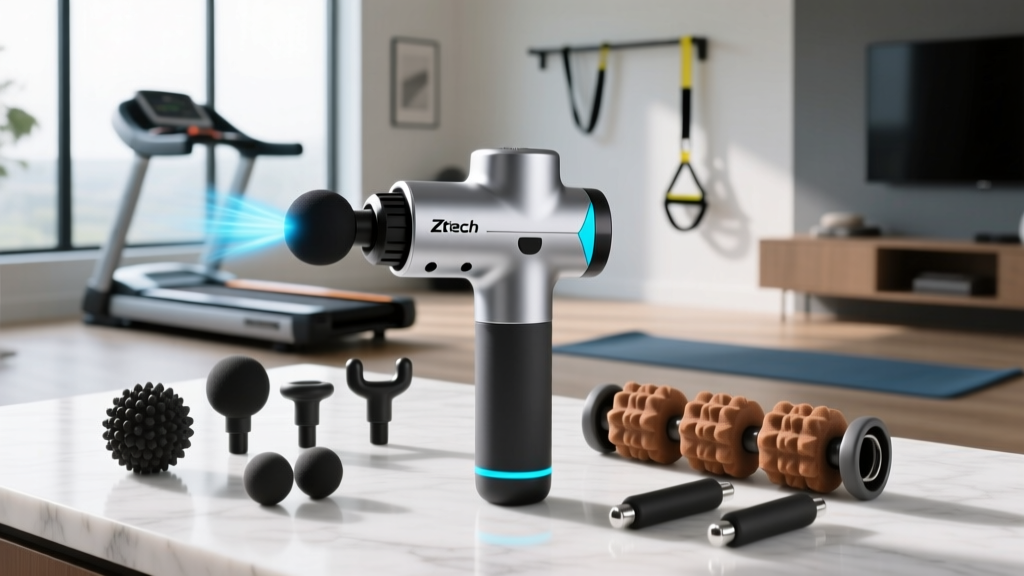
Ztech Mini Massage Gun vs Trigger Point Tools: 2026 Trends

Compression Boot Review: Pulsio Massage Gun Integration Mistakes

Infrared Sauna Blanket vs Panel: External HDD Recovery Tool Guide
