Home Recovery Layouts: Cold Plunges and Massage Gun for Cellulite
Design a compact home recovery room featuring space-saving cold plunges and a dedicated zone for using a massage gun for cellulite and lymphatic drainage.

The Spatial Reality of Home Cold Therapy
Integrating an ice bath and cold plunge tub for home use is no longer reserved for sprawling estates with dedicated wellness wings. In 2026, urban athletes and biohackers are retrofitting apartments, small garages, and spare bathrooms into high-performance recovery zones. However, combining hydrotherapy with percussive therapy in a confined footprint requires rigorous spatial planning. A standard 100-gallon cold plunge weighs over 800 pounds when filled. Placing this on a second-floor bathroom or a balcony without verifying structural load limits is a catastrophic failure waiting to happen. Standard residential floor joists are typically rated for a 40 PSF (pounds per square foot) live load, meaning a concentrated 800-pound tub requires strategic placement directly over load-bearing walls or the addition of steel sister joists.
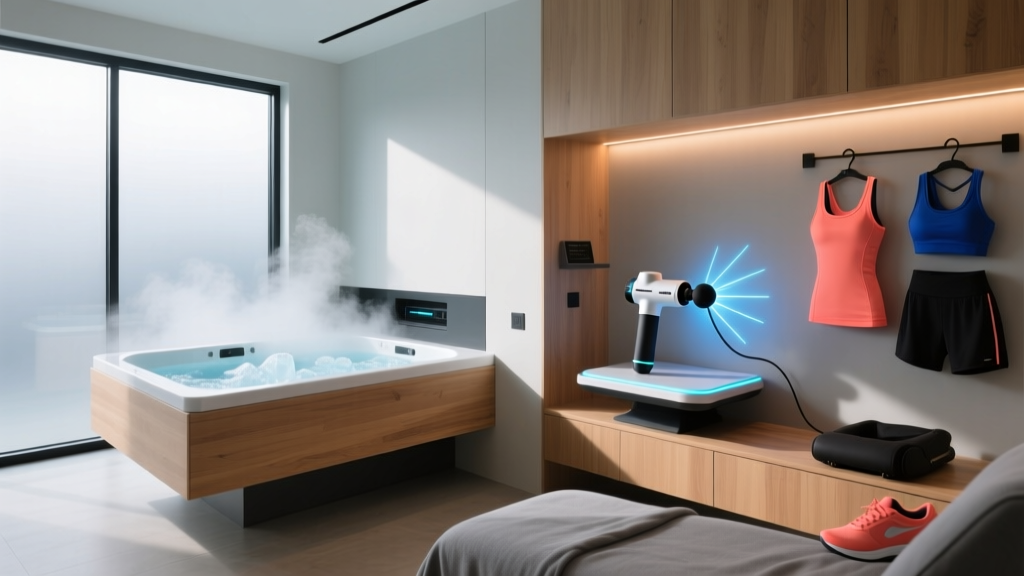
Beyond structural integrity, a functional home recovery room must seamlessly transition between the 'wet zone' (the plunge) and the 'dry zone' (percussive therapy and stretching). This guide breaks down how to optimize a small-space layout to accommodate both a compact cold plunge and a dedicated ergonomic station for targeted percussive routines.
Compact Cold Plunge Footprints and Load Limits
When space is at a premium, the physical dimensions and chiller placement of your cold plunge dictate the entire room layout. Modern chillers, like the Plunge Pro XL, can be tucked under floating vanities or housed in adjacent closets with ventilation louvers to reduce noise and visual clutter in the main recovery area.
| Model | Dimensions (L x W x H) | Filled Weight | Footprint Strategy | Power Requirement |
|---|---|---|---|---|
| Plunge Evolve Series (Standard) | 71' x 30' x 26' | ~850 lbs | Linear wall placement; requires external chiller closet. | Dedicated 20A GFCI |
| Sun Home Cold Plunge (Lumi) | 46' x 31' x 39' | ~650 lbs | Corner wedge; built-in chiller saves exterior floor space. | Dedicated 15A GFCI |
| Nurecover Pod (Portable) | 30' diameter x 30' H | ~350 lbs | Temporary balcony or shower-stall deployment; drain via floor siphon. | Standard 15A Outlet |
Designing the Dry Zone: Percussive Therapy Integration
The wet zone is only half the recovery equation. To maximize the physiological benefits of cold exposure, you need a dry, ergonomic area immediately adjacent to the plunge. When space is limited, a traditional massage table will consume 30 square feet of floor space, effectively ruining the flow of a compact room.
The solution is vertical space optimization. Install a wall-mounted folding massage table, such as the Master Massage Apollo Wall-Mount model. When folded, it protrudes only 8 inches from the wall, leaving the floor clear for post-plunge movement. When deployed, it provides the necessary stability for targeted soft-tissue work, which is crucial when addressing specific aesthetic and lymphatic goals.
Ergonomics for Using a Massage Gun for Cellulite
Many users incorporate percussive therapy into their body contouring routines. Using a massage gun for cellulite requires specific ergonomic angles that are nearly impossible to achieve while standing or sitting on a cramped bathroom stool. Cellulite reduction protocols rely on stimulating lymphatic drainage and increasing localized blood flow to the subcutaneous fascia. To do this effectively, the user must be prone or supine, allowing the glutes, thighs, and hips to be fully relaxed.
When utilizing a high-end device like the Theragun PRO Plus for this purpose, spatial layout matters. You need at least 36 inches of clearance on both sides of the massage table to perform the long, sweeping strokes required for lymphatic flushing. Attach the Dampener or the Supersoft head, set the device to 1750 RPM, and use the wall-mounted table to ensure your target tissues are accessible without awkward twisting, which can lead to user fatigue and inconsistent pressure application.
The Post-Plunge Protocol: Vascular Flush and Contouring
Combining cold water immersion with percussive therapy creates a powerful vascular pump. According to research indexed in the National Library of Medicine, cold water immersion triggers severe vasoconstriction, pushing blood and lymphatic fluid toward the core. When you step out and immediately begin percussive therapy, you stimulate rapid vasodilation and mechanical lymphatic movement.
- The Immersion Phase (3-5 Minutes): Submerge in the cold plunge at 45°F (7°C). Focus on diaphragmatic breathing to manage the cold shock response.
- The Transition (1 Minute): Exit the plunge, pat dry with a microfiber towel (avoid heavy rubbing to preserve the epidermal barrier), and move to the wall-mounted table.
- The Percussive Flush (10 Minutes): While utilizing your massage gun for cellulite-prone areas (thighs, glutes, hips), use light-to-moderate pressure. Do not push deeply into the muscle belly; instead, use sweeping, proximal-directed strokes (moving toward the heart) to encourage lymphatic return.
- The Thermal Rebound: Allow the body to re-warm naturally. The combination of cold-induced vasoconstriction and massage-induced mechanical friction will leave the targeted tissues highly oxygenated.
Moisture Management in Enclosed Recovery Spaces
Bringing an ice bath and cold plunge tub for home use into a small, enclosed space introduces massive humidity challenges. A 45°F water surface in a 72°F room will generate continuous condensation on walls, mirrors, and electrical fixtures. Left unchecked, this moisture leads to toxic mold growth within the drywall cavities. The EPA's guidelines on indoor moisture explicitly warn that chronic condensation in poorly ventilated areas compromises structural integrity and indoor air quality.
The HVAC Solution: Do not rely on a standard bathroom exhaust fan. You must install a commercial-grade dehumidifier, such as the AlorAir Sentinel HDi90 (capable of removing 90 pints of water per day), equipped with a continuous gravity drain line tied directly into the cold plunge's floor sink. Additionally, coat all walls in the recovery zone with a semi-gloss, mold-inhibiting epoxy paint to create an impermeable vapor barrier.
The 6x8-Foot Recovery Room Blueprint
If you are converting a standard 6x8-foot spare room or walk-in closet into a recovery sanctuary, follow this exact layout blueprint to maximize utility:
- North Wall (Wet Zone): Place the Sun Home Lumi cold plunge in the corner. The built-in chiller eliminates the need for external hoses. Install a stainless steel floor drain directly beneath the unit's overflow valve.
- East Wall (Dry Zone): Mount the folding massage table at a height of 28 inches. Ensure the wall studs are reinforced with plywood backing to support the dynamic load of a user leaning on the table while operating a massage gun.
- South Wall (Storage & Climate): Install a slatwall panel system to hang the Theragun, attachments, microfiber towels, and neoprene plunge covers. Place the AlorAir dehumidifier in the corner, routed to the floor drain.
- Electrical Layout: Hire a licensed electrician to run two dedicated 20-amp GFCI circuits. One for the cold plunge chiller, and one for the dehumidifier and wall-mounted heated towel rack. Never put a cold plunge compressor on a shared circuit with high-draw appliances.
By treating your home recovery space as a cohesive ecosystem rather than a collection of isolated gadgets, you unlock the true potential of contrast therapy. The physical layout of your room directly dictates the consistency of your routines. When the transition from a freezing cold plunge to a targeted, ergonomic massage station is frictionless, the daily habit of optimizing your vascular health and tissue recovery becomes effortless.
More gear to consider
All reviews
Massage Gun After Running or Compression Boots? Setup Guide

Cupping Therapy Equipment & Massage Gun for Plantar Fasciitis Care
Foam Roller Density Guide & Flyby Massage Gun Space-Saving Setup

Troubleshooting Stretching Equipment & Massage Gun for Muscle Pain

Ekrin Athletics B37S Massage Gun vs Theragun Prime: 2026 Showdown