Compact Portable Cardio Equipment: Treadmill Deck Lube Value Analysis
Discover how treadmill deck lube maximizes the lifespan and value of compact portable cardio equipment. Read our budget breakdown and maintenance guide.

The Hidden Depreciation of Portable Cardio Gear
The market for compact portable cardio equipment options has exploded in 2026, driven by remote work culture and the shrinking footprint of modern apartments. Walking pads, under-desk treadmills, and foldable mini-steppers offer incredible convenience. However, a critical gap exists between the upfront purchase price and the true long-term cost of ownership. Many consumers treat a $300 walking pad as a disposable appliance, tossing it when the belt stalls or the motor whines. This is a fundamental misunderstanding of fitness equipment economics.
The secret to transforming a fragile budget purchase into a long-term cardiovascular asset lies in a single, inexpensive maintenance step: applying high-quality treadmill deck lube. In this comprehensive budget breakdown and value analysis, we will dissect the mechanical realities of portable cardio machines, prove the ROI of preventative lubrication, and provide a step-by-step protocol to protect your investment.
Quick Value Insight
Replacing a burned-out lower control board (LCB) on a compact walking pad costs between $85 and $140, plus shipping. A premium bottle of 100% silicone treadmill deck lube costs roughly $14 and lasts up to three years. The math heavily favors preventative maintenance.
The Engineering Flaw: Friction, Amp Draw, and Burnout
To understand why treadmill deck lube is non-negotiable for compact portable cardio equipment, you must understand the engineering constraints of sub-3HP motors. Unlike full-sized commercial treadmills that boast massive 4.0 HP continuous-duty AC motors and thick phenolic decks, portable walking pads rely on lightweight brushed DC motors (typically rated between 2.0 and 2.5 peak HP) and high-density MDF or composite resin decks.
The Friction Factor
When the PVC or urethane belt rubs against a dry MDF deck, the coefficient of friction increases dramatically. According to biomechanics and fitness equipment repair data, a dry belt can increase the mechanical resistance by up to 35%. To maintain your target walking speed of 3.0 MPH, the DC motor must draw significantly more amperage. This excess electrical current generates intense heat within the motor windings and the lower control board.
- Edge Case Failure 1: The thermal overload switch trips repeatedly, eventually failing in the 'closed' position, killing the machine.
- Edge Case Failure 2: The MDF deck absorbs ambient humidity and warps under the heat and friction, causing the belt to track permanently to the left or right.
- Edge Case Failure 3: The increased amp draw fries the MOSFETs on the motor control board, resulting in a sudden, unrepairable dead unit.
By introducing a microscopic layer of 100% silicone treadmill deck lube between the belt and the deck, you reduce the coefficient of friction to near-zero. The motor draws only the baseline amperage required, running cooler, quieter, and vastly extending the lifespan of the entire drivetrain.
Budget Breakdown: The True Cost of Ownership
Let us run a 3-year value analysis comparing the cost of owning popular compact portable cardio equipment options with and without a strict treadmill deck lube maintenance schedule. This data assumes an average usage of 45 minutes per day, 5 days a week.
| Equipment Model | Upfront Cost | Maintenance Cost (3 Yrs) | Projected Repair/Replacement | Total 3-Yr Cost |
|---|---|---|---|---|
| Generic Budget Walking Pad (No Lube) | $249 | $0 | $249 (Full replacement at month 14) | $498 |
| Generic Budget Walking Pad (With Lube) | $249 | $14 (Silicone Lube) | $0 | $263 |
| King Smith WalkingPad X21 (No Lube) | $599 | $0 | $110 (LCB Replacement at month 22) | $709 |
| King Smith WalkingPad X21 (With Lube) | $599 | $14 (Silicone Lube) | $0 | $613 |
As the table illustrates, neglecting treadmill deck lube effectively doubles the cost of ownership for budget models and adds a 20% premium to high-end portable models due to inevitable component failure. For deeper insights into the physiological benefits of maintaining a consistent daily walking routine on these devices, refer to the Mayo Clinic's comprehensive guide to walking for fitness.
Selecting the Right Treadmill Deck Lube for Compact Models
Not all lubricants are created equal. Using the wrong chemical compound will destroy the PVC belt and void your warranty. When shopping for treadmill deck lube for your portable cardio equipment, adhere to these strict chemical guidelines:
1. 100% Silicone Liquid (The Gold Standard)
You must use 100% pure silicone in a liquid form (often sold with an applicator wand). Silicone is chemically inert, meaning it will not react with the PVC belt or the MDF deck. Brands like Spot On, Godora, and Impresa offer excellent 4oz bottles that cost between $12 and $16.
2. Avoid Silicone Gels and Pastes
Compact walking pads have low clearance between the belt and the deck. Thick gels create uneven ridges, causing the belt to bump and vibrate at higher speeds, which is particularly annoying when using an under-desk treadmill while working.
3. NEVER Use WD-40 or Petroleum Distillates
CRITICAL WARNING: Petroleum-based lubricants, including standard WD-40, 3-in-One oil, and lithium grease, will immediately dissolve the chemical bonds in the PVC walking belt. This leads to catastrophic belt stretching, delamination, and total machine failure within days.Step-by-Step Maintenance Protocol for Folding Walking Pads
Compact portable cardio equipment options often feature a center folding hinge (like the WalkingPad R2 or UREVO Strol). This hinge creates a unique topographical challenge for belt lubrication. Follow this exact protocol every 3 to 6 months, or after every 150 miles of use.
- Unplug and Cool Down: Disconnect the machine from the wall. If you just finished a workout, wait 30 minutes for the deck and motor housing to cool to room temperature.
- Loosen the Rear Roller: Using the provided Allen wrench, turn the left and right rear adjustment bolts counter-clockwise by exactly three full turns. This creates enough slack to lift the belt.
- Address the Center Hinge: For folding models, gently lift the belt near the center hinge. Wipe away any accumulated black dust (a mix of degraded belt material and dirt) using a dry microfiber cloth. Do not use wet wipes, as moisture will warp the MDF deck.
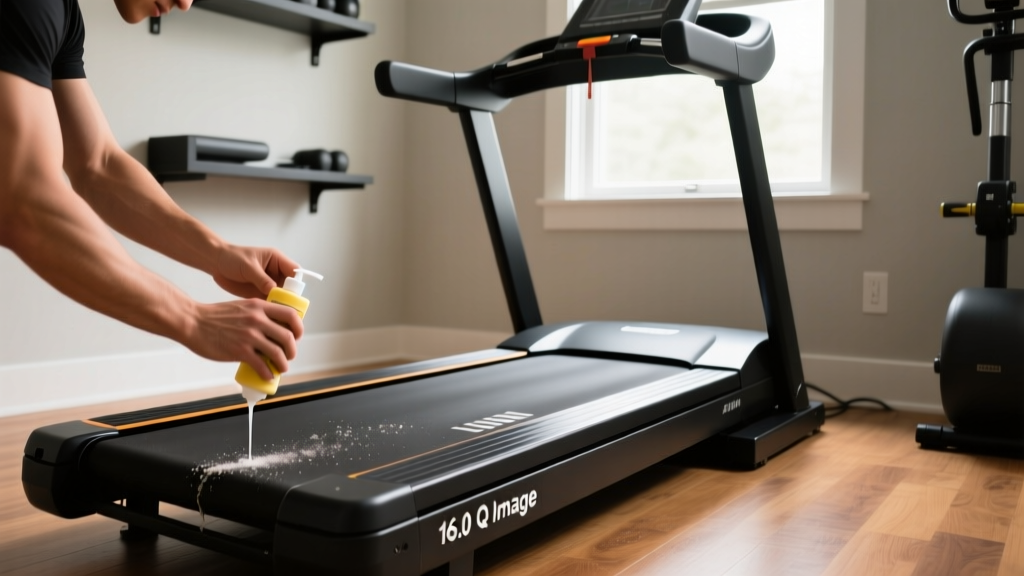
- Apply the Treadmill Deck Lube: Insert the applicator wand under the belt on the left side, near the front roller. Squeeze exactly 1/2 ounce of silicone liquid in a zig-zag pattern as you pull the wand toward the rear. Repeat on the right side.
- Retighten and Center: Tighten the rear bolts clockwise by the exact same three turns. Plug the machine in, turn it on to 2.0 MPH, and observe the belt tracking. If it pulls left, tighten the left bolt a quarter-turn and loosen the right.
- Distribute the Lube: Walk on the machine at a slow pace for 3 minutes. Your footfalls will press the belt against the deck, evenly distributing the silicone across the entire surface area.
Top Compact Portable Cardio Options Built for Longevity
If you are entering the market for compact portable cardio equipment options and want models that respond exceptionally well to a treadmill deck lube maintenance regimen, consider these top-tier 2026 selections:
King Smith WalkingPad X21
Price Range: $549 - $599
Why it holds value: The X21 features a dual-system folding mechanism and a slightly thicker composite deck than its predecessors. When paired with routine silicone lubrication, the 3.0 Peak HP motor runs whisper-quiet, making it the premier choice for shared home offices. You can read more about the engineering behind top-tier walking pads in Wired's extensive walking pad reviews.
UREVO Strol 2E
Price Range: $329 - $379
Why it holds value: UREVO has upgraded the Strol 2E with a reinforced steel frame beneath the MDF deck, reducing the flex that normally accelerates belt wear. The belt tensioning system is highly accessible, making the 6-month treadmill deck lube application a literal two-minute job.
Final Verdict: The ROI of Preventative Maintenance
When evaluating compact portable cardio equipment options, consumers often hyper-fixate on upfront pricing, motor size, and app connectivity. However, the true financial value of a walking pad is determined by its mechanical longevity. A $14 bottle of 100% silicone treadmill deck lube is the single highest-ROI accessory you can purchase for your home gym. By neutralizing friction, protecting low-voltage DC motors, and preserving the structural integrity of lightweight decks, you transform a disposable piece of tech into a reliable, multi-year cornerstone of your daily cardiovascular health.
More gear to consider
All reviews
Which Is Better: Treadmill or Elliptical Machine for Home Maintenance?
Stair Climber Setup: Upgrading From 3 Miles Per Hour on Treadmill
Manual vs Motorized Treadmills: Setup with RUNN Treadmill Sensor
Beyond the Treadmills Definition: Expert Belt Maintenance Guide

Compact Cardio Maintenance: Walking Pads & The Disney Treadmill