Compact Portable Cardio: Maintenance & Normal Heart Rate on Treadmill
Discover 2026 maintenance tips for compact portable cardio equipment and learn how to accurately track your normal heart rate on treadmill walking pads.

The shift toward micro-apartments and permanent work-from-home setups has made compact portable cardio equipment a staple in modern fitness routines. However, the engineering compromises required to make a treadmill fold into a closet or an elliptical fit under a desk introduce unique mechanical vulnerabilities. Furthermore, because these machines often prioritize space over advanced console telemetry, users frequently struggle to accurately monitor their cardiovascular output.
In this guide, we break down the essential maintenance protocols to extend the lifespan of your compact cardio gear, while addressing a common physiological challenge: establishing and tracking a normal heart rate on treadmill walking pads and low-profile machines.
The 2026 Compact Portable Cardio Landscape
Before diving into wrench-and-lube maintenance, it is crucial to understand the mechanical limitations of today's top portable options. Compact machines typically utilize smaller direct-current (DC) motors and abbreviated track lengths, which directly impacts both their longevity and the intensity of the workout they can provide.
| Equipment Type | Top 2026 Model | Avg. Price | Primary Failure Point | HR Tracking Accuracy |
|---|---|---|---|---|
| Under-Desk Walking Pad | UREVO Strol 2E | $399 | Motor overheating / Belt fraying | Poor (Grip sensors absent) |
| Compact Elliptical | Cubii Move | $249 | Pivot joint wear / Magnetic drag | Moderate (App estimation) |
| Folding Upright Bike | XTERRA FB150 | $180 | Drive belt slippage / Pedal bearings | High (ANT+ compatible) |
Longevity Protocols for Walking Pads and Compact Treadmills
Walking pads are notorious for premature motor burnout. Because they lack the massive cooling fans found in full-sized commercial treadmills, a 2.0 HP walking pad motor runs significantly hotter. To ensure your compact treadmill survives past its 1-year warranty, implement the following maintenance schedule.
Step-by-Step Belt and Motor Care
- Clear the Intake Vents: Walking pads sit flush with the floor, acting as magnets for dust bunnies and pet hair. Every 14 days, use a can of compressed air to blow out the motor hood vents. Crucial: Keep the air pressure under 30 PSI and hold the nozzle at least six inches away to avoid damaging the internal Hall effect speed sensors.
- Check Belt Deflection: Lift the edge of the walking belt in the center of the deck. It should lift exactly 2 to 3 inches. If it lifts higher, the belt is too loose and will slip during use, causing the motor to draw excess amperage and overheat. Tighten the rear roller adjustment bolts by a quarter-turn clockwise until deflection is correct.
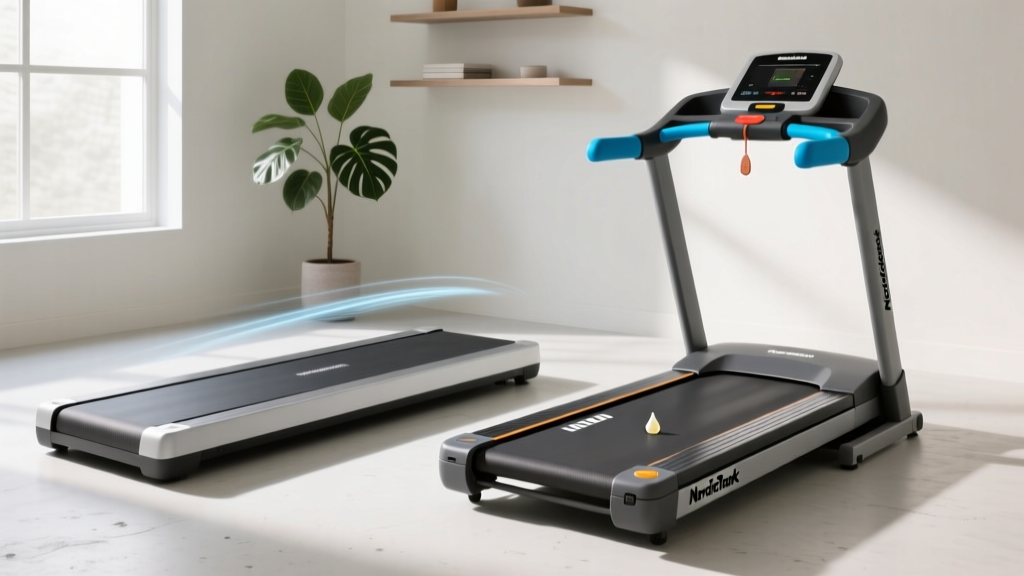
- Apply 100% Silicone Lubricant: Compact decks generate immense friction. Every 40 miles (or monthly for daily users), lift the belt and apply exactly 15ml of 100% pure silicone treadmill lubricant down the center of the deck. Never use petroleum-based sprays like WD-40, which will melt the PVC belt backing.
Achieving a Normal Heart Rate on Treadmill Walking Pads
One of the most frequent complaints from users of compact portable treadmills is the inability to reach a meaningful cardiovascular zone. Because most walking pads cap out at 3.0 to 4.0 mph and lack an incline feature, fit individuals often find their pulse stagnating in the 80–90 BPM range—barely above resting levels.
So, what is a normal heart rate on treadmill setups when the machine's mechanical limits restrict your speed? According to the American Heart Association, your target heart rate for moderate-intensity physical activity should be between 64% and 76% of your maximum heart rate (estimated as 220 minus your age). For a 35-year-old, this means a normal, effective workout heart rate should sit between 118 and 139 BPM.
Overcoming the 'Low-Intensity Trap'
If your compact treadmill maxes out at 3.5 mph, flat walking will not elevate your heart rate into this target zone. To achieve a normal heart rate on treadmill walking pads without running, you must artificially increase the metabolic demand:
- Add a Weighted Vest: Donning a 10lb to 20lb weighted vest while walking at 3.0 mph can increase your heart rate by 10 to 15 BPM, pushing you into the fat-burning Zone 2 without requiring a higher belt speed.
- Incorporate Arm Ergometrics: Because walking pads lack motorized handrails, you are free to use light dumbbells (2lb–5lb) or resistance bands anchored to your desk to engage the upper body, drastically increasing cardiac output.
- Use a Chest Strap Monitor: Compact machines rarely include accurate grip-based heart rate sensors. Pairing a Polar H10 or Garmin HRM-Pro chest strap via Bluetooth to your phone is the only reliable way to verify you are actually hitting your target BPM.
'Many users assume that simply stepping on a walking pad counts as a cardio session. But without monitoring your heart rate, you might just be doing low-intensity NEAT (Non-Exercise Activity Thermogenesis) movement. To get true cardiovascular adaptation, you must verify you are sustaining an elevated heart rate for at least 20 continuous minutes.'
For a deeper dive into calculating your specific zones, the Mayo Clinic's guide on exercise intensity provides excellent frameworks for mapping your perceived exertion to actual heart rate data.
Maintenance for Portable Ellipticals and Folding Bikes
If your compact cardio option of choice is an under-desk elliptical or a folding upright bike, the maintenance shifts from belt care to bearing and magnetic resistance preservation.
Pivot Points and Drive Belts
Compact ellipticals like the Cubii utilize heavily stressed pivot joints to manage the elliptical path in a fraction of the space of a full-sized machine. Every 90 days, apply a single drop of PTFE (Teflon) dry lubricant to the main crank bearings and pedal arm pivots. Avoid wet oils, which will attract dust and form a grinding paste that destroys the bushings.
For folding exercise bikes, the internal drive belt is the primary wear item. If you hear a rhythmic 'slapping' sound while pedaling, the poly-V belt has stretched. Most compact bikes feature a tensioner bolt near the bottom bracket. Tightening this by two full turns will restore silent operation and prevent the magnetic resistance flywheel from stuttering.
Final Thoughts on Compact Cardio Longevity
Investing in compact portable cardio equipment is an excellent way to maintain daily movement in space-constrained environments. However, these machines require a more hands-on maintenance approach than their full-sized counterparts. By keeping the motor housings free of dust, strictly adhering to silicone lubrication schedules, and actively managing your workout intensity to ensure a normal heart rate on treadmill sessions, you can easily double the functional lifespan of your equipment. As the Cleveland Clinic notes regarding daily walking routines, consistency is the ultimate driver of cardiovascular health—provided your machine is well-oiled and your heart rate is actually in the zone.
More gear to consider
All reviews
Curved Manual vs Motorized: Picking the Right ifit.com Treadmill
Rowing Machine Setup: Why It Wins the Treadmill vs Elliptical Debate

Walking Pad vs Assault Treadmill: A Beginner's Step-by-Step Guide

Is It Easier to Run on a Treadmill or Outside? Under-Desk Value Guide
Walking Pad Review: Belt Care & NordicTrack Treadmill Belt Lubricant