
Barbell Collar Types & Triceps Pushdowns with Dumbbells Safety Guide
Compare barbell collar and clamp types for 2026. Learn which locking mechanism ensures safety for heavy squats and triceps pushdowns with dumbbells.

The Unsung Heroes of Free Weight Safety
In the hierarchy of gym equipment, barbell collars and dumbbell clamps are frequently relegated to an afterthought. Yet, as any seasoned powerlifter or physical therapist will attest, a failed collar is one of the most common catalysts for catastrophic gym injuries. Whether you are bailing on a 400-pound back squat or performing high-rep isolation work, the mechanical integrity of your weight-locking system is non-negotiable. In 2026, the market is saturated with varying locking mechanisms—from traditional Olympic spring collars to aerospace-grade aluminum clamps. This guide dissects the engineering, failure modes, and ideal use cases for every major collar type on the market.
⚠️ Safety Alert: Never assume a collar is secure based solely on brand reputation. Manufacturing tolerances on barbell sleeves can vary by up to 0.4mm between brands (e.g., Eleiko vs. Rogue vs. Rep Fitness), which directly impacts the gripping surface area of clamp-style collars. Always perform a physical 'tug test' before lifting.Comprehensive Collar & Clamp Comparison Matrix
Before diving into the mechanical nuances, here is a high-level comparison of the three dominant collar categories available in 2026. Data reflects average market pricing and standardized drop-test performance.
| Collar Type | Top 2026 Models | Avg. Price (Pair) | Grip Mechanism | Best Application |
|---|---|---|---|---|
| Olympic Spring | Eleiko Olympic, Rogue HG 2.0 | $22 - $40 | Radial Spring Tension | Olympic Weightlifting, Dynamic Movements |
| Locking Jaw / Clamp | Rogue Aluminum, Lock-Jaw Pro | $35 - $55 | Mechanical Lever & Nylon Pad | Powerlifting, Strongman, Heavy Drops |
| Spinlock / Threaded | Standard 1" Iron, CAP Barbell | $10 - $18 | Helical Threading | Lightweight Home Gyms, Adjustable Dumbbells |
Deep Dive: Mechanisms, Materials, and Failure Modes
1. Olympic Spring Collars (The Weightlifter's Standard)
Spring collars rely on the radial tension of heavy-gauge steel wire to grip the barbell sleeve. The Rogue HG 2.0 Spring Collars and the premium Eleiko Olympic Spring Collars remain the gold standard for Olympic weightlifting. Because they lack rigid housing, they do not impede the rotation of the barbell sleeve during the explosive turnover of a snatch or clean and jerk.
- Weight: Typically 0.15 lbs to 0.25 lbs per collar.
- Failure Mode: Metal fatigue. After 2 to 3 years of heavy use, the steel wire loses its tensile memory, resulting in a collar that slides off under minimal lateral pressure. Furthermore, the plastic-coated grips frequently tear, exposing sharp wire ends.
- Edge Case: Spring collars are highly susceptible to 'plate shift' during slow, grinding eccentric lifts. If you are doing heavy negatives, the plates can slowly inch outward, compressing the spring and eventually slipping off the sleeve.
2. Locking Jaw & Clamp Collars (The Powerlifter's Choice)
Clamp collars use a mechanical lever to drive a rigid housing (usually aluminum or high-density nylon) against the sleeve, pinning the plates together. The Rogue Aluminum Collars ($45/pair) feature an anodized aircraft-aluminum body and a proprietary locking latch that prevents the lever from vibrating open. According to extensive durability testing by BarBend's equipment review team, high-end clamp collars can withstand thousands of drop cycles from shoulder height without structural deformation.
- Weight: 0.45 lbs (Lock-Jaw Pro) to 0.56 lbs (Rogue Aluminum) per collar.
- Failure Mode: Hinge snapping. Cheaper, injection-molded plastic clamps (often found in the $15-$20 range) are notorious for snapping at the hinge pin when dropped repeatedly onto rubber horse-stall mats.
- Pro-Tip: Always place the lever mechanism facing upward or outward when loading the bar. If the lever faces the floor during a deadlift, the impact can force the latch open, instantly releasing the plates.
3. Spinlock Collars (For Threaded & Adjustable Dumbbells)
Spinlock collars are the standard for 1-inch threaded bars and traditional adjustable dumbbell handles. They rely on helical threading to apply direct, crushing force against the weight plates. While incredibly secure when tightened properly, they are the slowest to load and unload.
- Weight: Varies wildly; cast iron star-lock nuts can weigh up to 1.5 lbs each.
- Failure Mode: Cross-threading and vibration loosening. If the threads are stripped or misaligned, the nut will bypass the locking groove. More dangerously, high-frequency vibrations can cause standard spinlock nuts to back off the thread entirely.
Application Spotlight: Triceps Pushdowns with Dumbbells & Overhead Safety
Why are we discussing barbell collars in the context of dumbbell training? Because the principles of weight security scale directly to plate-loaded dumbbell handles, especially during high-risk isolation movements.
Consider the biomechanics of performing triceps pushdowns with dumbbells. While traditionally a cable-based movement, many lifters utilize plate-loaded Olympic dumbbell handles or adjustable dumbbells to perform lying triceps extensions, floor pushdowns, or overhead variations. These movements require intense, repetitive acceleration and deceleration of the weight.
The Harmonic Vibration Problem: When performing triceps pushdowns with dumbbells using plate-loaded handles, the repetitive flexion and extension generate severe harmonic vibrations. Standard 1-inch spinlock nuts are highly vulnerable to this specific frequency of vibration, often backing off mid-set. A slipped plate during an overhead triceps extension or a lying dumbbell pushdown is a direct route to a facial or cranial injury.
The 2026 Solution: If you are executing triceps pushdowns with dumbbells or any high-rep isolation work using plate-loaded handles, abandon standard spinlocks. Upgrade to 2-inch Olympic dumbbell handles and secure them with miniature clamp collars (like the Lock-Jaw Pro Dumbbell Edition) or heavy-duty snap-ring collars. The mechanical lever of a clamp collar is entirely immune to the harmonic vibrations that loosen threaded spinlock nuts, ensuring your plates remain fused to the handle throughout the entire set.
Known Failure Modes & Maintenance Protocols
Even the most expensive collars will fail if neglected. Based on fleet data from commercial gym maintenance logs, here are the primary failure modes and how to prevent them:
- Chalk and Dust Buildup: Gym chalk (magnesium carbonate) acts as a dry lubricant. When chalk accumulates inside the nylon padding of a clamp collar, the coefficient of friction drops dramatically, causing the collar to slide during heavy squats. Fix: Scrub the inner padding with a stiff nylon brush and isopropyl alcohol monthly.
- Sleeve Tolerance Mismatch: Olympic sleeves are nominally 50mm in diameter. However, budget bars can measure 49.5mm, while precision-calibrated competition bars measure exactly 50.0mm. A clamp collar calibrated for a 50mm sleeve will lack the necessary clamping force on a 49.5mm sleeve, leading to lateral plate shift. Fix: Test your collars on your specific bars; if they slide with moderate hand pressure, the tolerance is too wide, and you need a spring collar or a different clamp brand.
- Lever Spring Fatigue: The internal torsion springs inside locking jaw collars can rust or snap if left in damp garage gyms. Fix: Apply a single drop of synthetic lithium grease to the hinge pin bi-annually.
The 2026 Buying Framework: Which Should You Choose?
Selecting the right collar is not about finding the 'best' overall, but matching the tool to your specific training modality. Use this decision matrix to finalize your purchase:
- Buy Olympic Spring Collars IF: You are an Olympic weightlifter, you prioritize fast loading times, or you frequently use specialty bars (like safety squat bars) where the sleeve geometry makes clamp collars difficult to seat properly.
- Buy Aluminum Clamp Collars IF: You are a powerlifter, strongman, or CrossFit athlete who drops weights from overhead or shoulder height. The rigid housing of the top-rated aluminum clamps provides the absolute highest lateral holding force on the market.
- Buy Upgraded Snap-Ring/Mini-Clamps IF: You utilize plate-loaded dumbbell handles for isolation work like triceps pushdowns with dumbbells, lateral raises, or heavy lunges, where vibration-induced loosening is a primary safety hazard.
Ultimately, whether you are stepping up to the platform for a 1-rep max deadlift or dialing in the mind-muscle connection during triceps pushdowns with dumbbells, your training is only as safe as your weakest mechanical link. Invest in high-tolerance, rigorously tested collars, maintain their friction surfaces, and never compromise on weight security.
More gear to consider
All reviews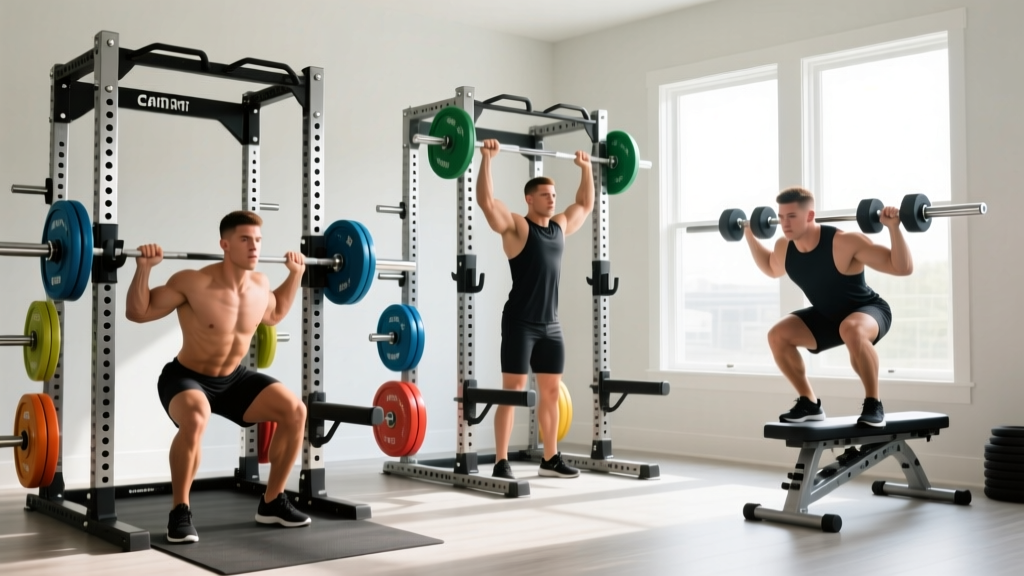
Power Rack vs Squat Rack vs Stand for HIIT Training with Dumbbells
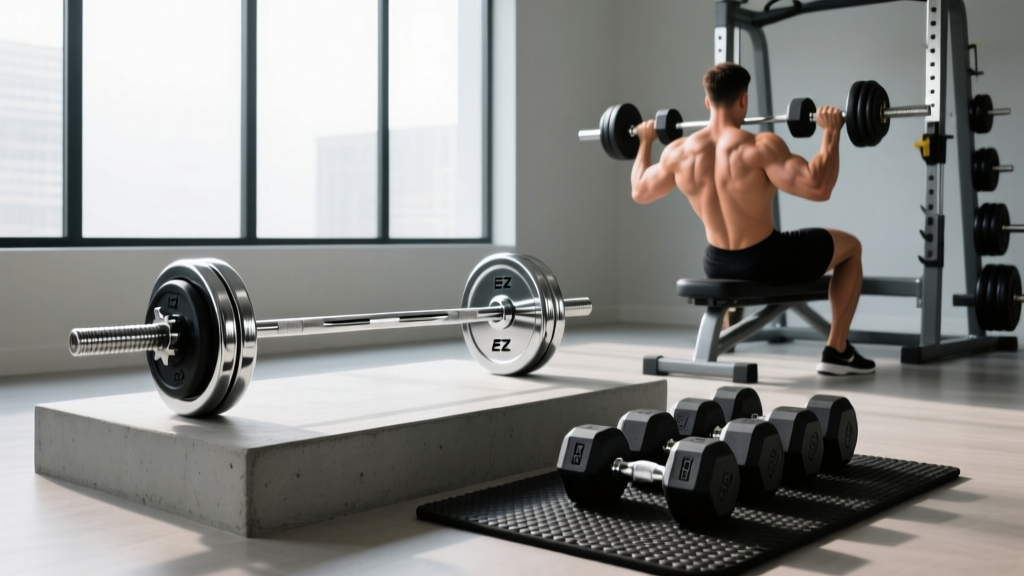
EZ vs Straight Bar Care & Upper Back Exercises with Dumbbells

Rubber Hex vs Urethane Care: Back Shoulder Workout with Dumbbells

EZ Bar vs Straight Bar: Is the Side Dumbbell Press Better?
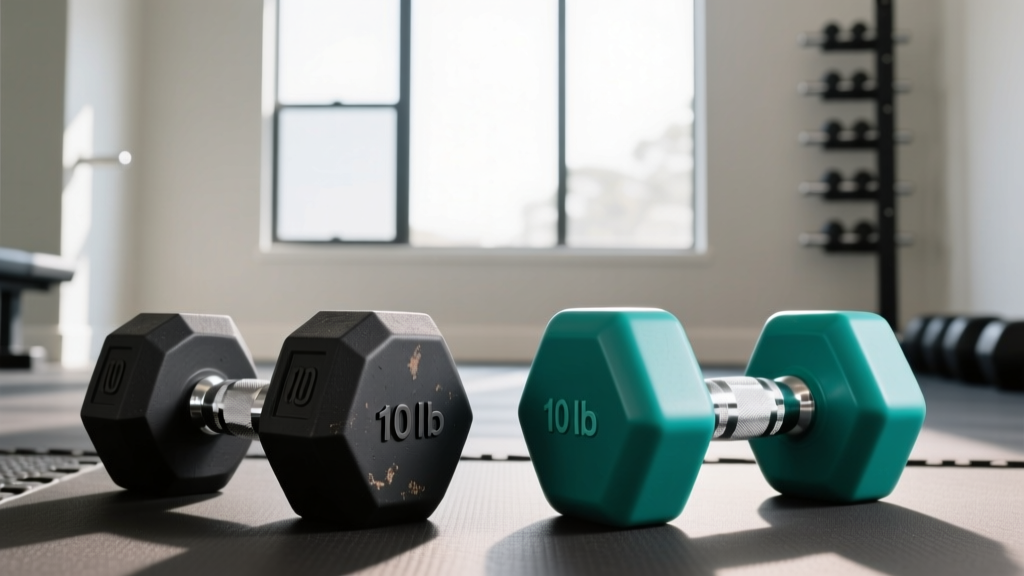
Rubber Hex vs Urethane: Optimizing Exercise for Wings With Dumbbells
