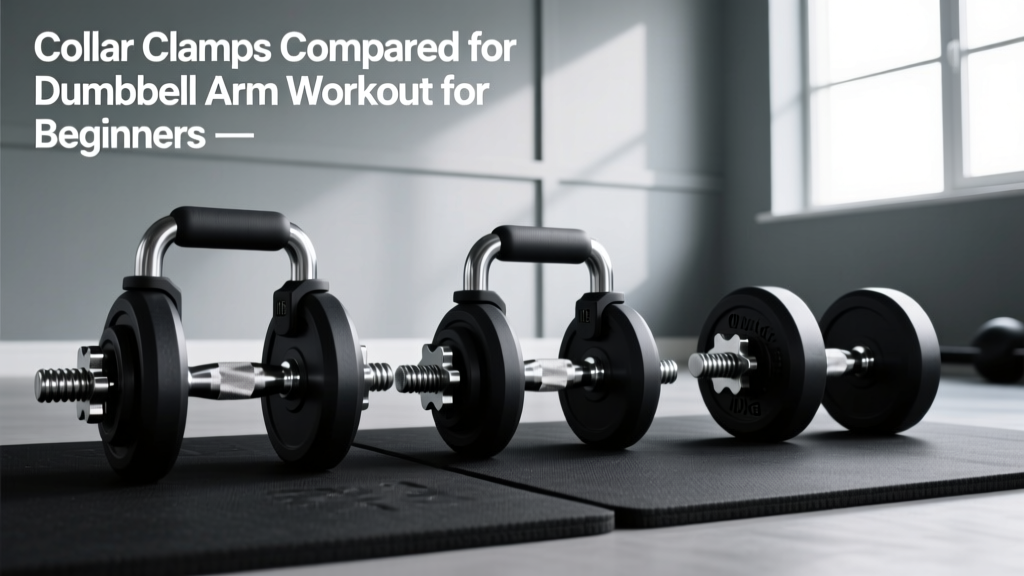
Collar Clamps Compared for Dumbbell Arm Workout for Beginners
Compare barbell collar and clamp types to secure your weights safely. Discover which quick-release, spring, or spinlock collar fits your arm workout needs.

The Hidden Bottleneck of Arm Isolation Training
When most lifters embark on a dumbbell arm workout for beginners, they rarely think about the hardware securing their plates. You grab a pair of adjustable dumbbells, twist on the standard star-lock spinlock collars, and start your bicep curls. But as you progress from basic 1-inch standard dumbbells to 2-inch Olympic dumbbell handles and short barbells, collar selection becomes a critical variable in your training safety and efficiency. In 2026, the market is flooded with clamping mechanisms, ranging from $12 spring clips to $45 aerospace-grade aluminum levers. Choosing the wrong collar for high-torque isolation movements can lead to mid-set plate shifts, premature grip fatigue, and catastrophic equipment failure.
Arm isolation movements—such as skull crushers, hammer curls, and overhead tricep extensions—subject the barbell or dumbbell sleeve to intense rotational torque. Unlike a static squat where the bar rests on your traps, arm workouts require constant wrist supination and pronation. If your collar lacks adequate lateral holding force, the plates will rattle, shift, and potentially slide off the sleeve mid-rep. According to the National Strength and Conditioning Association (NSCA), ensuring equipment stability is a foundational pillar of resistance training safety, particularly when the load is positioned directly over the face or joints.
Head-to-Head Clamp Comparison Matrix
To help you upgrade your home gym arsenal, we have tested and categorized the four primary collar types available in 2026. Below is a structured comparison matrix detailing their holding force, setup time, and ideal use cases.
| Collar Type | Avg. Price Range | Setup Time | Lateral Holding Force | Best Use Case |
|---|---|---|---|---|
| Threaded Spinlock | $10 - $18 | 15 - 30 seconds | Moderate (Thread Dependent) | 1-inch Standard Dumbbells |
| Spring Clips | $12 - $20 | 2 - 4 seconds | Low (10 - 15 lbs) | Light isolation, quick changes |
| Quick-Release Jaw | $35 - $45 | 3 - 5 seconds | High (40+ lbs) | Olympic dumbbells, heavy curls |
| Lever-Action Aluminum | $40 - $60 | 4 - 6 seconds | Extreme (60+ lbs) | Heavy barbell compounds, drops |
Deep Dive: Analyzing the Top Collar Types
1. Threaded Spinlock Collars (The Beginner Baseline)
Spinlock collars are the default hardware included with almost every budget-friendly adjustable dumbbell set. They feature a threaded interior that screws onto a matching threaded sleeve, secured by a star-shaped nut.
- Pros: Extremely secure when tightened properly; very inexpensive; zero risk of accidental clamping release.
- Cons: Notoriously slow to adjust. Threading a nut onto a 10-inch sleeve during a drop-set will ruin your rest interval. Furthermore, cross-threading is a common failure mode that permanently damages the sleeve.
- Verdict for Arm Work: Adequate for slow, controlled movements like concentration curls, but highly inefficient for supersets or drop-sets where rapid weight changes are required.
2. Spring Clips (The High-Rep Compromise)
Spring clips utilize high-carbon steel tension to grip the sleeve. You squeeze the handles, slide the clip over the barbell or Olympic dumbbell handle, and release. Models like the CAP Barbell Spring Collars dominate the budget space.
- Pros: Lightning-fast application; lightweight; inexpensive.
- Cons: Poor lateral holding force. Over time, the steel loses its temper, and the zinc plating flakes off, reducing the grip diameter. They also require significant hand strength to open, which can pre-fatigue your grip before a heavy deadlift or farmer's walk.
- Verdict for Arm Work: Acceptable for light tricep pushdowns or wrist curls, but never use them for overhead extensions or decline skull crushers where a slipping plate poses a severe injury risk.
3. Quick-Release Jaw Clamps (The Isolation Gold Standard)
Jaw clamps, popularized by the Lock-Jaw Pro 2.0 ($39.95), use a heavy-duty polycarbonate body and an internal steel spring mechanism. When you squeeze the handles, the internal jaw expands, and upon release, it bites aggressively into the steel sleeve.
- Pros: Incredible lateral holding force; fast application; does not scratch or damage Olympic sleeves; ergonomic design minimizes grip fatigue.
- Cons: Higher upfront cost; requires a minimum of 5/16-inch clearance on the sleeve (meaning you cannot load the bar to absolute maximum capacity).
- Verdict for Arm Work: The absolute best choice for Olympic dumbbell handles. They lock the plates tightly together, eliminating the distracting 'clanking' sound during hammer curls and ensuring the weight distribution remains perfectly balanced throughout the supination phase of a bicep curl.
4. Lever-Action Aluminum Collars (The Heavy-Duty Overkill)
Lever-action collars, such as the Rogue AH-1 Aluminum Collars ($45.00), use a cam-lever system to apply immense crushing force against the sleeve. Machined from aircraft-grade aluminum, these are the standard in commercial powerlifting gyms.
- Pros: Unmatched holding force; virtually indestructible; sleek aesthetic.
- Cons: Heavy (adding noticeable weight to light dumbbell handles); the lever can pinch fingers if mishandled; overkill for light isolation work.
- Verdict for Arm Work: While they will securely hold your plates during heavy close-grip bench presses, they are generally too bulky and heavy for dedicated dumbbell arm isolation routines. Save these for your main barbell compound lifts.
Biomechanics and Grip Fatigue: The Hidden Cost of Bad Clamps
Why does collar choice matter so much for a targeted arm day? The answer lies in wrist kinematics and grip endurance. During a standard dumbbell arm workout for beginners, the lifter is often instructed to maintain a neutral or supinated wrist position. If the plates on an Olympic dumbbell handle are not clamped tightly together, they will shift laterally by a fraction of an inch with every rep.
"Micro-shifts in plate distribution force the stabilizer muscles in the forearm and wrist to constantly recalculate the center of gravity. This neurological noise accelerates grip fatigue, forcing you to terminate the set before your target muscle (the bicep or tricep) reaches true mechanical failure."
By utilizing a high-tension quick-release jaw clamp, you fuse the plates and the handle into a single, solid unit. This eliminates rotational rattle, allowing you to focus 100% of your neural drive into the target muscle group rather than wasting energy stabilizing a loose load.
⚠️ SAFETY WARNING: Real-World Failure ModesNever trust a worn-out spring clip on a decline bench or during overhead tricep extensions. The most common failure mode for budget spring clips is 'tension relaxation.' After 6 to 12 months of daily use, the steel spring loses its elasticity, dropping the lateral holding force from 15 lbs to under 5 lbs. If you are performing a skull crusher and the bar tilts slightly, a 10 lb plate can easily slide past a weakened spring clip, resulting in a severe impact injury. Always inspect your clamps for metal fatigue and upgrade to jaw or lever collars for any movement where the barbell passes over your head or face.
Edge Cases: Short Sleeves and Bumper Plates
When transitioning from standard dumbbells to specialized equipment like short-sleeve Olympic dumbbell handles or loadable EZ-curl bars, space becomes a premium. A standard lever-action collar requires nearly an inch of sleeve space to clamp down. If you are using thick 10-pound bumper plates for high-rep arm endurance work, you may find that a lever collar simply will not fit on the sleeve. In these specific edge cases, the low-profile design of a quick-release jaw clamp is mandatory, as it requires significantly less lateral real estate while maintaining a vice-like grip on the remaining sleeve.
Final Verdict: Building Your 2026 Home Gym Arsenal
If you are strictly using 1-inch standard adjustable dumbbells for your foundational arm routines, well-maintained threaded spinlock collars remain the safest, most cost-effective option. However, the moment you upgrade to 2-inch Olympic dumbbell handles or short barbells, you must abandon spinlocks and spring clips for isolation work.
For 90% of lifters focusing on arm hypertrophy, isolation movements, and rapid drop-sets, the Quick-Release Jaw Clamp (like the Lock-Jaw Pro 2.0) is the undisputed champion. It offers the perfect synthesis of speed, safety, and sleeve preservation. Reserve your heavy-duty Lever-Action Aluminum Collars for your squat rack and deadlift platform, and keep your jaw clamps in your dumbbell caddy for your next intense arm day. Investing $40 in proper clamping hardware is a minor expense that yields massive dividends in training safety, focus, and muscle isolation.
More gear to consider
All reviews
Cast Iron vs Competition Kettlebells: Leg Workout Gym with Dumbbells

Barbell Collar Comparison: Safe Setup for Heavy Lifts and Dumbbell Exercises

Gym Layout: Kettlebells & Seated Dumbbell Overhead Triceps Extension

Maximize Benefits of Dumbbells: Neoprene Mistakes & Fixes
Space-Saving Dumbbell Racks for Your Dumbbell Leg Workout
