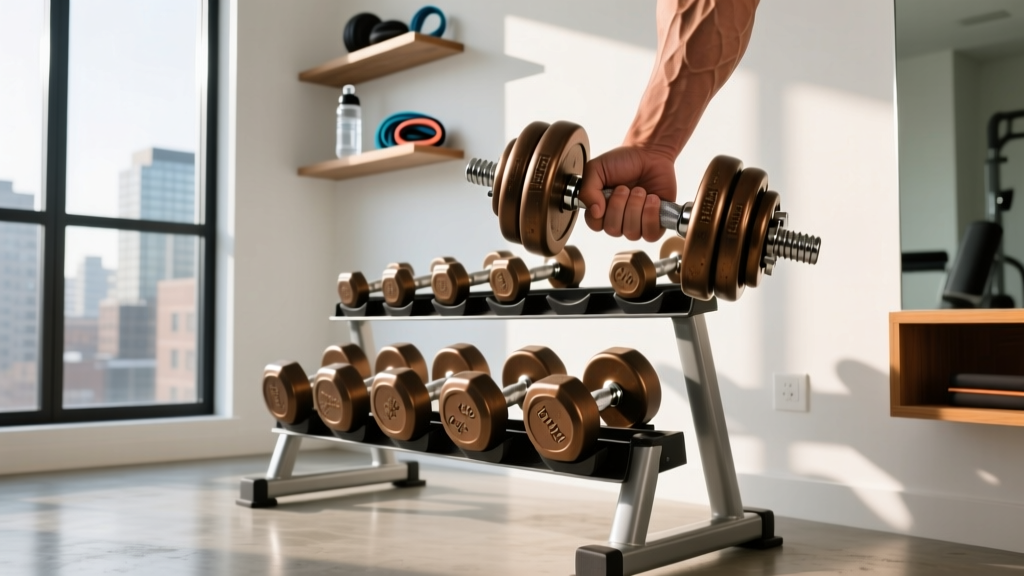
Do Dumbbell Curls Work Forearms? Save Your Grip & Dumbbell Racks
Discover how proper dumbbell rack storage and maintenance extends equipment life. Plus, we answer if dumbbell curls work forearms during heavy lifts.

The Post-Set Burnout: Where Anatomy Meets Equipment Care
If you spend enough time on fitness forums, you will inevitably see beginners asking, 'do dumbbell curls work forearms?' The biomechanical answer is a resounding yes. According to the American Council on Exercise (ACE) Exercise Library, the brachioradialis and wrist flexors act as critical dynamic stabilizers during supinated and neutral grip curls. However, for veteran lifters and home gym owners, the true test of forearm endurance doesn't happen during the concentric phase of the lift—it happens after the final rep when you are hauling 50-pound hex dumbbells back to a poorly designed storage rack.
When your grip is fried, the temptation is to drop weights or slam them onto the nearest surface. Over time, this careless storage degrades both the dumbbells and the rack itself. As of 2026, with commercial-grade urethane dumbbells averaging $2.50 to $3.50 per pound and heavy-duty 3-tier racks pushing past $500, protecting your investment requires a strategic approach to storage and maintenance. This guide breaks down the structural vulnerabilities of dumbbell racks and provides a meticulous maintenance protocol to maximize longevity.
Evaluating Dumbbell Rack Tiers for Long-Term Durability
Not all storage solutions are engineered equally. The way a rack distributes load dictates its lifespan and the wear-and-tear it inflicts on your dumbbells.
1. A-Frame Racks (The Budget Trap)
A-Frame racks (typically priced between $50 and $90) are ubiquitous in budget home gyms. They feature a steep incline and a narrow footprint. The Failure Point: The apex weld. When users hastily shove heavy dumbbells (35+ lbs) onto the top tier, the lateral force creates immense shear stress on the top welds. Furthermore, the steep angle causes dumbbells to slide and crash into each other, chipping rubber coatings and damaging knurling.
2. 3-Tier Horizontal Racks (The Commercial Standard)
Horizontal racks, like the Rogue Fitness 3-Tier Dumbbell Rack or the Rep Fitness SR-4000, utilize a 15-to-20-degree sloped tray. The Longevity Advantage: This shallow angle prevents rolling and allows lifters to set weights down with a controlled, downward motion rather than a lateral shove. The load is distributed across four vertical uprights rather than a single central spine, virtually eliminating weld fatigue.
3. Vertical Dumbbell Trees (The Space-Saver's Compromise)
Vertical trees save floor space but introduce a massive bending moment to the central pole. If loaded asymmetrically (e.g., all heavy weights on one side), the center pole can permanently bow over time. Maintenance Tip: Always load trees symmetrically and never exceed 60% of the manufacturer's stated maximum weight capacity to prevent micro-fractures in the base plate welds.
Expert Insight: The 'Drop Zone' Phenomenon
Equipment repair technicians note that 80% of rubber dumbbell damage occurs not during the workout, but during re-racking. When lifters experience forearm pump and grip failure, they tend to 'guide' the dumbbell onto the rack edge rather than placing it flat. This edge-striking peels the rubber casing away from the steel core, leading to irreversible delamination.
The FitGearPulse Maintenance Protocol
To ensure your dumbbell rack and storage solutions survive a decade of heavy use, implement this quarterly maintenance routine. These steps align with the preventative maintenance frameworks recommended by commercial facility standards outlined by Life Fitness Equipment Resources.
- Bolt Re-Torquing (Monthly): Vibration from dropped weights slowly backs out assembly bolts. Use a torque wrench to tighten all structural bolts to 45 ft-lbs. If your rack uses standard Grade 5 hardware, consider upgrading to Grade 8 hex bolts for superior shear strength.
- Weld Penetration Inspection (Quarterly): Use a high-lumen flashlight and shine it parallel to the weld joints at the base and tier supports. Look for hairline shadows or rust weeping, which indicate micro-fractures in the powder coat and underlying steel.
- Tray Alignment & Sag Check (Bi-Annually): Place a 24-inch spirit level across the horizontal trays. If the center of the tray sags more than 1/8th of an inch, the steel is experiencing plastic deformation. You may need to weld a support strut underneath the tray.
- Hardware Lubrication (Annually): Apply a dry PTFE (Teflon) lubricant to any moving parts, such as locking pins on adjustable racks or caster wheels on mobile storage units. Avoid WD-40, which attracts dust and creates an abrasive paste.
Rack & Dumbbell Lifespan Matrix
Understanding the expected lifespan of your gear helps you budget for replacements and identify when maintenance is no longer sufficient.
| Equipment Type | Average Cost (2026) | Expected Lifespan | Primary Failure Mode |
|---|---|---|---|
| A-Frame Rack | $50 - $90 | 2 - 4 Years | Apex weld snapping under lateral load |
| 3-Tier Horizontal Rack | $299 - $650 | 10 - 15+ Years | Tray sagging / Powder coat chipping |
| Rubber Hex Dumbbells | $1.50 - $2.00/lb | 3 - 5 Years | Rubber dry-rot, off-gassing, edge tearing |
| Urethane Dumbbells | $2.50 - $3.50/lb | 10+ Years | Cosmetic scuffing (structural failure is rare) |
Material Science: Protecting the Dumbbells Themselves
Proper rack maintenance is only half the battle; the environment in which you store your weights dictates their chemical longevity.
"Rubber is highly susceptible to UV degradation and ozone cracking. Storing rubber-coated dumbbells in a garage gym with direct sunlight exposure or near ozone-generating equipment (like certain air purifiers or arc welders) will cause the rubber to become brittle and crumble within 24 months."
The Urethane Advantage: If you are investing in a premium 3-tier rack, pair it with urethane dumbbells. Urethane (specifically formulations with a Shore A durometer rating of 85-90) is impervious to UV light, does not off-gas foul odors, and resists abrasion when slid across steel rack trays. While the upfront cost is higher, the cost-per-year of a urethane set stored on a well-maintained horizontal rack is significantly lower than replacing cheap rubber sets every few years.
Cleaning Protocols for Stored Weights
Sweat and skin oils contain salts and urea, which accelerate the oxidation of steel handles and degrade rubber.
- For Steel Handles: Wipe down with a microfiber cloth dampened with a 50/50 mix of water and white vinegar. Follow up with a light coating of 3-in-One oil to displace moisture.
- For Rubber/Urethane Cores: Use a mild dish soap and water solution. Avoid harsh chemical degreasers or bleach, which strip the protective factory waxes from rubber and accelerate dry-rot.
Final Thoughts on Gym Longevity
So, do dumbbell curls work forearms? Absolutely. But the strength you build in your grip and forearms should be used to control your equipment, not abuse it. Upgrading from a flimsy A-frame to a commercial-style 3-tier horizontal rack, combined with a strict quarterly maintenance routine, ensures your home gym remains safe, functional, and aesthetically pristine for decades. Treat your storage solutions with the same respect you treat your training program, and your equipment will easily outlast your personal records.
More gear to consider
All reviews
Top Adjustable Dumbbells 2026 & One Dumbbell Bicep Workout Guide

Bumper vs Iron Plates: 2026 Single Dumbbell Workout Trends
Olympic vs Standard Plates: Guide to Back Extensions with Dumbbells

Olympic Barbell Guide: Weight, Knurling & 1 Pound Dumbbells

Best Storage Racks for 1 lb Dumbbells & Light Weights (2026)
