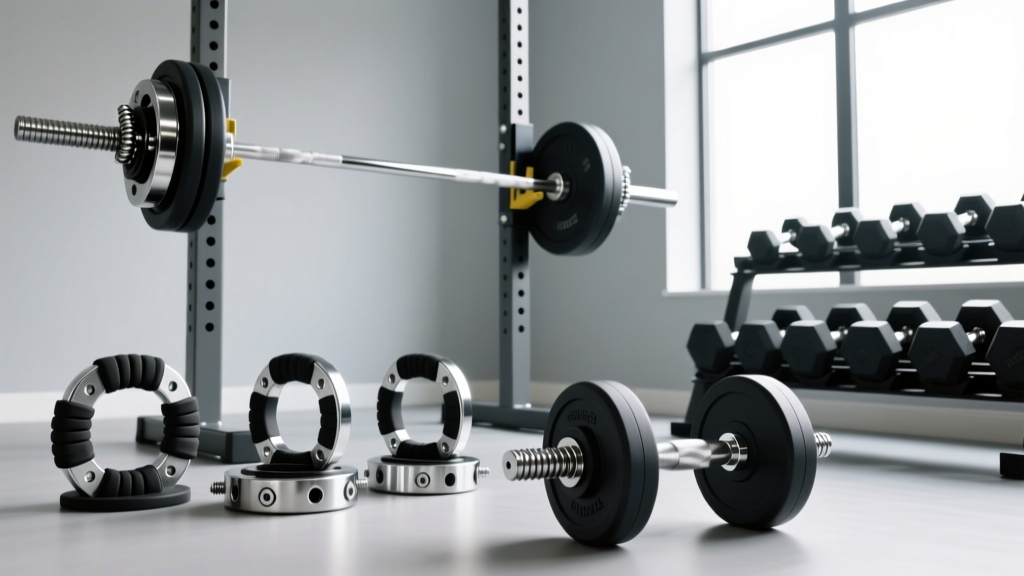
Barbell Collar & Clamp Types Comparison: Single Arm Rows with Dumbbells
Compare the best barbell collar and clamp types. Learn how to secure heavy lifts and single arm rows with dumbbells using top-rated 2026 models.

The Unsung Heroes of the Rack: Why Collar Selection Matters
When building a commercial or high-end home gym, lifters obsess over barbell whip, knurling aggression, and bumper plate durometer. Yet, the most critical safety component in the weight room is often an afterthought: the collar. A failure in your collar system doesn't just ruin a set; it can result in catastrophic plate shifts, barbell tipping, and severe injury. In 2026, the market is saturated with lever-action aluminum collars, polymer snap clamps, and precision spinlocks, each engineered for entirely different biomechanical demands.
This comprehensive barbell collar and clamp types comparison breaks down the exact mechanical advantages, failure modes, and pricing of the industry's top models. Furthermore, we will explore a highly specific, often-overlooked application: securing plate-loaded handles for heavy single arm rows with dumbbells, where the physics of unilateral loading demand absolute sleeve security.
⚠️ Safety Callout: Asymmetrical Loading RisksNever use standard spring clips for dynamic or asymmetrical movements. The kinetic energy generated during exercises like snatches, cleans, or heavy unilateral dumbbell rows will easily compress standard spring steel, leading to mid-rep plate migration.
Head-to-Head: The Big Three Collar Categories
To understand which collar belongs on your sleeve, we must evaluate the three dominant designs currently dominating the free weights market.
1. Lever-Action Aluminum Collars
The undisputed king of the modern weight room is the lever-action collar, with the Rogue HG 2.0 Collars setting the gold standard. Machined from 6061 aircraft-grade aluminum, these collars utilize a steel cam lever that clamps down on the barbell sleeve with immense radial pressure.
- Weight: 0.56 lbs per collar
- Price Range: $22 - $28 per pair
- Best For: Powerlifting, Olympic weightlifting, and general strength training.
- Failure Mode: Repeated drops from overhead can bend the steel cam lever or warp the aluminum hinge pin over a 3-to-5-year lifespan. They also struggle on older, worn-down barbell sleeves that measure under 49.5mm in diameter.
2. Polymer Snap Clamps
Polymer clamps, such as the Lock-Jawz Pro or Bull Clamps, rely on high-tension ABS plastic and internal steel springs to snap onto the sleeve. According to extensive durability testing by BarBend's equipment review team, these are the fastest collars to deploy, making them ideal for CrossFit or high-intensity interval training where plate changes are measured in seconds.
- Weight: 0.20 lbs per collar
- Price Range: $15 - $25 per pair
- Best For: CrossFit, quick-change circuits, and travel.
- Failure Mode: Polymer fatigue. Exposure to UV light, extreme cold (in unheated garage gyms), and repeated micro-fractures from dropping will cause the plastic housing to become brittle and shatter after 18 to 24 months of heavy use.
3. Precision Spinlock & Locking Collars
For competitive powerlifting and elite weightlifting, the International Powerlifting Federation (IPF) mandates collars that weigh exactly 2.5 kg each. The Eleiko Olympic Training Locking Collars utilize a threaded steel spinlock mechanism paired with a locking lever, ensuring zero lateral movement even under 1,000+ lbs of load.
- Weight: 5.5 lbs (2.5 kg) per collar
- Price Range: $85 - $110 per pair
- Best For: IPF/USAPL competition, heavy eccentric overload training.
- Failure Mode: Thread stripping if cross-threaded, and the sheer inconvenience of the 10-second screw-on time makes them useless for fast-paced training environments.
Unilateral Dynamics: Securing Single Arm Rows with Dumbbells
While most collar discussions focus on bilateral barbell lifts, the mechanics change drastically when transitioning to unilateral movements. Advanced lifters frequently use plate-loaded Olympic dumbbell handles (like the Titan Fitness 2" Loadable Handle or the Rogue Loadable Dumbbell Handle) to perform single arm rows with dumbbells at loads exceeding the 120-pound limit of standard commercial hex dumbbells.
When executing single arm rows with dumbbells, the pulling arc creates a distinct centrifugal force. As you drive your elbow past your torso at the peak of the contraction, the sudden deceleration transfers kinetic energy outward, pushing the weight plates laterally toward the end of the sleeve. If you are using cheap star-lock nuts or standard 1-inch spring clips, this shear force will routinely back the collar off, causing plates to rattle, shift, or slide off entirely mid-set.
Step-by-Step: Securing Loadable Handles for Heavy Rows
- Select the Right Sleeve: Ensure your loadable dumbbell handle has a sleeve length of at least 10 inches to accommodate multiple plates and the collar itself without overhang.
- Use Micro-Plates for Precision: When performing single arm rows with dumbbells, incremental weight jumps are vital. Use 1/4 lb or 1/2 lb micro-plates on the outside of the main bumpers to fine-tune the load.
- Deploy a Lever Collar: Slide a Rogue HG 2.0 or a smaller micro-lever clamp flush against the outermost plate. The radial compression of the aluminum cam will bite into the sleeve, completely neutralizing the outward centrifugal force generated during the rowing arc.
- The 'Shake Test': Before getting into your rowing stance, hold the dumbbell horizontally and give it a violent shake. If you hear the metallic 'clack' of plates shifting, your collar is not seated flush, or your sleeve tolerance is too wide for the collar model.
Expert Insight: "The arc of a heavy single-arm dumbbell row generates more lateral plate-shift force than a standard deadlift. Lifters using plate-loaded handles must treat their dumbbell collars with the same scrutiny as their barbell collars. A shifting plate during a 150-pound dumbbell row will instantly torque the wrist and compromise the lat contraction."
Comparison Matrix: Specs, Pricing, and Use Cases
Use the table below to quickly identify which collar type aligns with your specific training methodology and equipment roster.
| Collar Type | Top 2026 Model | Price (Pair) | Grip Mechanism | Ideal Application |
|---|---|---|---|---|
| Lever-Action Aluminum | Rogue HG 2.0 | $22.00 | Steel Cam / Radial | Heavy Compounds, Single Arm Rows with Dumbbells |
| Polymer Snap Clamp | Lock-Jawz Pro | $25.00 | ABS Spring Tension | CrossFit, Fast Plate Changes |
| Competition Spinlock | Eleiko Olympic Locking | $89.00 | Threaded Steel / Lever | IPF Powerlifting, Olympic Lifting |
| Standard Spring Clip | Generic Chrome Clip | $8.00 | Spring Steel Friction | Light Isolation, Storage Only |
Edge Cases: Sleeve Tolerances and Wear Patterns
One of the most common reasons for collar failure in 2026 is not the collar itself, but the barbell sleeve. Over years of use, the steel sleeves on barbells and plate-loaded dumbbell handles can wear down. A standard Olympic sleeve is 50mm in diameter. However, heavily used gym bars can wear down to 49.2mm or even 48.8mm at the ends.
When you apply a rigid aluminum lever collar to a worn sleeve, the cam fails to achieve full radial compression. During single arm rows with dumbbells, where the implement is tilted and subjected to multi-directional torque, a collar on a worn sleeve will spin freely. To combat this, high-end gyms are increasingly adopting collars with internal urethane lining or adjustable cam depths, which can compensate for up to 1.5mm of sleeve wear while maintaining a vice-like grip.
Final Verdict: Building Your Collar Arsenal
There is no single 'best' collar; there is only the right tool for the specific biomechanical demand. For the majority of lifters building a versatile home gym, a pair of Rogue HG 2.0 lever collars offers the best balance of price, durability, and security. They are robust enough to handle heavy squats and precise enough to secure the lateral forces generated during single arm rows with dumbbells on plate-loaded handles.
However, if your training involves high-volume Olympic lifting or competitive CrossFit, investing in a secondary set of Lock-Jawz polymer clamps will save you valuable seconds during transitions. Reserve the expensive, heavy Eleiko spinlocks strictly for your 1-rep max testing days and competition prep. By matching your collar type to the specific physics of your lifts, you ensure that your focus remains on muscle contraction and force production, rather than worrying about the hardware holding your gym together.
More gear to consider
All reviews
Bumper vs Iron Plates: Is Cable Hammer Curl Better Than Dumbbell?

Dumbbell Floor Press vs Dumbbell Bench Press: Top Adjustable Picks

Top Neoprene Dumbbells for Home Use & Dumbbell Hex Press (2026)

Barbell Collar Types Compared: Secure Lifts & Cable Rows with Dumbbells

Barbell Collar Types Compared: From Seated Chest Press with Dumbbells to Heavy Squats
