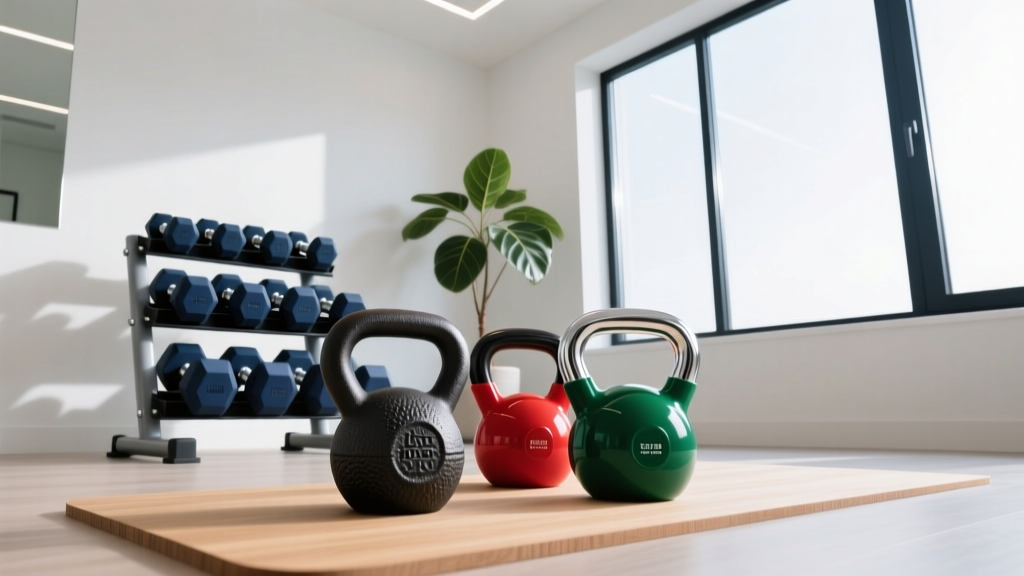
Compact Kettlebells & Dumbbells for Seniors: Cast vs Competition
Optimize your home gym layout. We compare cast iron vs competition kettlebells and review space-saving dumbbells for seniors to build a safe, compact space.

Designing a home gym for aging adults requires a delicate balance between biomechanical safety, ergonomic accessibility, and strict spatial efficiency. As we navigate the 2026 shift toward high-density micro-gyms, older adults and their caregivers are increasingly looking for ways to maintain muscle mass and bone density without sacrificing valuable living space. According to the CDC's Physical Activity Guidelines for Older Adults, muscle-strengthening activities at least two days a week are critical for preventing sarcopenia and maintaining independence. However, traditional weight racks are impractical for most spare bedrooms or living areas.
This brings us to a highly specific spatial dilemma: How do you choose the right free weights when square footage is limited? In this guide, we break down the kettlebell buying guide (cast iron vs. competition) through the lens of space optimization, and we evaluate the most ergonomic, space-saving dumbbells for seniors to complete your compact layout.
The Spatial Footprint: Cast Iron vs. Competition Kettlebells
When purchasing kettlebells, most buyers focus solely on weight. But for a compact home gym, the physical dimensions of the bell dictate your storage layout and floor clearance. Competition kettlebells are manufactured to a uniform size regardless of weight, while cast iron kettlebells scale in volume as the weight increases.
| Weight | Cast Iron Dimensions (H x W) | Competition Dimensions (H x W) | Shelf Space Variance |
|---|---|---|---|
| 8 kg (17.6 lbs) | 185mm x 150mm | 280mm x 210mm | Competition takes 115% more volume |
| 12 kg (26.4 lbs) | 215mm x 180mm | 280mm x 210mm | Competition takes 50% more volume |
| 16 kg (35.2 lbs) | 245mm x 210mm | 280mm x 210mm | Roughly equal footprint |
The Storage Verdict for Small Spaces
If you are outfitting a senior who is just starting out and requires lighter weights (4kg to 10kg), cast iron kettlebells are vastly superior for space optimization. Because they scale down in size, a nested set of three cast iron bells (8kg, 10kg, 12kg) can be stored on a single 24-inch shelf. A comparable set of competition bells will require a 48-inch horizontal rack or a multi-tiered vertical stand, eating up precious floor space and creating tripping hazards.
⚠️ Safety Warning for Vertical Storage: While vertical kettlebell trees save floor space, they require bending down to retrieve heavy bells from the bottom tier. For seniors with lumbar issues or limited hip mobility, a low-profile A-frame rack (height: 28 inches) is a much safer spatial investment, keeping the weights at hip-hinge level.Grip Ergonomics: Arthritis and Handle Diameter
Beyond spatial footprint, the handle geometry of your kettlebell directly impacts joint health. As we age, grip strength naturally declines, and conditions like osteoarthritis can make wrapping the hand around thick, uneven handles painful.
- Competition Kettlebells: These feature a standardized 33mm or 35mm handle diameter across all weights. The window (the space between the bell and the handle) is also uniformly rectangular, allowing for consistent hand insertion. For a senior with smaller hands or grip limitations, a 33mm competition handle offers a predictable, secure grip that doesn't suddenly become unmanageably thick when moving up in weight.
- Cast Iron Kettlebells: The handle diameter scales with the bell. An 8kg cast iron bell might have a slender 30mm handle, but a 20kg bell can swell to 45mm. This inconsistency forces the aging hand to adapt to new biomechanical stressors, increasing the risk of tendon strain during dynamic movements like swings.
"When prescribing resistance training for older adults, maintaining consistent grip mechanics is vital to prevent forearm fatigue and ensure the focus remains on the target muscle groups, rather than grip endurance." — Mayo Clinic's Senior Fitness Guide
Integrating the Best Dumbbells for Seniors in a Compact Layout
While kettlebells are excellent for ballistic movements and core stability, isolation work and joint-friendly pressing require dumbbells. Fixed-weight dumbbell racks are entirely out of the question for a micro-gym; a standard 5-to-25 lb rubber hex set requires over 12 square feet of shelving. Therefore, selecting the right adjustable dumbbells for seniors is the linchpin of your space optimization strategy.
Here is how the top 2026 adjustable models compare for aging users with spatial and ergonomic constraints:
1. Nuobell 552 (Best for Traditional Biomechanics)
- Dimensions: 15.5 inches long
- Price: ~$349 per pair
- Spatial & Ergonomic Edge: Unlike dial-based systems, the Nuobell uses a twist-handle mechanism that maintains the exact shape of a traditional dumbbell. There are no bulky overhangs. For seniors performing lateral raises or chest presses, the compact 15.5-inch length prevents the ends from colliding at the top of the movement, reducing wrist torque.
2. PowerBlock Sport 24 (Best for Ultra-Small Footprints)
- Dimensions: 12 x 6.5 x 6.5 inches
- Price: ~$199 per pair
- Spatial & Ergonomic Edge: This is the most spatially efficient dumbbell on the market, taking up less than half a square foot of storage. However, the caged, blocky design requires the user to grip an internal bar. Seniors with severe rheumatoid arthritis or limited wrist extension may find the internal geometry uncomfortable. It is best suited for seniors prioritizing absolute minimalism over traditional grip feel.
3. Bowflex SelectTech 552 (Use with Caution for Shorter Seniors)
- Dimensions: 16.9 inches long
- Price: ~$349 per pair
- Spatial & Ergonomic Edge: While incredibly popular, the SelectTech 552 is physically long because it houses the weight plates on the ends. For seniors under 5'5", this extra length alters the center of gravity during bicep curls and overhead presses, placing undue shear force on the elbow and rotator cuff joints. If spatial optimization is your goal but the user is petite, look elsewhere.
Designing the 4x6 Foot Senior-Safe Gym Zone
To safely integrate cast iron kettlebells and adjustable dumbbells for seniors, you need a dedicated, unobstructed zone. The National Institute on Aging emphasizes that a safe, uncluttered environment is the first step in preventing falls during home exercise. Here is a step-by-step blueprint for a 24-square-foot layout:
- The Foundation (Flooring): Lay down interlocking 3/4-inch EVA foam or rubber mats. This provides a 24x36 inch shock-absorbent drop zone for kettlebell swings, protecting both the floor and the user's joints from hard surface impact.
- Clearance Perimeters: Maintain a minimum 36-inch walkway clearance on all sides of the mat. This aligns with ADA accessibility standards, ensuring that a senior using a walker or cane can safely enter and exit the workout zone without navigating tight corners.
- Consolidated Storage Hub: Place a single 30-inch wide, waist-height (32-inch) storage bench at the top of the mat. Store the Nuobell or PowerBlock dumbbells on the left side, and nest the cast iron kettlebells on the right. Keeping all weights at waist height eliminates the need for deep squats or bending to pick up heavy objects from the floor before the warm-up is complete.
- Visual Anchoring: Mount a shatterproof acrylic mirror on the wall directly in front of the mat. This not only makes the small space feel twice as large but allows the senior to monitor their spinal alignment during kettlebell deadlifts without twisting their neck.
Frequently Asked Questions
Do I need a specialized rack for cast iron kettlebells?
No. Because cast iron bells have flat bottoms and scale in size, a simple, sturdy wooden or steel wall-mounted shelf (rated for 150+ lbs) placed at hip height is more space-efficient and safer for seniors than a floor-standing tiered rack that creates a tripping hazard.
Can seniors safely use competition kettlebells for goblet squats?
Yes, but the 33mm handle and wide, rectangular horns of a competition bell can be difficult to hold comfortably at chest height for those with limited wrist flexibility. Cast iron bells feature rounded, narrower horns that are generally easier for aging wrists to cradle during goblet squats.
How much weight should a senior start with for spatial home workouts?
For general spatial layouts, a starter kit should include an 8kg (17.6 lbs) cast iron kettlebell and a pair of adjustable dumbbells that start at 5 lbs. This combination allows for hundreds of exercise variations while occupying less than 3 square feet of storage space.
More gear to consider
All reviews
EZ Curl Bar vs Straight Bar: Space Layouts & Gold Gym Dumbbells

Maximizing Benefits of Dumbbell Squats: Best Storage Racks 2026

Bowflex Dumbbells Stuck on One Side? Storage & Rack Layout Fixes

Step-by-Step Dumbbell Core Exercise Guide for Neoprene Sets

Budget Loadable Dumbbells & The Alternating Dumbbell Biceps Curl
