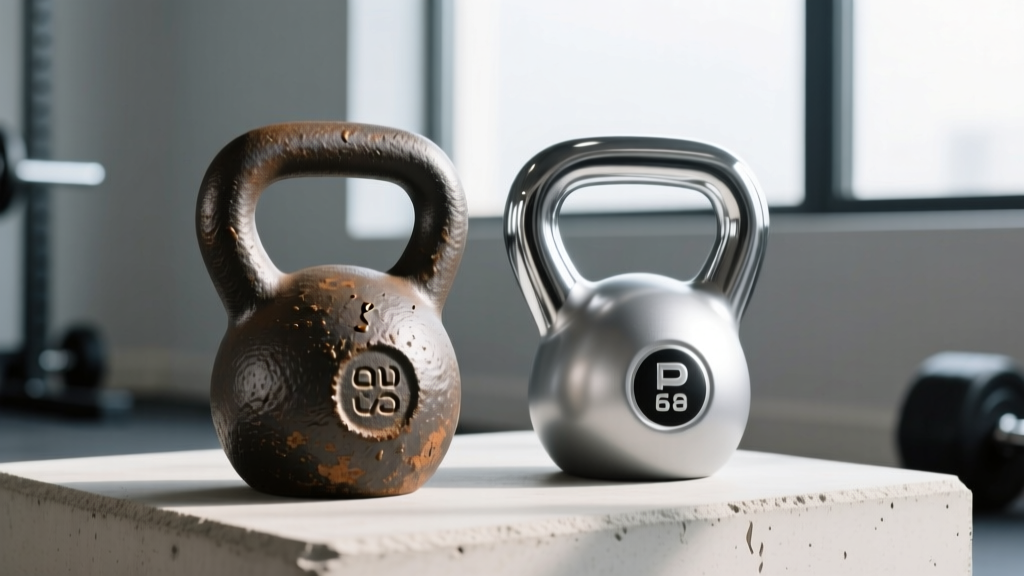
Cast Iron vs Competition Kettlebells for Plank Dumbbell Drags
Expert hands-on review comparing cast iron vs competition kettlebells. Discover which bell best supports hybrid core routines and plank dumbbell drags.

The Core Dilemma: Cast Iron vs. Competition Steel
Building a versatile free-weight arsenal in 2026 requires looking beyond isolated exercises and evaluating how your equipment performs in complex, hybrid conditioning circuits. As strength coaches and gear reviewers, we frequently program ballistic kettlebell movements paired with unilateral core stabilizers. One of our favorite, most grueling pairings is the heavy kettlebell swing supersetted with the plank dumbbell drag. This combination exposes every flaw in your equipment: grip fatigue, handle porosity, base stability, and transition fluidity.
When athletes ask us whether to invest in traditional cast iron kettlebells or uniform competition steel bells, the answer isn't just about aesthetics or sport-specific rules. It is about how the bell's metallurgy and geometry impact your broader training ecosystem. In this hands-on buying guide, we break down the exact specifications, real-world failure modes, and 2026 pricing of cast iron versus competition kettlebells to help you make the right choice for your home gym.
Dimensional Differences That Dictate Performance
Before diving into our testing protocol, it is crucial to understand the fundamental engineering differences between the two styles. According to Kettlebell Kings' educational resources, competition bells are milled from a single piece of steel alloy to exact international dimensions, regardless of weight. Cast iron bells, poured into sand molds, vary in size, handle thickness, and base width as the weight increases.
| Specification | Standard Cast Iron (16kg / 35lb) | Competition Steel (16kg / 35lb) |
|---|---|---|
| Handle Diameter | 33mm - 36mm (Varies by brand) | Strictly 35mm |
| Base Dimensions | ~160mm x 160mm (Often rounded edges) | 210mm x 210mm (Machined flat) |
| Horn Window Height | Compact, varies by mold | Standardized for deep rack positions |
| Typical 2026 Price | $75 - $95 | $125 - $145 |
| Coating | E-Coat, Powder Coat, or Bare Iron | Bare Steel or Zinc-Plated |
Hands-On Testing: The Grip & Transition Protocol
To evaluate these bells, we didn't just swing them. We subjected them to our 'Hybrid Transition Protocol.' The test consists of 5 rounds of 20 heavy two-handed kettlebell swings immediately followed by 12 alternating plank dumbbell drags (using 50lb hex dumbbells). We tracked three critical metrics: grip endurance, chalk retention, and base stability during the transition phase.
Why the Plank Dumbbell Drag is Our Benchmark
The plank dumbbell drag requires immense anti-rotational core tension. You must hold a rigid plank while dragging a dumbbell laterally beneath your torso. When integrating a kettlebell into this circuit, you are forced to hastily set the bell down on the floor to grab the dumbbell. A competition kettlebell's wide, 210mm machined steel base sits dead-flat on rubber mats, allowing for a secure, wobble-free release. Conversely, many cast iron bells feature a slightly rounded or uneven casting seam on the base, causing them to 'rock' when set down aggressively, which can disrupt your mental focus and core bracing before you even initiate the drag.
Top Cast Iron Picks for Hybrid Training
Cast iron remains the undisputed king of affordability and aggressive grip texture. For athletes who prioritize two-handed ballistics and don't mind a slightly smaller handle window, these are our top 2026 recommendations.
1. Rogue Fitness Cast Iron Kettlebell
Priced at roughly $91 for the 16kg model, Rogue's cast iron bell features a high-quality powder coat that holds chalk exceptionally well. During our plank dumbbell drag supersets, the porous texture of the handle provided a secure grip even when our hands were heavily chalked and fatigued from the drag exercise.
- Pros: Excellent chalk retention; highly durable powder coat; aggressive knurl-like feel on heavier models; cost-effective at ~$4.00/lb.
- Cons: Base is slightly domed, causing minor rocking on hard surfaces; handle diameter shrinks on lighter weights, altering muscle memory.
2. Yes4All Vinyl-Coated Cast Iron
At just $45 for 16kg, this is the budget entry point. However, the vinyl coating is a detriment for hybrid circuits. Sweat from high-rep core work turns the smooth vinyl into a slip hazard, forcing you to use excessive chalk, which subsequently cakes in the horns and requires constant wire-brushing.
- Pros: Unbeatable price point; protects hardwood floors from minor scuffs.
- Cons: Vinyl degrades and flakes over time; poor grip security during high-sweat conditioning circuits.
Top Competition Picks for Technical Precision
If your training involves single-arm snatches, cleans, or complex flows where the bell rests in the 'rack' position against your forearm, competition steel is non-negotiable. The uniform 35mm handle and deep window prevent forearm bruising, a common failure mode with thick-handled cast iron bells.
1. Kettlebell Kings Competition Series
Retailing around $135 for 16kg, these are milled to exacting standards. The bare steel handle is incredibly smooth. While this feels premium, we noted a distinct edge case during our testing: when transitioning from a sweaty plank dumbbell drag back to single-arm KB cleans, the lack of texture on the bare steel required us to re-apply chalk every single round to prevent the bell from slipping out of the backswing.
- Pros: Perfectly flat base for renegade rows and transitions; uniform 35mm handle builds consistent grip mechanics; deep horn window for painless racking.
- Cons: Premium pricing (~$6.00/lb); bare steel requires meticulous humidity control to prevent surface oxidation.
2. Onnit Competition Kettlebell
Onnit's offering ($125 for 16kg) features a slightly more aggressive zinc plating on the handle compared to KB Kings, offering a marginally better grip for high-sweat environments without sacrificing the uniform dimensions required for sport-style lifting.
- Pros: Color-coded bodies for easy weight identification; zinc-plated handle resists sweat better than bare steel.
- Cons: The painted body can chip if dropped onto concrete during outdoor workouts.
Real-World Failure Modes & Edge Cases
When investing in free weights, you must anticipate how the equipment fails over a 5-to-10-year lifespan. Based on our long-term durability tracking and insights from StrongFirst certification standards, here are the hidden edge cases to watch for:
- Chalk Impaction in Cast Iron Horns: Cast iron handles are thick where they meet the bell body. Over months of use, magnesium carbonate (chalk) packs into these corners. When you perform a plank dumbbell drag, your hands are already gritty; grabbing a chalk-caked cast iron bell can cause callous tearing on the palm. Solution: Wire-brush cast iron bells monthly.
- Competition Bell Base Slippage: While the 210mm flat base of a competition bell is stable, the machined steel is incredibly smooth. If you are doing these circuits on a slick laminate floor rather than rubber horse-stall mats, the competition bell can slide an inch or two when you set it down hastily. Solution: Always use 3/4-inch rubber flooring for hybrid floor-work.
- Handle Diameter Fatigue: The plank dumbbell drag heavily taxes the brachioradialis and forearm flexors. Transitioning immediately to a cast iron bell with a 36mm handle (common in 24kg+ iron bells) will cause premature grip failure compared to the strict 35mm competition handle.
Final Verdict: Building Your 2026 Free Weight Arsenal
The choice between cast iron and competition kettlebells ultimately depends on your primary training modality and your budget.
Choose Cast Iron if: You are a general fitness enthusiast focused on two-handed swings, goblet squats, and budget-conscious home gym builds. The Rogue Fitness Cast Iron bell offers the best balance of grip texture and durability for high-sweat circuits involving the plank dumbbell drag, provided you maintain the base and horns.
Choose Competition Steel if: You practice kettlebell sport, prioritize single-arm ballistic flows, or require absolute dimensional consistency as you progress through weights. The Kettlebell Kings Competition bell's flat, wide base makes it the superior anchor point for complex floor transitions, ensuring your equipment never compromises your core tension during demanding hybrid routines.
By understanding the metallurgical and geometric nuances of your free weights, you can build a rack that supports every facet of your training, from heavy ballistics to meticulous core stabilization.
More gear to consider
All reviews
Loadable Dumbbells & The Leg Curl With Dumbbell: 2026 Trends
Power Rack vs Squat Stand for Benching with Dumbbells

Power Rack vs Squat Stand: SA Dumbbell Bench Press Setups
What Muscles Does Dumbbell Row Work? Neoprene Dumbbells Compared

Rubber Hex vs Urethane Dumbbells for a Space-Saving Dumbbell Circuit
