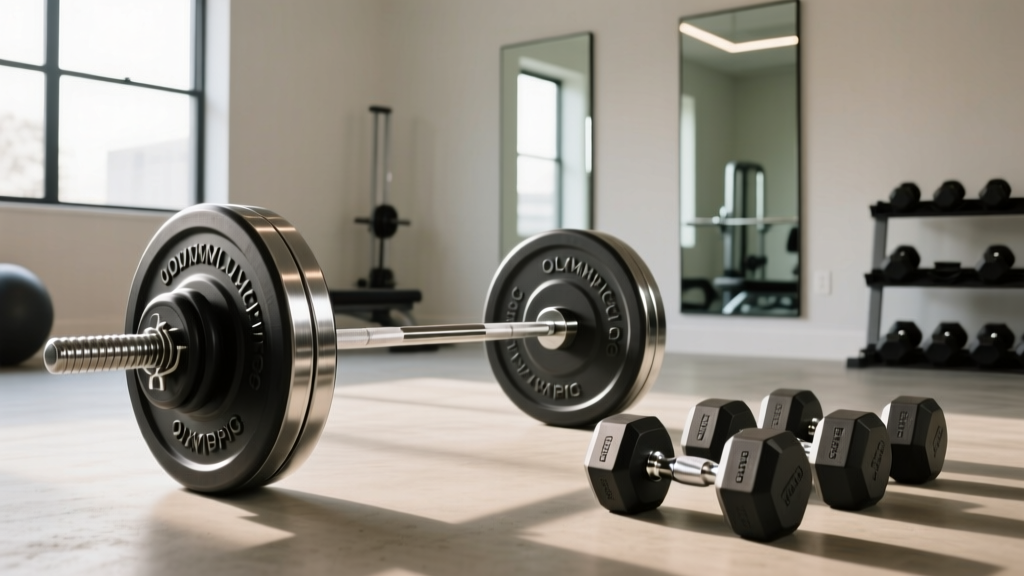
Olympic Barbell Weight, Knurling & Dumbbell Hammer Preacher Curl
Master your Olympic barbell buying guide for weight and knurling. Plus, learn how to pair it with the dumbbell hammer preacher curl for ultimate arm growth.

The Complete Beginner's Guide to Barbell Foundations and Arm Isolation
Building a functional, lifelong home gym in 2026 requires more than just throwing money at generic fitness equipment. It demands a strategic understanding of how different tools complement one another. If you are stepping into the world of free weights, your first major investment should be a high-quality Olympic barbell. However, a barbell alone won't build a complete physique. To develop elite pulling strength and aesthetic, functional arms, you must pair your heavy compound barbell work with precise isolation movements—most notably, the dumbbell hammer preacher curl.
This step-by-step guide will walk you through the exact specifications you need to look for when buying an Olympic barbell, focusing heavily on weight tolerances and knurling profiles. Then, we will transition into a masterclass on programming the perfect accessory movement to maximize your brachioradialis and brachialis development.
Step 1: Demystifying Olympic Barbell Weight and Tensile Strength
When beginners shop for a barbell, they often assume all bars weigh exactly 45 pounds. While this is a common gym myth, the reality of Olympic barbell weight standards is slightly more nuanced, especially when dealing with high-precision equipment. According to the International Weightlifting Federation (IWF) and the International Powerlifting Federation (IPF), a standard men's Olympic barbell must weigh exactly 20 kilograms (44.09 pounds), while a women's barbell weighs 15 kilograms (33.07 pounds).
Beyond the baseline weight, you must pay attention to tensile strength, measured in Pounds per Square Inch (PSI). This metric determines how much load the bar can handle before it permanently bends.
- 165,000 to 190,000 PSI: Ideal for beginners and multipurpose home gyms. These bars have a bit of 'whip' (flex), which is forgiving on the joints during dynamic movements.
- 190,000 to 215,000 PSI: The gold standard for serious lifters. Bars in this range, like the Rogue Ohio Bar 2.0, offer the perfect balance of stiffness for heavy squats and enough whip for Olympic lifts.
- 215,000+ PSI: Reserved for elite powerlifting bars. They are incredibly stiff and feature aggressive knurling, making them unsuitable for general fitness beginners.
Step 2: Navigating the Knurling Matrix
Knurling is the cross-hatched pattern machined into the steel shaft of the barbell. It is the single most important tactile feature of your equipment. As detailed in comprehensive industry breakdowns like BarBend's Knurling Guide, the shape and depth of the knurl dictate your grip security and skin integrity.
Manufacturers generally machine three distinct knurl profiles:
| Knurl Profile | Depth & Shape | Best Use Case | Beginner Verdict |
|---|---|---|---|
| Volcano | Deep valleys with sharp, concentric peaks (approx. 1.0mm - 1.2mm depth). | Multipurpose, Powerbuilding, Heavy Rows. | Highly Recommended |
| Mountain | Aggressive, sharp peaks with minimal valleys (approx. 1.5mm depth). | Deadlifts, Heavy Powerlifting. | Avoid (Tears Calluses) |
| Hill | Smooth, rounded peaks with shallow valleys (approx. 0.5mm depth). | Olympic Weightlifting, High-Rep WODs. | Good for High-Rep Only |
For a beginner building a versatile home gym, a Volcano knurl is non-negotiable. It provides immense grip security for heavy barbell rows and deadlifts without shredding your palms, allowing you to maintain high training frequency without grip fatigue or torn skin.
Step 3: The Perfect Accessory - Dumbbell Hammer Preacher Curl
Once your barbell foundation is set, you must address the smaller muscle groups that stabilize your heavy pulls. Heavy barbell rows and deadlifts tax the biceps, but they primarily rely on the brachioradialis (the thick muscle of the forearm) and the brachialis (the muscle sitting underneath the biceps peak). To isolate and fortify these muscles, the dumbbell hammer preacher curl is the undisputed king of accessory movements.
According to biomechanical data cataloged by the ExRx Exercise Directory, utilizing a neutral (hammer) grip shifts the mechanical advantage away from the biceps brachii and directly onto the brachioradialis. When you add a preacher bench to the equation, you eliminate all momentum, cheating, and shoulder involvement, forcing pure, unadulterated elbow flexion.
Step-by-Step Execution Guide
- Set the Bench Angle: Adjust the preacher bench pad to a 45-degree or 60-degree angle. A 45-degree angle places more stretch on the brachialis at the bottom of the movement, while 60 degrees keeps constant tension on the brachioradialis.
- Establish the Neutral Grip: Grab a dumbbell with a neutral grip (palms facing each other). Ensure your thumb is wrapped securely around the handle to prevent the dumbbell from slipping down your wrist.
- Pin the Triceps: Wedge your armpit over the top edge of the pad. Your triceps must remain flat and glued to the pad throughout the entire range of motion. If your elbow lifts off the pad, the weight is too heavy.
- The Concentric Phase (Up): Exhale and curl the dumbbell toward your shoulder. Focus on pulling with the meaty part of your forearm. Stop just short of vertical to maintain tension on the muscle.
- The Eccentric Phase (Down): Lower the weight slowly over a strict 3-second count. The eccentric portion of the dumbbell hammer preacher curl is where the majority of muscle damage and subsequent growth occurs. Do not drop the weight.
Step 4: Choosing the Right Dumbbells for the Preacher Bench
Not all dumbbells are created equal, especially when performing strict isolation work on an angled pad. For the dumbbell hammer preacher curl, the physical design of the dumbbell matters immensely.
- Urethane Hex Dumbbells: These are the best choice for home gyms. The hexagonal shape prevents the dumbbell from rolling off the preacher bench pad when you set it down between sets. Urethane coating also resists degradation and smells better than cheap rubber.
- Adjustable Dumbbells (e.g., Nuobell or PowerBlock): Highly space-efficient and cost-effective for beginners in 2026. However, be cautious with bulky adjustable models; the wide cages on some brands can clash with the preacher pad, limiting your range of motion at the bottom of the curl.
- Round Rubber Dumbbells: Avoid these for preacher work. They will inevitably roll off the angled pad, creating a safety hazard and disrupting your workout flow.
Troubleshooting Common Beginner Mistakes
Even with the best equipment, poor form and programming errors can derail your progress. Here are the most common failure modes beginners experience when combining heavy barbell work with strict arm isolation:
1. Overloading the Preacher Curl
The preacher bench is a humbling piece of equipment. Because it removes all body English and momentum, lifters are typically 20% to 30% weaker on a preacher curl compared to a standing curl. Solution: Drop your ego. If you normally curl 40 lb dumbbells standing, start your dumbbell hammer preacher curl with 25 lb or 30 lb hex dumbbells. Focus on the 3-second eccentric.
2. Ignoring Elbow Tendonitis Warning Signs
The brachialis and brachioradialis attach near the lateral epicondyle of the elbow. If you jump straight into heavy hammer curls without warming up the elbow joint, you risk developing lateral epicondylitis (Tennis Elbow). Solution: Always perform 2 warm-up sets of 15-20 reps with a very light weight (10-15 lbs) to pump synovial fluid into the joint before your working sets.
3. Letting Barbell Knurling Tear Your Grip for Accessory Work
If your heavy barbell rows are tearing your calluses, your grip will fail on the dumbbell hammer preacher curl before your forearms do. Solution: Maintain your calluses weekly with a pumice stone, and consider using lifting straps for your heaviest barbell pulls so your grip has the stamina left to crush your arm isolation finishers.
Final Thoughts on Your 2026 Home Gym Setup
Building a world-class physique in your home gym requires a synergy between heavy, systemic loading and precise, localized isolation. By investing in a 20kg Olympic barbell with a 190k PSI tensile strength and a volcano knurl profile, you secure a lifetime foundation for heavy pulling. By subsequently mastering the dumbbell hammer preacher curl with properly selected hex dumbbells, you armor your elbows, thicken your forearms, and build the structural integrity required to lift heavy for decades to come. Equip smart, train strict, and watch your strength compound.
More gear to consider
All reviews
EZ vs Straight Bar Care: Upgrading From a Five Below Dumbbell

Rack Care & Storage for a Complete Shoulder Workout with Dumbbells
Shoulder Workout with Dumbbells at Home: The Barbell Upgrade Guide

Wrist Dumbbell Exercises and Barbell Collar Clamp Troubleshooting
Olympic Barbell Guide: Rogue vs Rep & What Does Dumbbell Front Raise Work?
