Cast Iron vs Competition Kettlebells & Dumbbell Lateral Layouts
Optimize your home gym layout. Compare cast iron vs competition kettlebells and design safe dumbbell lateral raise zones with precise dimensions.

The Spatial Dilemma: Cast Iron vs. Competition Kettlebells
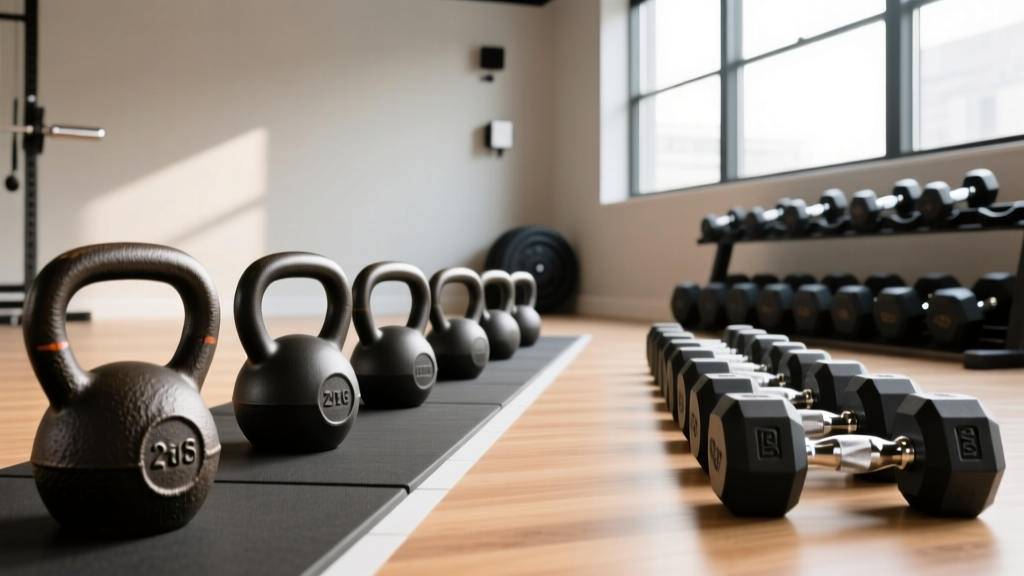
Designing a high-performance home gym in 2026 requires more than just purchasing top-tier equipment; it demands a rigorous approach to spatial geometry and layout optimization. When outfitting your free weight zone, the debate between cast iron vs competition kettlebells is often framed around grip texture or athletic performance. However, from a space optimization perspective, the physical dimensions, footprint, and stacking mechanics of these two bell types dictate entirely different storage solutions and floor plans.
Unlike standard bumper plates which share a uniform 450mm diameter regardless of weight, kettlebells introduce a complex volumetric variable. Understanding these dimensional differences is the first step in designing a layout that maximizes square footage while preserving critical movement corridors—such as the wingspan required for isolation exercises.
The Geometry of Iron: Dimensional Breakdown
To optimize your layout, you must first understand the physical footprint of your equipment. Cast iron kettlebells scale in volume as the mass increases. An 8kg cast iron bell is compact and easily tucked away, while a 32kg behemoth demands significant floor space and heavy-duty shelving. Conversely, competition kettlebells adhere to strict international dimensional standards: exactly 280mm in height, 210mm in width, and featuring a uniform 35mm handle diameter, regardless of whether the bell weighs 8kg or 32kg.
| Weight | Cast Iron Height (Approx) | Cast Iron Width (Approx) | Competition Height (Exact) | Competition Width (Exact) |
|---|---|---|---|---|
| 8 kg | 185 mm | 160 mm | 280 mm | 210 mm |
| 16 kg | 235 mm | 210 mm | 280 mm | 210 mm |
| 24 kg | 275 mm | 245 mm | 280 mm | 210 mm |
| 32 kg | 305 mm | 275 mm | 280 mm | 210 mm |
As referenced in the Rogue Fitness kettlebell specifications, the variable geometry of cast iron means your storage racks must accommodate a sloping profile. Competition bells, available from specialists like Kettlebell Kings, allow for perfectly uniform, single-tier horizontal shelving, which can save vertical space but requires a wider continuous lateral wall footprint.
Integrating the Dumbbell Lateral Corridor
A common failure mode in home gym layouts is the neglect of lateral movement zones. When mapping out your floor plan, you must account for the clearance required for a standard dumbbell lateral raise. According to biomechanical data on shoulder abduction exercises, such as the dumbbell lateral raise guidelines on ExRx, an average male with a 72-inch wingspan holding 10-inch dumbbells requires a minimum of 82 inches (nearly 7 feet) of unobstructed lateral clearance to perform the movement safely without clipping adjacent equipment.
Layout Warning: The Swing-to-Raise Ratio
Never place a freestanding kettlebell tree rack directly adjacent to your dumbbell zone. A heavy kettlebell swing requires a posterior chain hinge and roughly 4 feet of anterior-posterior clearance, but a dumbbell lateral movement requires strict side-to-side spatial isolation. Position kettlebell storage against dead walls, maintaining at least 48 inches of lateral buffer space from your primary dumbbell rack to prevent mid-set collisions.
If you are utilizing cast iron kettlebells, their smaller lower-weight profiles allow you to store them on compact, stepped vertical racks that tuck neatly into corners, preserving the open floor space necessary for expansive lateral dumbbell movements. Competition bells, due to their uniform 280mm height, often require specialized wall-mounted cradles or wide floor stands that can inadvertently encroach on your lateral exercise zones if not measured precisely.
2026 Buying Guide: Top Space-Efficient Models
When selecting your arsenal, consider how the specific model's design impacts your gym's spatial flow. Here are the top recommendations for space-conscious lifters:
1. Rogue Cast Iron Kettlebells (Powder Coat)
- Best For: Corner storage and stepped vertical racks.
- Spatial Advantage: The flat, machined bottom allows for safe, stable stacking on the floor during high-intensity interval circuits, eliminating the need for a permanent rack in the center of the room.
- Pricing (2026): Ranges from $45 (8kg) to $165 (32kg).
- Edge Case: The handle thickness varies by weight. If you are mounting them on a custom wall shelf, you must account for the varying horn widths (from 90mm to 140mm) to ensure your shelf brackets don't bind the bells.
2. Kettlebell Kings Competition Series
- Best For: Uniform horizontal wall shelving and predictable footprint planning.
- Spatial Advantage: Because every bell shares the exact same 280x210mm dimensions, you can install a single, heavy-duty continuous shelf at exactly 300mm off the ground. This creates a clean, minimalist aesthetic and keeps the floor entirely clear for sprawling movements.
- Pricing (2026): Ranges from $65 (8kg) to $195 (32kg).
- Edge Case: The wide, uniform horns of competition bells require wider shelf dividers. Standard 6-inch shelf brackets will not accommodate them; you must use custom 10-inch cradles or open-concept heavy-duty piping.
Storage Solutions & Point-Load Warnings
Space optimization is not just about the floor; it is about leveraging vertical real estate safely. Kettlebells exert massive point-loads on shelving units. A standard particle-board garage shelf will catastrophically fail under the concentrated weight of three 24kg competition bells resting on a narrow steel lip.
Expert Layout Tip: When mounting horizontal kettlebell shelves, anchor them directly into wall studs using 3/8-inch lag bolts. Never rely on drywall anchors, even for lighter 8kg or 12kg cast iron bells. The dynamic force of placing a bell back onto the shelf after a fatiguing set can generate over 150 lbs of downward shear force.
For gyms under 200 square feet, a vertical 'tree' rack is the most spatially efficient choice for cast iron bells, occupying only a 24x24 inch floor footprint. However, for competition bells, a custom-built timber and steel wall rack positioned 18 inches off the floor (leaving room for baseboards and easy toe-clearance when lifting the bells) remains the gold standard for preserving open training zones.
Frequently Asked Questions
Can I mix cast iron and competition kettlebells on the same rack?
While physically possible, it is a spatial design error. The varying heights of cast iron bells will render uniform shelving useless, while the wide horns of competition bells won't fit into the narrow slots designed for compact cast irons. Dedicate separate zones or modular, adjustable shelving units to each type to maintain an organized, space-efficient layout.
How much lateral space do I really need for dumbbell exercises?
For isolation movements like the dumbbell lateral raise, you need your total wingspan plus the length of the dumbbells, plus a 12-inch safety buffer on each side. For most adults, this means dedicating a continuous 8-foot lateral corridor free of protruding rack legs, kettlebell horns, or bench edges.
Are adjustable kettlebells a good space-saving alternative?
Adjustable kettlebells (like the Kettlebell Kings Adjustable model) drastically reduce the physical footprint of a full set, condensing 8kg to 20kg into a single 12x12 inch base. However, their bulky, mechanical handles alter the biomechanics of cleans and snatches, and their wide bases can sometimes interfere with tight storage shelving. They are excellent for micro-gyms but less ideal for dedicated free-weight rooms where uniform stacking is preferred.
More gear to consider
All reviews
Olympic vs Standard Plates for Your 20 Minute Workout with Dumbbells

Bumper vs Iron Plates: Gym Layouts for Good Tricep Dumbbell Workouts

EZ vs Straight Bar: Best Bicep Workout Without Dumbbells 2026

Barbell Collar Types Comparison & Incline Dumbbell Press GIF Guide

Rack Guide: Power vs Squat Rack vs Stand + Dumbbell Workout Arms Abs
