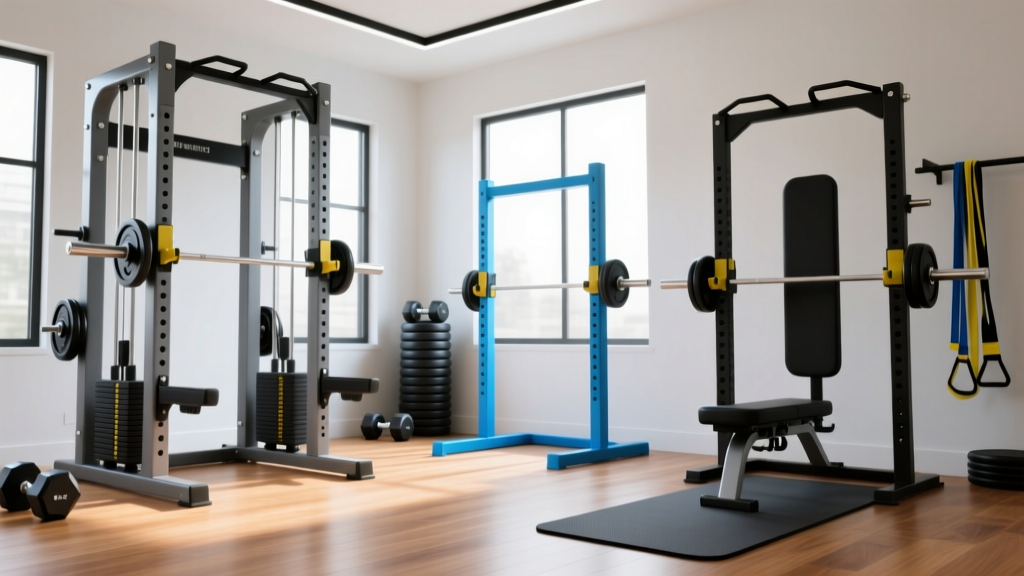
Best Back Exercises With Dumbbells & Barbell Collar Types
Master the best back exercises with dumbbells and barbells by avoiding critical collar clamp mistakes. Compare types, failure modes, and safety tips.

The Hidden Dangers of Improper Weight Securing
When compiling a list of the best back exercises dumbbells and barbells can facilitate, most lifters obsess over grip straps, lifting belts, or barbell knurling. However, the structural integrity of the sleeve hardware is frequently ignored until a 45-pound plate slides off mid-rep. As of 2026, the market has seen a massive surge in hybrid loadable dumbbells and specialized Olympic bars, making the choice of barbell collars and clamps more critical than ever. Heavy bilateral movements like Pendlay rows, bent-over barbell rows, and unilateral loadable dumbbell rows generate immense rotational torque and asymmetric bar whip.
If your plates shift during the eccentric phase of a heavy row, the sudden redistribution of kinetic energy can lead to catastrophic lower back shear forces or wrist sprains. This troubleshooting guide breaks down the exact barbell collar and clamp types available on the market, highlighting the common mistakes lifters make when securing weights for back training, and providing actionable solutions to keep your sets safe and effective.
Barbell Collar and Clamp Types: A Technical Comparison
Not all collars are created equal. The clamping force, measured in Newtons, and the material composition dictate how well a collar will hold up to the violent stops and starts inherent in heavy back training. Below is a deep dive into the four primary categories of barbell collars.
1. Spring Collars (The Default Mistake)
Spring collars are the ubiquitous wire rings found in almost every commercial gym. Typically priced between $12 and $18 per pair, they rely on the tension of 1060 carbon steel wire to grip the 50mm Olympic sleeve. While they are incredibly fast to load and remove, they offer the lowest clamping force of any collar type. During heavy deadlifts or explosive barbell rows, the vibration causes the spring to bounce, incrementally walking outward and allowing plates to rattle and shift.
2. Clamp-Style Latches (e.g., Lock-Jawz)
Clamp-style collars, such as the popular Lock-Jawz Pro ($39.99), utilize a glass-reinforced nylon body with a cam-lever latching mechanism. When you snap the lever shut, it compresses a polymer inner ring against the steel sleeve. These are excellent for general back training because they do not scratch the barbell's zinc or chrome finish. However, over time, the polymer ring can compress and degrade, requiring replacement inserts to maintain a tight grip on the sleeve.
3. Spin-Lock and Competition Collars (e.g., Rogue Ahnbeek)
For serious powerlifters and strongmen, spin-lock collars are the gold standard. The Rogue Ahnbeek Barbell Collars ($65.00) represent the pinnacle of this category. Machined from high-quality aluminum, they feature a dual O-ring system that grips the sleeve tightly when threaded down. According to the USA Powerlifting Rulebook, competition collars must weigh exactly 2.5kg and securely fasten the plates to prevent any shifting during maximal lifts. These are virtually immune to the rotational torque generated during heavy unilateral back work.
4. Magnetic and Snap Collars (e.g., OSO Proloc)
Magnetic collars use neodymium magnets to snap onto the end of the barbell sleeve, securing a heavy-duty plastic or aluminum cap. While highly innovative and incredibly fast to use, they are generally better suited for Olympic weightlifting (cleans and snatches) where the barbell is dropped vertically. For the horizontal dragging forces of a heavy bent-over row, magnetic collars can occasionally pop off if the barbell sleeve strikes the rack uprights.
| Collar Type | Avg. Price (Pair) | Clamping Force | Best Use Case | Slippage Risk on Rows |
|---|---|---|---|---|
| Spring Collars | $12 - $18 | Very Low | Light isolation, quick changes | High |
| Clamp / Latch | $30 - $45 | Moderate-High | General hypertrophy, Pendlay rows | Low (if new) |
| Spin-Lock (Aluminum) | $55 - $80 | Extremely High | Heavy 1RM rows, loadable dumbbells | None |
| Magnetic / Snap | $40 - $60 | Moderate | Olympic lifts, sled drags | Moderate |
4 Common Mistakes When Securing Weights for Back Work
Even with the right equipment, improper application can render a collar useless. Here are the most frequent troubleshooting scenarios we see in home and commercial gyms.
Mistake 1: Using Spring Collars on Loadable Dumbbells
When athletes search for the best back exercises with dumbbells, heavy unilateral dumbbell rows are always at the top of the list. Many lifters use loadable Olympic dumbbell handles to achieve weights over 100 lbs per hand. Using standard spring collars on these short sleeves is a massive safety hazard. The short sleeve length leaves almost no margin for error; if the spring expands even a quarter-inch, the plate clears the lip and falls onto your foot mid-row. Fix: Always use spin-lock or specialized short-sleeve clamp collars for loadable dumbbells.
Mistake 2: Flush-Mounting Against the Sleeve Lip
A common error is pushing the collar completely flush against the inner lip of the barbell sleeve. While this seems like it would secure the plates tighter, it actually prevents the collar's inner O-ring or polymer band from seating properly on the smooth part of the sleeve. Fix: Leave a 2-millimeter gap between the collar and the sleeve lip to allow the clamping mechanism to engage the full circumference of the 50mm bar.
Mistake 3: Ignoring O-Ring Wear on Spin-Locks
Spin-lock collars rely entirely on the friction of their rubber O-rings. Over time, chalk dust, sweat, and oxidized steel from the plates degrade the rubber. If your spin-lock collar requires excessive force to thread down, or worse, spins freely without tightening, the O-ring is shot. Fix: Inspect O-rings every 6 months. Replacement O-rings cost less than $5 and take seconds to install.
Mistake 4: Over-Tightening Clamps on Knurled Sleeves
Some specialty barbells feature knurling that extends partially onto the sleeve. Snapping a polymer clamp-style collar directly over sharp knurling will chew up the inner lining of the collar, destroying its ability to grip. Fix: Always place clamp collars on the smooth, un-knurled portion of the sleeve, pushing the plates outward slightly if necessary.
WARNING: The Asymmetric Whip EffectDuring unilateral back exercises (like a Meadows row or a heavy one-arm landmine row), the barbell experiences asymmetric torsional stress. If the collar on the loaded side is loose, the plates will spin independently of the barbell sleeve. This rotational lag can violently twist your wrist and elbow at the top of the pulling motion, leading to severe connective tissue strain.
Step-by-Step Troubleshooting: Mid-Set Collar Failures
If you are in the middle of a high-volume back workout and notice a collar slipping, do not attempt to fix it while the bar is still loaded and resting on your back or the floor. Follow this protocol:
- Rack the Weight Safely: Return the barbell to the J-hooks of your power rack. If performing floor rows, lower the bar gently to the platform.
- Assess the Sleeve: Check for excessive chalk buildup or grease on the 50mm sleeve. Wipe it down with a microfiber towel; friction is your best friend here.
- Re-Seat the Plates: Push all bumper or steel plates tightly together. Tap the ends of the barbell on the ground to ensure no micro-gaps exist between the plates.
- Re-Apply the Collar: If using a clamp, ensure the latch is fully locked and the secondary safety clip (if present) is engaged. If using a spin-lock, thread it down until hand-tight, then give it one final quarter-turn with the palm of your hand.
- Perform a Shake Test: Lift one end of the barbell a few inches off the ground and gently shake it. Listen for the metallic clinking of loose plates. If you hear it, re-tighten.
Final Verdict: Matching the Collar to the Movement
The pursuit of a stronger, wider back requires heavy, uncompromising loads. While spring collars have their place in fast-paced circuit training, they have no business on a barbell loaded for heavy Pendlay rows or on loadable dumbbells used for unilateral back work. Investing $40 to $70 in a high-quality pair of clamp or spin-lock collars is a fraction of the cost of physical therapy for a lower back or wrist injury caused by shifting plates.
'The best back exercises with dumbbells and barbells are only as safe as the hardware holding them together. Treat your collars with the same respect you give your lifting belt.'
By understanding the mechanical differences between collar types and avoiding the common application mistakes outlined above, you can ensure that every rep of your back training is stable, secure, and focused entirely on muscular hypertrophy and strength.
More gear to consider
All reviews
Space Layouts for Alternate Incline Dumbbell Curls: Hex vs Urethane

Bent Over Two Arm Dumbbell Row: Home Gym Setup & Neoprene Guide

Dumbbell Wood Choppers: Maintaining Loadable Interchangeable Plates

Bumper vs Iron Plates: How Heavy the Dumbbells You Lift Impacts Care
Bumper vs Iron 2026 & Reverse Grip Dumbbell Press Muscles Worked