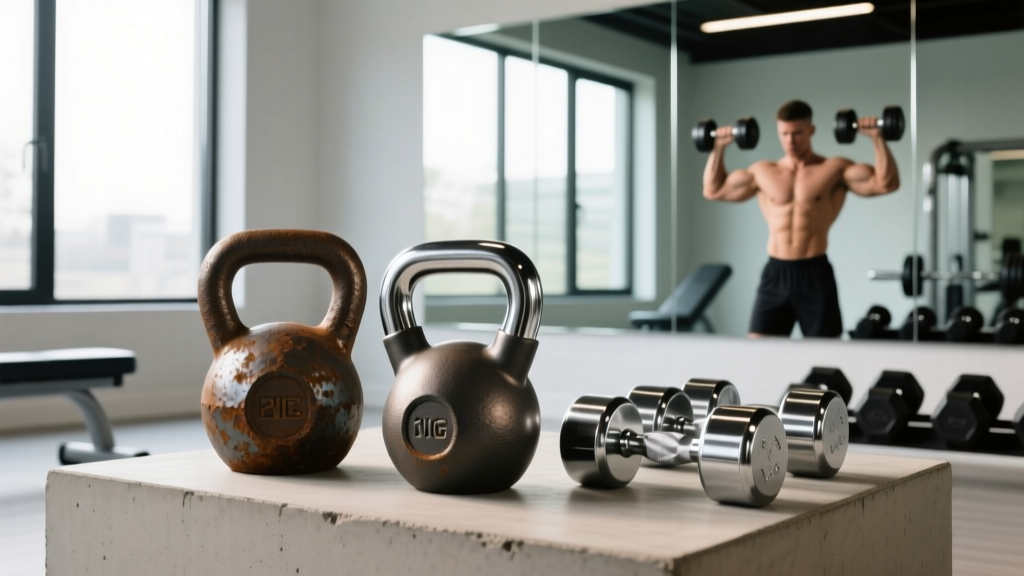
Cast Iron vs Competition Bells & Good Arm Workouts with Dumbbells
Compare cast iron vs competition kettlebells. Learn essential maintenance tips and how to pair them with good arm workouts with dumbbells for ultimate growth.

As hybrid home gym setups continue to dominate fitness trends in 2026, lifters are increasingly blending traditional bodybuilding tools with functional ballistic implements. However, bridging the gap between equipment types requires an understanding of biomechanics, grip mechanics, and rigorous gear maintenance. When designing good arm workouts with dumbbells, integrating kettlebells introduces unique stabilization demands that can accelerate forearm hypertrophy and grip strength—provided your equipment is properly maintained. A rusted handle or a chalk-clogged horn will ruin your grip long before your biceps or triceps reach muscular failure.
This comprehensive guide breaks down the critical buying differences between cast iron and competition kettlebells, outlines expert-level maintenance protocols to maximize their lifespan, and demonstrates how to seamlessly pair them with your existing dumbbell arsenal for superior arm development.
The Buying Decision: Cast Iron vs. Competition Kettlebells
Before you can maintain your kettlebells, you must understand what you are buying. The market is split into two primary categories, each with distinct metallurgical profiles, dimensional standards, and price points.
1. Cast Iron Kettlebells (The Home Gym Standard)
Cast iron bells are poured into molds, meaning their physical dimensions scale with their weight. A 16kg cast iron bell is significantly smaller than a 32kg bell. The handles typically range from 32mm to 35mm in diameter, and they are usually finished with a powder coat, e-coat, or enamel. In 2026, premium powder-coated options (like those from Rogue Fitness or Kettlebell Kings) cost approximately $1.35 to $1.60 per pound. They are ideal for general strength training, goblet squats, and heavy swings.
2. Competition Kettlebells (The Precision Tool)
Competition bells are constructed from a steel shell filled with an iron/lead core to ensure that every bell, regardless of weight, shares the exact same dimensions. The handle is strictly 35mm in diameter, and the bell measures exactly 280mm wide by 210mm tall. Because the handles are often left as bare, machined steel to maximize grip feedback, they require meticulous upkeep. These are priced at a premium, typically ranging from $140 to $180 per bell regardless of the weight class.
| Feature | Cast Iron (Powder Coat) | Competition (Steel Shell) |
|---|---|---|
| Handle Diameter | 32mm - 38mm (scales with weight) | 35mm (universal standard) |
| Material / Finish | Cast Iron / Powder or E-Coat | Steel Shell / Bare Steel Handle |
| Avg. Price (24kg) | $75 - $95 | $150 - $175 |
| Primary Failure Mode | Coating chipping, handle pitting | Bare steel oxidation (rust) |
| Best For | Heavy grinds, general fitness | High-rep snatches, sport, technique |
Cast Iron Maintenance: Beating Oxidation and Pitting
The most common failure mode for cast iron kettlebells is the degradation of the handle coating. Once the powder coat chips from repeated drops or improper storage, the exposed raw iron will begin to oxidize within 48 hours in environments with humidity levels above 50%.
Step-by-Step Cast Iron Upkeep
- Chalk Removal: Gym chalk (magnesium carbonate) is hygroscopic—it pulls moisture from the air and traps it against the iron. Once a week, scrub the handle and horns with a stiff nylon brush and warm soapy water. Never use steel wire brushes on powder-coated handles, as this will strip the finish.
- Deep Drying: Towel dry immediately, then use a hair dryer on a low heat setting to evaporate moisture trapped in the micro-texture of the powder coat.
- Protective Oiling: Apply a micro-thin layer of food-grade mineral oil or 3-IN-ONE Multi-Purpose Oil. Wipe off all excess with a microfiber cloth. A heavy oil application will create a slick surface, ruining your grip for heavy holds.
Competition Bell Upkeep: Preserving the Bare Steel Handle
Competition kettlebells are prized for their bare steel handles, which offer unparalleled tactile feedback. However, bare steel is highly susceptible to flash rust. If you leave a competition bell in a damp garage gym without wiping down your sweat, orange oxidation spots will appear by the next morning.
Restoring a Rusted Competition Handle
If your 35mm handle has developed surface rust, do not panic, and do not reach for sandpaper. Sandpaper alters the precise 35mm diameter and ruins the factory knurling or machining grooves.
- The Brass Brush Method: Use a brass wire brush (such as the Milwaukee 4-inch brass brush). Brass is softer than steel, meaning it will aggressively scrub away iron oxide (rust) without scratching or removing the base steel of the handle.
- Vinegar Soak (For Severe Pitting): If the rust is severe, wrap the handle in paper towels soaked in white vinegar for exactly 30 minutes. Neutralize immediately with a baking soda and water paste, then scrub with the brass brush.
- Camellia Oil Finish: Traditional Japanese Camellia oil is the gold standard for bare steel fitness equipment. It is non-toxic, odorless, and cures into a hard, dry film that resists sweat acidity better than mineral oil.
Bridging the Gap: Integrating Bells into Arm Training
Why does kettlebell maintenance matter for arm training? Because grip fatigue is the primary limiting factor in hybrid routines. When programming good arm workouts with dumbbells, lifters often overlook the transitional grip demands of adding kettlebells. A poorly maintained, chalk-clogged kettlebell handle increases friction, leading to callus tearing during high-rep ballistic movements, which subsequently ruins your ability to hold heavy dumbbells for triceps extensions or bicep curls.
According to biomechanical analyses published by the National Center for Biotechnology Information (NCBI), kettlebell training uniquely activates the forearm flexors and brachioradialis due to the offset center of mass. By maintaining the pristine handle of a competition bell, you ensure maximum force transfer to the forearm musculature without skin tearing.
The 2026 Hybrid Arm Superset Protocol
Pairing the offset load of a kettlebell with the symmetrical isolation of a dumbbell creates a massive stimulus for arm hypertrophy. Ensure your equipment handles are freshly brushed and lightly oiled before attempting this complex:
- Superset A1: Kettlebell Bottoms-Up Holds (Timed)
Execution: Hold a 12kg-16kg competition bell upside down by the 35mm handle. Squeeze the handle with maximum force to stabilize the bell. Hold for 45 seconds per arm. This pre-exhausts the brachioradialis and forearm flexors. - Superset A2: Dumbbell Hammer Curls (Heavy)
Execution: Immediately drop the bell and pick up 35lb-50lb hex dumbbells. Perform 8-10 strict hammer curls. The pre-fatigued grip from the kettlebell will force the brachialis to work in overdrive. - Superset B1: Kettlebell Triceps Crush Extensions
Execution: Hold a light cast iron bell (8kg-12kg) by the horns. Perform overhead triceps extensions. The wide horn spacing of a cast iron bell provides a superior stretch to the long head of the triceps compared to a single dumbbell.
Longevity Checklist & Storage Solutions
Proper storage is the final pillar of equipment longevity. Tossing kettlebells into a plastic bin or leaving them on a damp garage floor guarantees coating failure and rust.
'The lifespan of a powder-coated cast iron kettlebell is directly tied to its storage environment. UV exposure degrades the powder coat, making it brittle and prone to chipping, while concrete floors wick moisture directly into the iron base.' — StrongFirst Equipment Guidelines
Optimal Storage Parameters
- Use a Dedicated Steel Rack: Store bells on a tiered steel rack with UHMW plastic liners on the shelves to prevent the iron from grinding against bare metal.
- Desiccant Packs: If you must store kettlebells in a bin or under a bench, throw in three 50-gram silica gel desiccant packs to control localized humidity.
- UV Protection: Competition bells feature color-coded paint bands (e.g., Yellow for 16kg, Green for 24kg). Keep these out of direct sunlight to prevent the paint from fading and chalking, which ruins the aesthetic and resale value of the bell.
Final Verdict: Building a Sustainable Arsenal
Choosing between cast iron and competition kettlebells ultimately depends on your training style and your willingness to perform routine maintenance. Cast iron bells offer a budget-friendly, durable solution for heavy grinds, provided you commit to weekly chalk removal and oiling. Competition bells demand a higher financial investment and meticulous bare-steel care, but they reward the lifter with standardized dimensions that are unmatched for high-rep sport work and precision grip training.
By respecting the metallurgy of your gear and keeping the handles pristine, you ensure that your grip never becomes the weak link. Whether you are executing heavy bottoms-up presses or transitioning into good arm workouts with dumbbells, a well-maintained kettlebell arsenal will serve your hypertrophy and strength goals for decades to come.
More gear to consider
All reviews
Top Adjustable Dumbbells for Dumbbell Shoulder Press Variations (2026)
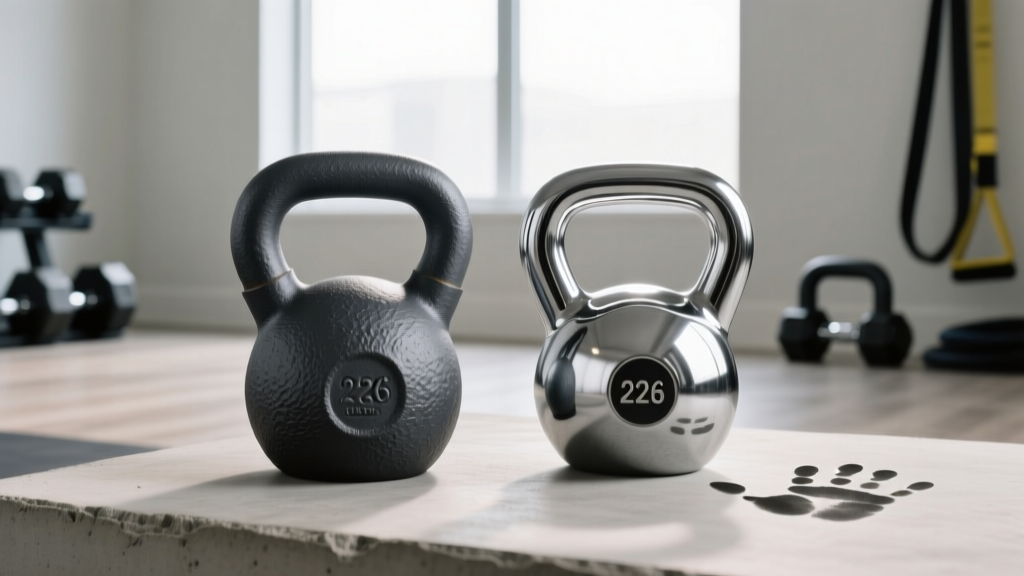
Beyond Dumbbell Exercise Charts: Cast Iron vs Competition Kettlebells

EZ Curl Bar vs Straight Bar & Over the Head Dumbbell 2026 Trends

Dumbbell Flat Bench Flyes: Power Rack vs Squat Stand Errors

Rubber Hex vs Urethane Dumbbells for Lawnmowers (2026)
