
Budget Breakdown: Loadable Bench Flyes Dumbbells vs. Fixed Sets
Discover the true cost of loadable bench flyes dumbbells vs. fixed sets. We break down 2026 pricing, micro-loading benefits, and ergonomic trade-offs.

The Home Gym Dilemma: Outfitting for Chest Isolation
When programming chest isolation movements, selecting the ideal bench flyes dumbbells configuration is critical for joint health and muscle hypertrophy. However, outfitting a home gym to accommodate the specific weight jumps required for flyes can quickly drain a budget. While fixed urethane dumbbell sets offer unparalleled convenience, their cost-per-pound ratio in 2026 remains a massive barrier for most lifters. This brings us to the ultimate value proposition: loadable dumbbells with interchangeable plates.
In this comprehensive budget breakdown, we analyze the financial and biomechanical ROI of loadable dumbbell handles compared to fixed sets, specifically through the lens of the dumbbell chest flye. We will examine hidden costs, micro-loading economics, and the physical edge cases that can make or break your workout.
The 2026 Financial Matrix: Loadable vs. Fixed Weights
To understand the true value of loadable dumbbells, we must calculate the total cost of ownership for a functional flye weight range. Most intermediate lifters require dumbbells ranging from 15 lbs to 50 lbs per hand to effectively execute flat and incline flyes. Below is a comparative cost matrix based on current 2026 market pricing for standard 1-inch plate-loaded handles, premium Olympic loadable handles, and a full fixed urethane set.
| Equipment Type | Handle Cost (Pair) | Plate Cost (to 50lbs/hand) | Total Setup Cost | Setup Time per Change | Flye Ergonomics |
|---|---|---|---|---|---|
| Standard 1" Spinlock Handles | $65 | $160 (Cast Iron) | $225 | 45-60 seconds | Poor (Thin grip, bulky plates) |
| Olympic Loadable Handles (2" Sleeves) | $140 | $210 (Calibrated Steel) | $350 | 20-30 seconds | Moderate (Wide sleeve limits ROM) |
| Premium Quick-Lock Adjustable (e.g., Ironmaster) | $450 (Base Kit) | $0 (Included in Kit) | $450 | 10-15 seconds | Excellent (Compact, knurled grip) |
| Fixed Urethane Set (10-50 lbs, 5lb jumps) | N/A | N/A | $1,850+ | 2 seconds | Excellent (Optimal weight distribution) |
Biomechanics and the "Stretch" Tax
The dumbbell chest flye is uniquely demanding on the pectoralis major, requiring a deep eccentric stretch under load. According to the ExRx biomechanics database, the primary function of the flye is horizontal adduction with a massive emphasis on the stretched position of the muscle fibers. This is where loadable dumbbells often introduce a hidden "stretch tax."
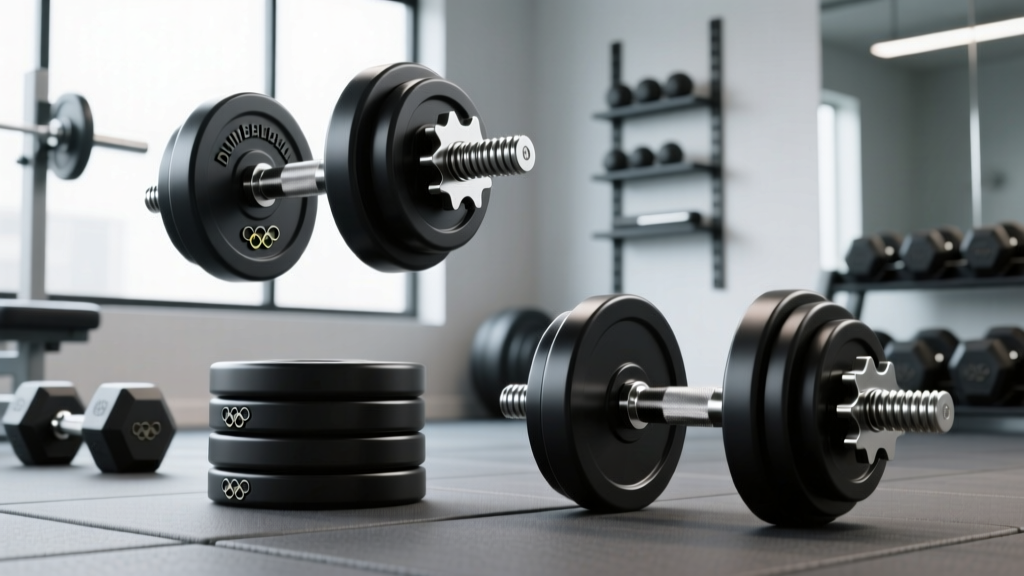
When you load a standard 1-inch handle with 45 lbs of plates (to achieve a 50 lb total working weight), the physical width of the cast iron plates extends outward. A standard 10 lb cast iron plate is roughly 1.5 inches wide, and a 25 lb plate is over 2 inches wide. During the deepest part of the eccentric flye, as your elbows drop below the bench pad, the outer edges of the plates can physically graze the bench or force you to alter your grip width to avoid collision. This artificially limits your range of motion (ROM), directly reducing the hypertrophic stimulus of the exercise.
Micro-Loading: The Hidden ROI of Loadable Setups
Where loadable dumbbells absolutely destroy fixed sets in value is micro-loading. The chest flye is an isolation movement that places immense shear stress on the anterior deltoid and the biceps tendon. Jumping from a 30 lb dumbbell to a 35 lb dumbbell represents a 16.6% increase in load—a jump that is neurologically and structurally jarring for isolation work.
"Progressive overload on single-joint and isolation movements requires fractional loading to maintain joint integrity. A 2.5 lb micro-jump per hand allows for continuous adaptation without compromising the connective tissue of the shoulder capsule."
— Principles of Hypertrophy Programming, Strength & Conditioning Literature
With loadable handles, you can purchase fractional plates (0.5 lb, 1.25 lb, and 2.5 lb) for roughly $2 to $3 per pound. This allows you to increase your flye weight by as little as 1 lb per hand, extending the lifespan of your current strength plateau and maximizing the value of your equipment. A fixed set forces 5 lb total jumps, often leading to premature stagnation on flyes.
Ergonomic Edge Cases and Failure Modes
Before purchasing loadable dumbbells for flyes, you must account for specific mechanical failure modes that do not exist with fixed dumbbells. We analyzed user data and equipment specs from top manufacturers, including the Rogue Loadable Dumbbell Handles, to identify these edge cases:
- Grip Diameter Fatigue: Standard 1" loadable handles typically feature a 28mm grip diameter. While excellent for deadlifts, a thin grip concentrates the load onto a smaller surface area of the palm. During heavy flyes, this can cause premature grip fatigue or wrist pain before the pecs reach true muscular failure. Fixed dumbbells usually feature thicker 32mm-35mm grips.
- Sleeve Spin and Collar Loosening: If you are using standard spinlock collars on a non-rotating sleeve, the rotational force of the flye (especially during the concentric squeeze) can cause the collar to slowly unscrew. This is a massive safety hazard. Always invest in lock-jaw collars or handles with built-in rotating sleeves.
- Knurling Aggression: Loadable barbell handles often feature aggressive Olympic-style knurling. When performing high-rep flye sets (12-15 reps), aggressive knurling can tear the calluses on the heel of your hand, as the grip shifts slightly during the arc of the movement.
Ironmaster Quick-Lock vs. Standard Spinlock: A Flye-Specific Showdown
If your budget allows for a mid-tier investment, the Ironmaster Quick-Lock V2 system bridges the gap between cheap loadable handles and expensive fixed sets. Priced around $450 for the 45 lb base kit (expandable to 75 lbs or 120 lbs), the Ironmaster uses a screw-in pin mechanism rather than traditional plates sliding onto a sleeve.
For bench flyes, this design is superior because the weight blocks are perfectly square and compact. You eliminate the "plate width" issue entirely, allowing for a deep, unobstructed stretch at the bottom of the flye. Furthermore, the handle thickness and knurl pattern mimic a high-quality fixed dumbbell, reducing wrist strain. While the initial $450 outlay is higher than the $225 standard spinlock setup, the time saved during weight changes and the preservation of your ROM make it the superior value play for serious hypertrophy training.
Final Value Verdict: Who Should Buy Loadable Handles?
If you are strictly on a shoestring budget and prioritize raw cost-per-pound above all else, standard 1-inch loadable handles with cast iron plates remain the undisputed champion of home gym economics. You can build a fully functional flye station for under $250.
However, if you are an intermediate-to-advanced lifter focused on chest hypertrophy, joint longevity, and workout density, the value shifts toward premium quick-lock loadable systems or entry-level adjustable dial dumbbells. The ability to micro-load your bench flyes dumbbells safely, combined with a compact head design that preserves your eccentric stretch, provides a training ROI that cheap spinlock handles simply cannot match in 2026.
More gear to consider
All reviews
30 Day Dumbbell Challenge: Adjustable Dumbbell Review & Guide

Rogue vs Rep Barbell Knurling & Supinated Dumbbell Curls

Reverse Lunge Dumbbell vs Barbell: Weight & Knurling Guide

Olympic vs Standard Plates: Best for Dumbbell Shoulder Front Raises?
Barbell Collar Types: Securing the Dumbbell Crunch Press
