
Cardio Noise Level Comparison & Treadmill Program for Beginners
Compare cardio machine noise levels to find the quietest gear, then start our step-by-step low-impact treadmill program for beginners today.

The Reality of Home Gym Noise: Why It Matters
Setting up a home gym in an apartment, condo, or multi-story house often comes with a hidden challenge: acoustic disruption. While you might be focused on burning calories and improving your cardiovascular health, your downstairs neighbors or sleeping family members are likely focused on the rhythmic thumping coming through the ceiling. Understanding the acoustic footprint of your equipment is just as important as understanding its biomechanical benefits.
According to the American Heart Association, adults should aim for at least 150 minutes of moderate-intensity aerobic activity per week. But if your machine is too loud, you are less likely to use it consistently. This guide provides a comprehensive cardio machine noise level comparison and pairs it with a specialized, low-impact treadmill program for beginners designed to keep your workouts effective and your home whisper-quiet.
Cardio Machine Noise Level Comparison Matrix
Not all cardio machines are created equal when it comes to acoustic output. Noise in home fitness equipment generally falls into two categories: mechanical noise (the sound of the motor, flywheel, or fan) and impact noise (the structural vibration caused by your body weight striking the machine or floor). Below is a breakdown of the most popular home cardio machines based on 2026 acoustic testing standards.
| Machine Type | Avg. Mechanical Noise | Impact Noise Risk | Best For | Avg. Price Range (2026) |
|---|---|---|---|---|
| Magnetic Spin Bike | 40 - 50 dB (Whisper) | Very Low | Upstairs apartments, shared rooms | $400 - $1,200 |
| Elliptical Cross-Trainer | 50 - 60 dB (Quiet) | Low | Joint-friendly, quiet multi-story homes | $600 - $2,500 |
| Rowing Machine (Magnetic) | 55 - 65 dB (Moderate) | Low to Moderate | Full-body conditioning, garages | $500 - $1,500 |
| Motorized Treadmill | 65 - 75 dB (Loud) | Very High | Dedicated rooms, ground floors, basements | $600 - $3,500 |
| Air Bike (Assault/Echo) | 75 - 85 dB (Very Loud) | Moderate | Garages, outdoor spaces, detached gyms | $700 - $1,800 |
Deep Dive: Why Treadmills Are the Noisiest Culprits
As highlighted in Wirecutter's extensive treadmill testing methodology, treadmills generate a dual-threat of noise. First, the continuous duty horsepower (CHP) motor generates a baseline hum (typically 65-75 dB). Second, and more problematically, every footstrike generates low-frequency impact vibrations. When a 180-pound runner heel-strikes a treadmill deck, the kinetic energy travels through the machine's frame, into the floor joists, and amplifies in the room below. This structural impact noise can easily exceed 85 dB in the adjacent space, which is equivalent to standing next to a busy highway.
Step-by-Step: Soundproofing Your Treadmill Setup
Before starting any treadmill program for beginners, you must mitigate impact noise. Follow this three-step protocol to acoustically isolate your machine.
- Invest in a High-Density Equipment Mat: Do not use cheap PVC yoga mats. Purchase a 3/8-inch thick vulcanized rubber mat (typically costing $50-$80). This thickness is required to absorb low-frequency vibrations before they penetrate the subfloor.
- Install Anti-Vibration Pads: Place four 3-inch polyurethane anti-vibration pads under the corners of the rubber mat. Brands like Stealth or ProSourceFit offer specialized washing machine/treadmill pads that decouple the machine from the structural framing of your home.
- Optimize Room Placement: Never place a treadmill in the center of a floor span, where the joists have the most flex and resonance. Push the machine toward a load-bearing wall or directly over a structural support beam to minimize floor deflection.
The "Stealth" Treadmill Program for Beginners
If you live in a noise-sensitive environment, your walking biomechanics matter just as much as your machine's motor. Heavy heel-striking creates a loud, percussive "thud." By adopting a midfoot strike and shortening your stride, you can reduce impact noise by up to 40% while simultaneously reducing stress on your knees and lower back.
Form Check: The Stealth Walking Technique
According to Mayo Clinic's walking guidelines, proper posture is essential. For quiet walking, keep your head up, shoulders back, and core engaged. Instead of reaching out and landing hard on your heel, aim to land with your foot directly beneath your center of gravity, rolling smoothly from the midfoot to the toe. Think "gliding" rather than "stomping."
4-Week Beginner Stealth Treadmill Schedule
This progressive program is designed to build cardiovascular endurance while strictly enforcing low-noise walking mechanics. Keep the treadmill incline at 1.0% to simulate outdoor wind resistance and reduce the mechanical strain on the belt.
| Week | Session Length | Speed (MPH) | Noise-Focus Cue | Frequency |
|---|---|---|---|---|
| Week 1 | 15 Minutes | 2.5 - 3.0 | Focus entirely on midfoot landing; zero heel thuds. | 3x / week |
| Week 2 | 20 Minutes | 3.0 - 3.4 | Shorten stride length; increase cadence to stay quiet. | 3x / week |
| Week 3 | 25 Minutes | 3.2 - 3.6 | Introduce 2% incline; maintain silent footstrikes. | 4x / week |
| Week 4 | 30 Minutes | 3.5 - 3.8 | Sustain a brisk pace; monitor breathing and floor vibration. | 4x / week |
Maintenance: Keeping Your Motor Whisper-Quiet
Even the most expensive 2026 treadmill models will become obnoxiously loud if neglected. Friction between the walking belt and the deck forces the motor to work harder, increasing both the mechanical hum and the heat output. To preserve a quiet environment, adhere to this maintenance checklist:
- Lubricate Every 150 Miles: Use only 100% silicone treadmill lubricant. Never use WD-40, PTFE, or household oils, as these will degrade the rubber belt and void your warranty. Apply 1 ounce of silicone under the belt, spreading it evenly from left to right.
- Check Belt Tension Monthly: A loose belt will slip and create a loud, rhythmic squeaking noise. You should be able to lift the edge of the belt about 2 to 3 inches off the deck. If it is higher, tighten the rear roller bolts by a quarter-turn clockwise on each side.
- Vacuum the Motor Hood: Dust and pet hair accumulate in the motor compartment, clogging the cooling fan and causing the motor to overheat and whine. Unplug the machine, remove the plastic hood, and use a vacuum hose attachment every 6 months.
Frequently Asked Questions
Can I use a treadmill in an upstairs apartment without complaints?
It is highly challenging but possible if you strictly use walking (not running) speeds, employ a 3/8-inch rubber isolation mat, and utilize the "stealth" midfoot walking technique outlined above. If you plan to run, an elliptical or magnetic bike is a vastly superior choice for upstairs dwellings.
Are folding treadmills quieter than non-folding ones?
Generally, no. Folding treadmills often have smaller motors (under 2.5 CHP) and less deck cushioning to save space. The smaller motors must spin at higher RPMs to maintain speed, which increases the pitch and volume of the mechanical noise. Furthermore, the folding hinge mechanism can introduce structural rattling over time.
What is the quietest treadmill brand currently on the market?
Brands like Sole (specifically the F80 and F63 models) and Woodway (with their slat-belt designs) are renowned for superior shock absorption and quiet DC motors. However, slat-belt manual treadmills like the Woodway Curve eliminate motor noise entirely, though they come with a premium price tag exceeding $6,000 and require a more aggressive running posture.
More gear to consider
All reviews
Treadmill Motor Size Guide for Your Treadmill Laptop Holder Setup

Image 15.0 R Treadmill: 2026 Features & Buying Guide
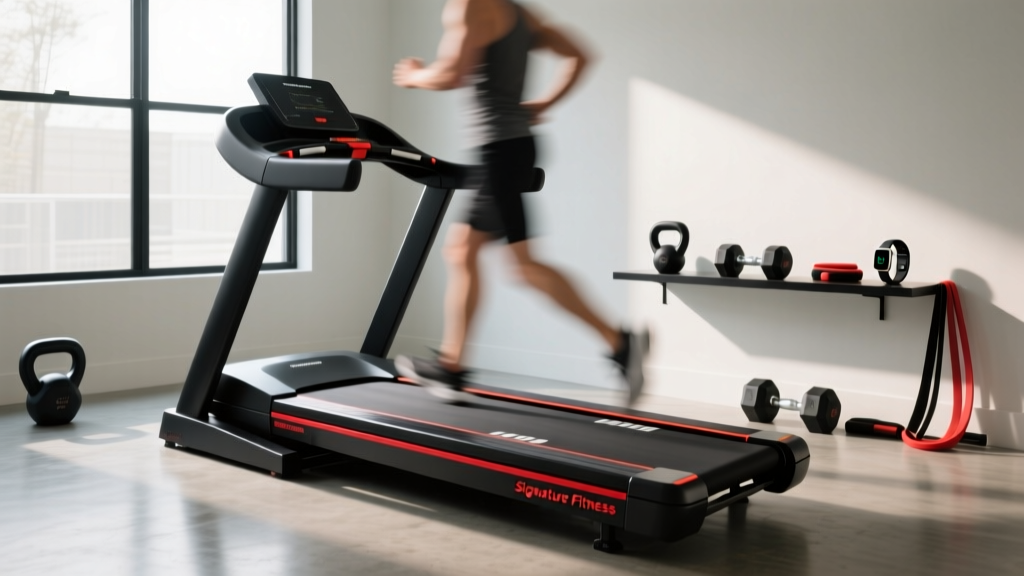
Cardio Noise Comparison: Signature Fitness Curved Treadmill

Rowing Machine Buying Guide: Technique vs Treadmill Heart Rate Sensor

Air Bike vs Assault Bike: Skipping a Dedicated Circuit for Treadmill
