
Is It Bad to Walk Barefoot on a Treadmill? Best 2026 Folding Models
Wondering if it's bad to walk barefoot on a treadmill? We review the best 2026 folding treadmills for small spaces, focusing on deck safety and layout.

The Small-Space Dilemma: Barefoot Walking and Compact Treadmills
Living in a compact apartment or designing a multi-use home gym in 2026 often means making compromises on space. When your fitness equipment shares square footage with your living room or bedroom, the "shoes-off at the door" rule naturally extends to your workouts. This leads to one of the most frequent questions we receive from urban dwellers and small-space optimizers: is it bad to walk barefoot on a treadmill?
The short answer is yes, it is generally not recommended due to friction burns, lack of arch support, and hygiene degradation of the belt. However, the reality of small-space living means you need a machine that accommodates quick, sock-clad walks or offers superior deck cushioning to mitigate the impact of barefoot strides. Below, we break down the biomechanics of barefoot treadmill walking and review the top folding treadmills of 2026 that bridge the gap between ultra-compact storage and foot-safe engineering.
⚠ Friction & Thermal Warning
Treadmill belts are constructed from polyvinyl chloride (PVC) or polyurethane, designed to grip rubber soles. Bare skin creates a higher coefficient of friction, generating rapid thermal buildup. Walking barefoot for more than 5-10 minutes can result in severe friction blisters on the soles of your feet.
Is It Bad to Walk Barefoot on a Treadmill? The Biomechanics
To understand why footwear matters, we have to look at how treadmill decks are engineered. According to the American Podiatric Medical Association (APMA), walking barefoot on unyielding surfaces strips the foot of its natural shock absorption, placing excessive strain on the plantar fascia and Achilles tendon. While some premium treadmills offer elastomer cushioning, it is calibrated for the compressive force of a running shoe's midsole, not a bare heel.
1. Belt Texture and Shear Force
Standard treadmill belts feature a diamond or grass-textured top layer to prevent slipping. When barefoot, this texture acts like mild sandpaper. The shear force generated during the push-off phase of your gait cycle can easily tear the outer layers of the epidermis. If you must walk without sneakers in a small apartment, wearing thick, silicone-grip yoga socks is the mandatory compromise.
2. Deck Deflection and Joint Impact
The American Council on Exercise (ACE) notes that proper footwear absorbs up to 30% of the impact force during walking. When barefoot on a standard MDF (medium-density fiberboard) treadmill deck, that 100% of the impact travels directly up your tibia to your knees and lower back. Compact folding treadmills often use thinner decks to save weight, exacerbating this issue.
3. Hygiene and Belt Lubrication
Bare feet sweat, and human skin oils transfer directly to the belt. Over time, this organic residue breaks down the silicone lubricant layer between the belt and the deck, increasing the motor's amp draw and leading to premature controller board failure.
2026 Review: Top Folding Treadmills for Compact Apartments
If your space optimization strategy requires a folding treadmill, you need a model that folds small but doesn't sacrifice deck integrity. Here are the top three models for 2026 that cater to small-space layouts while offering features that make sock-clad or quick barefoot walks safer.
1. KingSmith WalkingPad R2 (Best for Under-Desk & Sock Walking)
The WalkingPad R2 remains the undisputed king of micro-apartments in 2026. It features a patented 180-degree folding mechanism that reduces its footprint to a mere 10.6 x 29.9 x 59.4 inches, allowing it to slide under a standard sofa.
The Barefoot Factor: The belt is notably smoother than traditional gym treadmills, which reduces friction shear. While we still advise against bare skin, the smoother PVC makes it much more forgiving for thick grip-socks.
Specs: 2.5 HP peak motor, 3.7 mph top speed (walking only), 24-inch belt width.
Price: ~$599
2. Horizon Fitness T202 (Best Cushioning for Barefoot Strides)
Horizon's T202 utilizes a featherlight folding system that locks vertically, taking up just 34 x 30 x 85 inches of floor space.
The Barefoot Factor: Horizon employs a 3-zone variable durometer cushioning system. The front third (strike zone) is softer, while the back third (push-off) is firmer. This advanced elastomer setup absorbs significantly more impact than standard compact treadmills, making it the safest option if you occasionally forget your shoes and take a barefoot stroll.
Specs: 2.75 CHP motor, 12 mph top speed, 20 x 55-inch belt.
Price: ~$799
3. Sunny Health & Fitness SF-T7516 (Best Budget Fold-Away)
For those on a strict budget, the SF-T7516 offers a manual folding hinge that tucks neatly into a closet (26 x 28 x 65 inches folded).
The Barefoot Factor: This is a basic, high-friction belt with minimal deck shock absorption. Strictly no barefoot walking. You must wear running shoes or thick padded socks to avoid blisters and joint pain on this model.
Specs: 1.0 HP motor, 8 mph top speed, 16.5 x 46-inch belt.
Price: ~$348
Compact Treadmill Comparison Matrix
| Model | Folded Footprint | Deck Cushioning | Belt Texture | 2026 Price |
|---|---|---|---|---|
| WalkingPad R2 | 10.6" x 29.9" x 59.4" | None (Rigid MDF) | Smooth PVC | $599 |
| Horizon T202 | 34" x 30" x 85" | 3-Zone Elastomer | Diamond Grip | $799 |
| Sunny SF-T7516 | 26" x 28" x 65" | Minimal Rubber Pads | High-Friction | $348 |
Space Optimization: Layout Rules for Folding Treadmills
Owning a folding treadmill is only half the battle; how you position it in your small space dictates both safety and usability. Follow these spatial design rules to optimize your layout:
- The 48-Inch Posterior Rule: Never place the rear of a treadmill directly against a wall or glass door. If you trip or the emergency stop clip fails, you need a minimum of 48 inches of clear space behind the deck to slide to a safe stop without hitting furniture.
- Lateral Clearance (24 Inches): Compact apartments often tempt users to shove treadmills into tight corners. You must maintain at least 18 to 24 inches of lateral space on both sides for arm swing clearance and safe mounting/dismounting.
- Vibration Isolation: In multi-story apartments, treadmill impact transfers through the floor joists. Place a 3/8-inch thick, high-density EVA foam equipment mat (cut to 3x6 feet) under the machine. This reduces low-frequency noise transmission to neighbors below by up to 40%.
- Vertical Storage Hinges: If storing your treadmill vertically (like the Horizon T202), ensure the ceiling height is at least 85 inches. Furthermore, verify that the floor hinge is locked; a sudden release of a 140-lb folding deck can cause severe property damage or injury.
Pro Layout Tip: Position your folding treadmill facing a window or a wall-mounted mirror rather than a blank corner. In small spaces, visual depth reduces the psychological feeling of claustrophobia during 45-minute steady-state cardio sessions.
Frequently Asked Questions (FAQ)
Can I use a treadmill barefoot if I walk at a very slow speed?
Even at slow speeds (1.0 to 2.0 mph), the continuous friction of the PVC belt against bare skin generates heat. While you might avoid immediate blisters, the lack of arch support on a flat, rigid deck can trigger plantar fasciitis over time. Always wear grip socks at a minimum.
Do folding treadmills have weight limits that differ from standard models?
Yes. Because folding treadmills utilize lighter materials and hinged deck mechanisms to save space, their weight capacities are generally lower. While a commercial gym treadmill might support 350 lbs, most compact folding models in 2026 cap out between 220 lbs and 265 lbs. Always check the manufacturer's stated limit, as exceeding it will warp the folding hinge.
How often should I lubricate a folding treadmill belt?
For compact models used in home environments, apply 100% silicone treadmill lubricant every 3 months or every 130 miles. If you frequently walk in socks or barefoot, skin oils will degrade the factory lube faster; check the belt tension and friction monthly by feeling for heat under the deck after a 20-minute walk.
More gear to consider
All reviews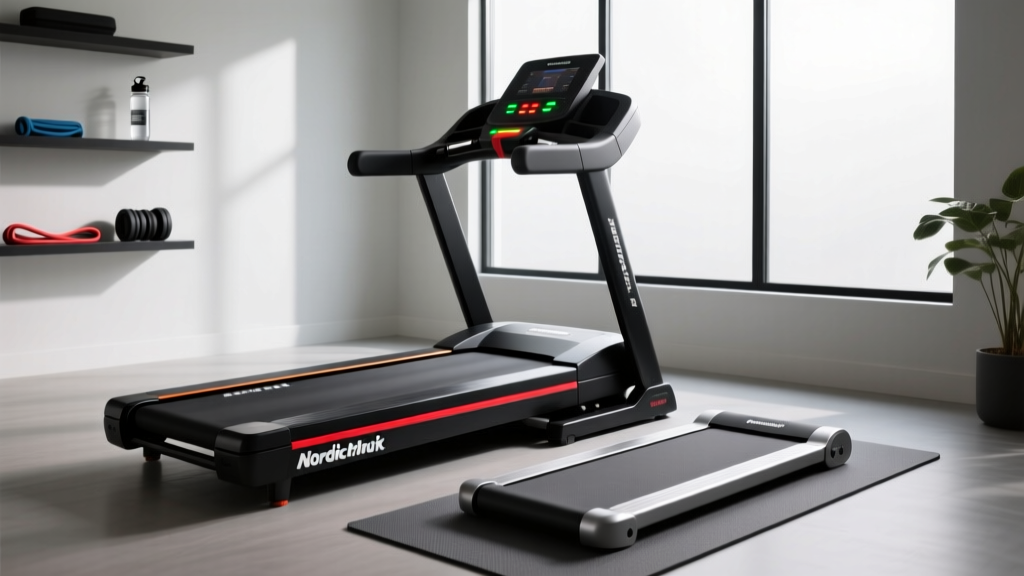
NordicTrack T 9.5 S Treadmill vs Walking Pads: 2026 Review

NordicTrack T Series 10 Treadmill Belt Maintenance & 2026 Trends
Beyond Treadmill vs Elliptical for Cardio: Air Bike vs Assault Bike

Elliptical vs Treadmill: Weighing ProForm Treadmill Support Costs

Home Stair Climber Guide: Beyond the Vision Fitness Treadmill Manual
