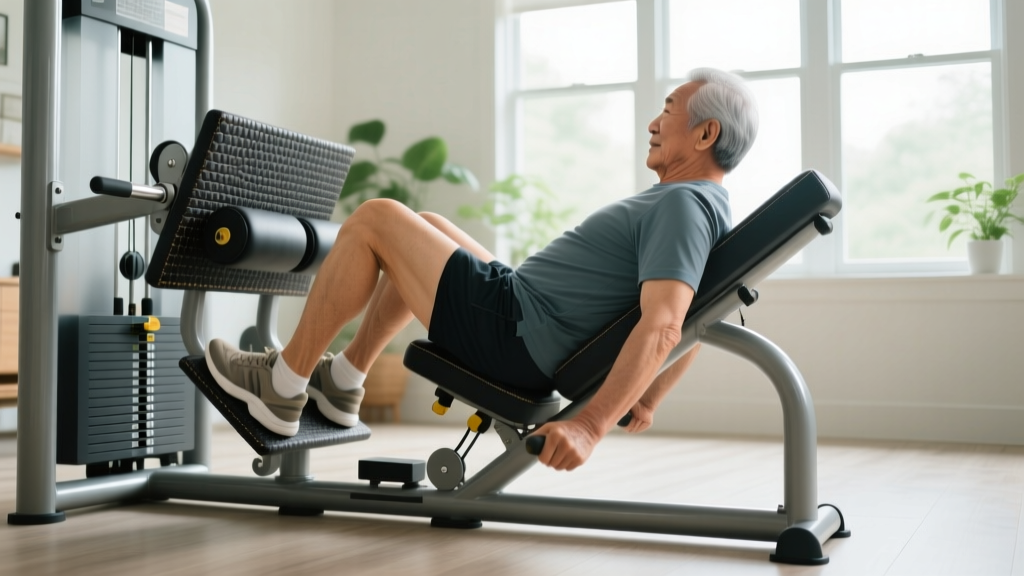
Cable Leg Attachment Maintenance vs Leg Press Machine Exercise Gear
Learn essential maintenance tips for cable machine leg attachments. Discover how to prolong gear life and compare upkeep to the leg press machine exercise.

The Hidden Wear and Tear of Cable Leg Attachments
Functional cable machines, such as the Rogue Monster Cable Crossover or the Body-Solid Dual Adjustable Pulley (DAP), have become absolute staples for lower body training. While the traditional leg press machine exercise remains a cornerstone for raw quad and glute loading, cable attachments for leg exercises—such as neoprene ankle cuffs for hip extensions, low-row footplates for seated leg curls, and hip belts for pull-throughs—offer unmatched versatility and joint-friendly resistance profiles. However, maintaining these soft-goods and high-tension hardware components requires a completely different protocol than greasing the guide rods of a plate-loaded leg press.
Many home and commercial gym owners treat cable attachments as "buy and forget" accessories. This is a critical error. The dynamic tension, sweat exposure, and friction points inherent in cable leg work lead to specific failure modes that can compromise safety. Understanding how to maintain these attachments is essential for maximizing your equipment ROI and ensuring safe training environments.
Common Failure Modes in High-Tension Leg Gear
Unlike the linear bearings and steel sleds of a dedicated leg press, cable leg attachments rely on textiles, synthetic rubbers, and small-format hardware. According to equipment maintenance guidelines outlined by the National Strength and Conditioning Association (NSCA), regular inspection of soft goods and load-bearing hardware is non-negotiable for injury prevention.
- Velcro Degradation: Ankle cuffs and hip belts rely on heavy-duty hook-and-loop closures. Dead skin, lint, and chalk become embedded in the "hook" side, reducing grip strength by up to 60% over six months.
- D-Ring Grooving: The metal D-ring where the carabiner attaches bears the brunt of the lateral load. Over time, the carabiner saws a microscopic groove into the zinc plating, eventually exposing the inner steel to rust and creating a sharp edge that shreds nylon webbing.
- Neoprene Dry Rot: Exposure to UV light and the acidic nature of human sweat (which contains urea and lactic acid) breaks down the synthetic rubber cells in neoprene, causing it to flake and lose its compressive grip on the limb.
- Webbing Fraying: The fold point where 1-inch nylon webbing loops through the D-ring experiences immense shear stress during exercises like cable pull-throughs or leg curls.
Maintenance Matrix: Cable Attachments vs. Leg Press Machine Exercise Gear
To understand the unique care requirements of cable attachments, it is helpful to contrast them with the maintenance required for a dedicated leg press machine exercise setup, such as a Hammer Strength Linear Leg Press or a Prime Fitness Pendulum. As detailed in standard commercial equipment guides like the Life Fitness owner's manuals, heavy iron requires lubrication, while soft goods require sanitation and friction management.
| Component | Primary Wear Factor | Maintenance Action Required | Frequency | Est. Replacement Cost |
|---|---|---|---|---|
| Cable Ankle Cuff (Neoprene/Nylon) | Sweat acidity & Velcro clogging | Wipe down, brush Velcro hooks | Daily / Weekly | $35 - $60 |
| Leg Press Sled (Linear Bearings) | Dust & metal-on-metal friction | Wipe rods, apply PTFE lubricant | Weekly | $150 - $300 (bearings) |
| Low-Row Footplate (UHMW Plastic) | Shoe tread abrasion | Inspect for deep grooving/snags | Monthly | $80 - $120 |
| Cable Pulley Wheel (Nylon/Aluminum) | Lateral cable tracking wear | Check for flat spots & bearing noise | Bi-Annually | $45 - $90 |
| Leg Press Guide Rods (Chrome Steel) | Oxidation and pitting | Wipe with silicone-impregnated cloth | Weekly | $200 - $450 (per rod) |
Step-by-Step Longevity Protocol for Cable Leg Gear
Implementing a strict maintenance routine will easily double the lifespan of premium attachments like the Spud Inc. Strap-Me-Up or Rogue Monster Ankle Straps. Follow this two-phase protocol to protect your investment.
Phase 1: Post-Workout Sweat Neutralization
Never leave sweat to dry on neoprene or nylon. The salts and acids left behind act as a desiccant, drying out the materials and accelerating corrosion on metal hardware.
- Mix a Neutralizing Solution: Create a 1:10 dilution of Simple Green All-Purpose Cleaner and distilled water in a spray bottle. Avoid bleach or ammonia-based cleaners, which instantly degrade neoprene's elasticity.
- Mist and Wipe: Lightly mist the neoprene backing and nylon webbing. Wipe vigorously with a microfiber cloth to lift surface oils and salts.
- Air Dry in Shade: Hang the attachments in a well-ventilated area away from direct sunlight. Ultraviolet (UV) photodegradation is the number one enemy of nylon webbing, reducing its tensile strength by up to 30% over a year of sun exposure.
Phase 2: Weekly Hardware and Webbing Inspection
Once a week, perform a tactile and visual inspection of the load-bearing components.
- The Velcro Comb Technique: Use a fine-toothed pet brush or a specialized Velcro cleaning comb to aggressively brush the "hook" side of the strap. Removing embedded lint and skin cells restores the mechanical grip, preventing the cuff from slipping during heavy hip extensions.
- The D-Ring Squeeze Test: Squeeze the nylon webbing where it folds through the D-ring. Run your thumb over the inside of the metal ring. If you feel a distinct "lip" or groove deeper than 1mm, the carabiner has worn through the protective zinc plating. It is time to replace the hardware.
Expert Insight: Most commercial gyms use cheap, zinc-plated carabiners that spin freely, causing lateral friction against the nylon loop. Upgrading to a locking oval carabiner (such as the Petzl Attache 3D, retailing around $22) ensures the carabiner stays oriented correctly, reducing webbing shear stress by over 40%.
Material-Specific Care Guidelines
Different materials used in cable leg attachments require distinct care approaches to maintain their structural integrity under heavy loads.
Neoprene and Synthetic Suede
Neoprene provides the necessary compression and grip against the skin to prevent the cuff from sliding down the leg during cable kickbacks. To maintain its tackiness, wash neoprene cuffs in a mesh laundry bag on a gentle, cold-water cycle once a month using a mild, non-enzyme detergent. Never put them in the dryer; heat warps the synthetic rubber cells.
1-Inch Nylon Webbing
Standard 1-inch nylon webbing has a break strength of roughly 1,200 to 1,500 lbs, but its working load limit in a dynamic gym environment is much lower. Inspect the edges of the webbing for "fuzzing." While minor surface fuzzing is normal, if you spot more than three severed load-bearing threads across the width of the strap, the structural integrity is compromised. Retire the attachment immediately.
UHMW Plastic Footplates
For those using low-row cable attachments with Ultra-High-Molecular-Weight (UHMW) plastic footplates for seated leg curls, the primary enemy is aggressive shoe tread. Over time, deep grooves can form, creating sharp plastic burrs that can slice into the user's skin or catch on footwear. Lightly sand these plates with 220-grit sandpaper every six months to maintain a smooth, safe surface.
Safety Thresholds: When to Throw Away Your Attachments
Knowing when to retire gear is just as important as knowing how to clean it. Do not attempt to sew or repair high-tension cable leg attachments. The cost of a new $45 ankle strap is negligible compared to the liability of a snapped strap during a heavy set. Discard your attachments if you observe any of the following:
- Flaking Neoprene: If the black backing leaves residue on your skin or clothing, the material has succumbed to dry rot and will tear under load.
- Stretched Stitching: If the box-X stitch pattern securing the D-ring shows visible gaps or pulled threads, the load distribution has failed.
- Hardware Deformation: If the D-ring is bent even slightly out of its planar shape, the metal has undergone plastic deformation and is at risk of sudden brittle fracture.
Frequently Asked Questions
Can I use WD-40 on the D-rings of my cable leg attachments to prevent rust?
No. WD-40 is a solvent and water displacer, not a long-term lubricant. It will attract dust and degrade the nylon webbing it touches. If your D-rings are prone to rust, wipe them down with a silicone-impregnated cloth or upgrade to 316 marine-grade stainless steel hardware.
How does the maintenance cost of cable attachments compare to a leg press?
Cable attachments are significantly cheaper to maintain and replace. A high-end set of ankle cuffs and a hip belt will cost around $100 to replace every few years. Conversely, rebuilding the linear bearings and guide rods on a commercial leg press machine exercise unit can easily exceed $600 in parts and labor, making cable setups highly cost-effective for long-term joint-friendly leg training.
Are there specific cable attachments that last longer than others?
Yes. Attachments that utilize "drop-in" forged steel D-rings encased in heavy-duty Cordura nylon (rather than simple folded webbing) offer the highest longevity. Brands that utilize bartacked stitching with bonded nylon thread (which resists UV and sweat degradation better than cotton or polyester thread) will easily outlast budget alternatives by 3 to 5 years.
More gear to consider
All reviews
2026 Glute Equipment Trends: The Standing Leg Press Machine Analysis

Best Equip Recovery for Heat: Evidence-Based Cooling Gear for Athletes and Workers

The Best Leg Press Machine Alternative: A Beginner's Sled Guide

Optimizing Space: Power Cage & Force USA Leg Press Machine Layouts

Single Leg Press Machine vs Sled: Beginner Leg Guide