
Sled Push vs Vertical Leg Press Machine: Beginner Guide
Learn the step-by-step basics of sled push and pull equipment for leg training, and see how it compares to the vertical leg press machine for beginners.

The Biomechanical Case: Sled Training vs. The Vertical Leg Press Machine
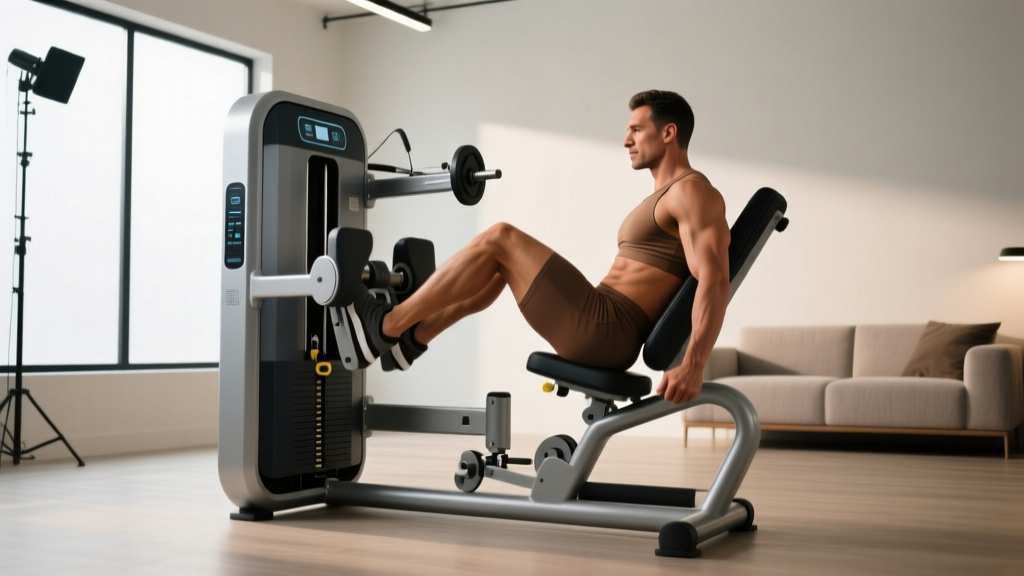
When beginners walk into a gym, the vertical leg press machine often looks like a safe haven for building lower body mass. You lie supine, brace your back against a padded carriage, and push weight directly toward the ceiling. However, while this fixed-path equipment has its place, sled push pull equipment has emerged as the superior, functional alternative for novice lifters in 2026. Here is why making the switch—or at least prioritizing the sled—will save your joints and accelerate your athletic development.
💡 The Lumbar Flexion Trap: On a vertical leg press machine, as you lower the weight, your hips naturally want to curl under (posterior pelvic tilt). If you bring your knees too close to your chest, this 'butt wink' transfers thousands of pounds of shear force directly to your lumbar discs. Sled training completely eliminates this risk by keeping your spine in a natural, load-bearing alignment. According to Mayo Clinic guidelines on weight training spinal safety, maintaining a neutral spine under heavy compressive loads is critical for long-term joint health.According to biomechanical breakdowns from SimpliFaster's research on sled training kinetics, the horizontal force vector of a sled push mimics the exact joint angles of sprinting and jumping. You are not just isolating the quadriceps; you are training the central nervous system (CNS) to transfer force from the ground, through a stiff core, and into an external object.
Essential Sled Equipment for Your Gym (2026 Market Overview)
Not all sleds are created equal. The friction coefficient of the skids, the height of the push poles, and the weight capacity dictate how effective your leg training will be. Below is a comparison of the top-tier sled push pull equipment available this year.
| Model | Price Range | Best For | Key Feature |
|---|---|---|---|
| Rogue SR-1 Sled | $395 - $450 | Commercial & Garage Gyms | Interchangeable push/pull handles, laser-cut skids |
| Titan Fitness Pro Sled | $189 - $220 | Budget-Conscious Beginners | Low-profile base, excellent turf grip |
| Rep Fitness PR-4000 Sled | $150 (Attachment) | Rack-Integrated Training | Mounts directly to uprights for space-saving |
Step-by-Step Guide: Mastering the Heavy Sled Push
The heavy sled push is a concentric-only movement. Because there is no eccentric (lowering) phase, it causes significantly less delayed onset muscle soreness (DOMS) than squats or leg presses, allowing beginners to train legs more frequently without burning out their CNS.
1. The Setup and Stance
- Load the Sled: For a beginner heavy push, start with the empty sled plus one 45-lb bumper plate on each side (approx. 135 lbs total). Bumper plates are crucial so the sled doesn't tip forward if you stop abruptly.
- Hand Placement: Grip the vertical push poles at roughly chest height. Gripping too low forces an excessive forward lean; gripping too high reduces your mechanical leverage.
- Torso Angle: Hinge at the hips so your torso is at a 45-degree angle to the floor. Keep your neck neutral—look at the ground about 10 feet ahead of you, not up at the wall.
2. The Execution (The Heavy March)
- Foot Strike: Do not push through your heels. Drive through the balls of your feet, mimicking a sprinter's start.
- The Piston Action: Extend one leg completely while the other leg chambers. Think of your legs as pistons. Avoid 'bounding' or hopping; maintain constant tension on the sled.
- Pacing: A heavy push should take 15–25 seconds to cover 20 yards. If you are moving faster than this, the weight is too light and you are training speed, not hypertrophy.
Step-by-Step Guide: The Backward Sled Pull
Popularized by modern knee-rehabilitation protocols, the backward sled pull targets the vastus medialis oblique (VMO) and strengthens the patellar tendon. It is the ultimate prehab and hypertrophy hybrid.
'The backward sled walk is non-negotiable for bulletproofing the knees. It drives blood flow into the patellar tendon without the compressive joint forces of a leg extension machine.' — Modern Sports Physiotherapy Consensus
Execution Steps:
- Attach the Strap: Loop a heavy-duty nylon pulling strap through the front eyelet of the sled. Attach a tricep rope or a specialized sled harness to the end.
- Body Position: Hold the rope with straight arms. Lean back slightly, bending your knees so they track well past your toes. Keep your chest proud.
- The Movement: Take slow, deliberate steps backward. Focus on the deep stretch at the bottom of the knee bend and squeeze the quad (specifically the teardrop VMO muscle) to straighten the leg.
- Volume: Perform 3 sets of 2-3 minutes of continuous walking. This is an endurance and blood-flow protocol, not a max-strength protocol.
Programming Matrix: Sled vs. Vertical Leg Press Machine
How do you program these tools? Use this decision matrix to determine when to use sled push pull equipment versus when to utilize the vertical leg press machine.
| Training Goal | Sled Push/Pull | Vertical Leg Press Machine |
|---|---|---|
| Athletic Transfer | High (Horizontal force vector) | Low (Fixed vertical path) |
| Spinal Safety | Excellent (Neutral spine) | Moderate (Risk of lumbar flexion) |
| Pure Quad Isolation | Moderate (Glute/Calf involvement) | High (Stabilizers removed) |
| CNS Fatigue | Low (Concentric only) | High (Eccentric loading) |
| Knee Prehab (VMO) | Excellent (Backward pulls) | Poor (High shear at lockout) |
Common Beginner Edge Cases & Troubleshooting
- The Shoe Slip Factor: The number one failure mode for beginners is footwear. Running shoes with soft, compressible foam soles will leak kinetic energy and cause slipping. Wear flat-soled shoes (like Converse or Metcons) or dedicated turf cleats to maximize force transfer into the ground.
- Turf Friction Variance: 200 lbs on thick indoor carpet turf will feel drastically different than 200 lbs on a smooth rubber gym floor. Always judge your sled weight by the time under tension and your speed, not just the number on the plate.
- The 'Bounce' Mistake: Beginners often try to use momentum, bouncing their shoulders against the harness or poles. This breaks the kinetic chain. Your core must act as a rigid cylinder; if your torso bends and extends with each step, you are leaking power and risking lower back strain.
Frequently Asked Questions
Can I completely replace the vertical leg press machine with sled work?
For 90% of beginners and athletes, yes. The sled provides superior functional carryover, better joint health, and less systemic fatigue. However, if your sole goal is maximum bodybuilding-style quad isolation with zero cardiovascular demand, the leg press still holds a niche place in a split routine.
How much weight should a beginner push?
Start with the empty sled (usually 50-75 lbs) plus 45-90 lbs of plates. Your goal is a slow, grinding march where each step requires maximal intent. If you can jog, it's too light.
More gear to consider
All reviews
Hack Squat vs Leg Press: Installation & Leg Press Machine Placement

Normatec vs. Field: A Clinically Informed Comparison of Recovery Systems for Athletes and Rehab Professionals

2026 Glute Equipment Trends: The Standing Leg Press Machine Analysis
2026 Glute Machine Market Trends: Beyond the Squat Machine Leg Press

Matrix Leg Press Machine vs Hack Squat: Setup & Installation
