
Space-Saving Flat Bench with Dumbbells: Loadable Plate Guide
Maximize your home gym footprint. Learn how to pair a flat bench with dumbbells using loadable plates for an ultra-compact, highly efficient layout.

The Micro-Gym Paradigm: Rethinking the Dumbbell Rack
As urban living spaces shrink and home fitness evolves in 2026, the traditional 10-pair hex dumbbell rack has become a relic of excess square footage. For apartment dwellers and garage gym owners alike, spatial efficiency is no longer a luxury—it is a strict requirement. The ultimate solution lies in a radical layout shift: anchoring your space around a flat bench with dumbbells that utilize loadable, interchangeable plates rather than fixed weights.
By transitioning to a loadable dumbbell system, you eliminate the need for a bulky storage rack, reclaiming up to 72% of your floor plan. However, executing this layout requires precise attention to bench clearances, sleeve lengths, and plate geometries. This guide breaks down the exact spatial math, equipment specifications, and ergonomic workflows needed to build a high-performance, ultra-compact training zone.
The Spatial Math: Fixed Racks vs. Loadable Systems
Before redesigning your layout, consider the spatial footprint of traditional equipment. A standard 5 lb to 50 lb rubber hex dumbbell set (10 pairs) requires a 3-tier storage rack. The average rack measures 44 inches wide by 28 inches deep, consuming 8.5 square feet of dead floor space. When you factor in the mandatory 3-foot clearance required to safely access and lift the weights, the total functional footprint balloons to roughly 20 square feet.
Conversely, a standard flat bench measures approximately 45 inches long by 18 inches wide (5.6 square feet). By utilizing loadable dumbbell handles and storing the interchangeable plates directly underneath the bench, your total functional footprint remains exactly 5.6 square feet. According to BarBend's home gym layout guides, consolidating your primary lifting surface and weight storage into a single vertical column is the most effective strategy for sub-200-square-foot training environments.
Selecting the Core: Flat Bench Dimensions & Clearance
Not every flat bench is compatible with under-bench plate storage. The critical metric is vertical clearance between the floor and the lowest structural cross-brace of the bench frame.
Blueprint Requirement: To store standard 10-inch diameter grip plates or fractional bumpers flat on the floor, you need a minimum of 6.5 inches of vertical clearance.Take the Rogue Flat Utility Bench 2.0 ($195), for example. It features a 17-inch seat height with a lower cross-brace positioned exactly 10 inches from the floor, yielding a generous 10-inch clearance gap. This allows you to stack up to four 10-inch grip plates per side beneath the bench without them scraping the steel tubing. Budget alternatives like the Titan Fitness Flat Bench ($129) often feature lower bracing at the 6-inch mark, which restricts you to thinner, smaller-diameter cast iron plates and complicates the loading workflow.
Loadable Handle Comparison Matrix
The loadable handle is the linchpin of this layout. You must balance sleeve length (which dictates max weight) against overall handle length (which affects the biomechanics of exercises like dumbbell flyes). Below is a 2026 market comparison of the top Olympic (2-inch) loadable handles.
| Model | Price (Pair) | Sleeve Length | Bushing Type | Max Load |
|---|---|---|---|---|
| Rogue Loadable Handles | $145.00 | 6.5 inches | Bronze Bushings | ~115 lbs |
| Titan Fitness 2" Olympic | $99.99 | 6.1 inches | Steel Bushings | ~105 lbs |
| Yes4All Olympic Loadable | $75.99 | 6.0 inches | None (Solid Steel) | ~95 lbs |
The Bushing Factor: Why Sleeve Spin Matters
When evaluating loadable dumbbells, never ignore the bushing system. During supinated movements like bicep curls or Zottman curls, your wrists naturally rotate. If the handle lacks bronze or steel bushings (like the budget Yes4All option), the entire weight of the plates transfers into rotational friction against the steel shaft. This 'sleeve spin' stalls the rotation, violently torquing your wrists and tearing calluses. For a layout designed for daily, high-volume use, investing in the Rogue or Titan models with integrated bushings is a non-negotiable biomechanical safeguard.
Plate Storage: The Under-Bench Stacking Strategy
To maximize the spatial efficiency of your flat bench with dumbbells setup, your plate selection must align with your storage geometry. The under-bench method relies on horizontal stacking.
- Avoid 12-Sided Urethane Plates: While popular in commercial gyms, 12-sided plates have angled edges that cause them to rock or roll when stacked horizontally on a hard floor. This creates a tripping hazard and makes sliding them onto the dumbbell sleeve frustrating.
- Use 10-Inch Grip Plates or Round Cast Iron: Standard 10-inch diameter plates (regardless of weight) share the same flat profile. A 10 lb cast iron plate is roughly 1.5 inches thick, while a 25 lb plate is about 1.2 inches thick. You can easily slide a 25 lb, a 10 lb, and a 5 lb plate onto a 6.5-inch sleeve, leaving room for a spring collar.
- The 'Bookend' Layout: Store your heaviest plates (25s and 45s) on the far left and right edges under the bench. Store your fractional plates (2.5s and 5s) dead-center. This creates a symmetrical weight distribution and prevents the bench from tipping if a user sits aggressively on one edge.
Loadable dumbbells secured with standard spring collars or even aluminum clamp collars are not drop-safe. Unlike fixed rubber hex dumbbells, dropping a loadable dumbbell from shoulder height during a failed flat bench press will bend the steel sleeve and shatter the plates. Your compact layout must include a strict 'controlled descent' rule, or you must invest in specialized locking collars (like the Rogue HG 2.0 Collars) to mitigate plate shift.
Ergonomic Workflow in a 10x10 Room
Designing the layout is only half the battle; optimizing the physical workflow within a tight 10x10 room ensures the space remains functional. Position the flat bench parallel to your longest wall, leaving exactly 24 inches of clearance on the loading side. This 24-inch aisle is the minimum required space to kneel, slide plates off the floor, and thread them onto the Olympic sleeve without hitting the wall. Keep a pair of 2.5 lb fractional plates on a small wall-mounted shelf at hip height to eliminate the need to bend down for micro-loading adjustments between sets.
Frequently Asked Questions
Can I use bumper plates with loadable dumbbells?
Yes, but with spatial caveats. Standard 17.7-inch bumper plates are too wide to store underneath a flat bench. If you must use bumpers for drop-safety or noise reduction, you will need to store them vertically on a wall-mounted plate tree, which partially defeats the ultra-compact under-bench storage advantage of this layout. Stick to 10-inch grip plates or cast iron for maximum space optimization.
How do I prevent the plates from loosening during flat bench press?
The horizontal plane of the flat bench press generates significant outward kinetic force at the lockout position. Standard wire spring collars will fail under heavy loads (80+ lbs per dumbbell). You must use competition-style aluminum barbell collars (such as the OSO Pro or Rogue HG 2.0) adapted for dumbbell sleeves to ensure the interchangeable plates remain locked against the inner shoulder of the handle.
Is the overall length of a loadable dumbbell an issue for chest flyes?
It can be. A loadable dumbbell loaded to 60 lbs will measure roughly 14 to 16 inches from end to end. When performing flat bench flyes, the inner plates may clash together at the top of the movement before your chest is fully contracted. To fix this, utilize smaller diameter fractional plates on the innermost sleeve position, or adjust your grip slightly wider to accommodate the physical bulk of the interchangeable plates.
More gear to consider
All reviews
Cast Iron vs Competition Kettlebells & Dumbbell Hammer Flys Trends
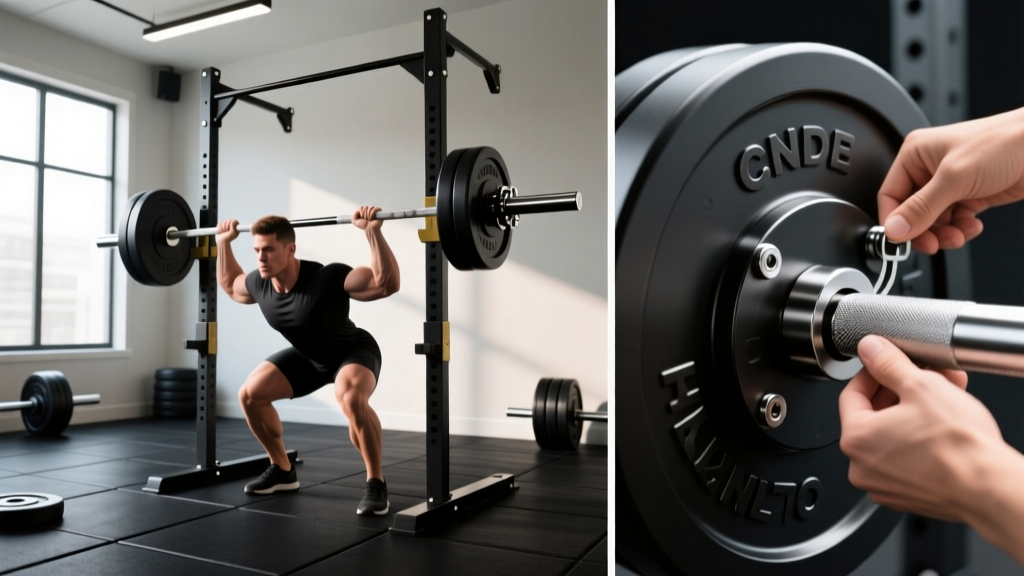
Best Barbell Collars for the Alt Dumbbell Snatch & Olympic Lifts

Rack Guide: Power Rack vs Squat Stand for Biceps Dumbbell Workouts
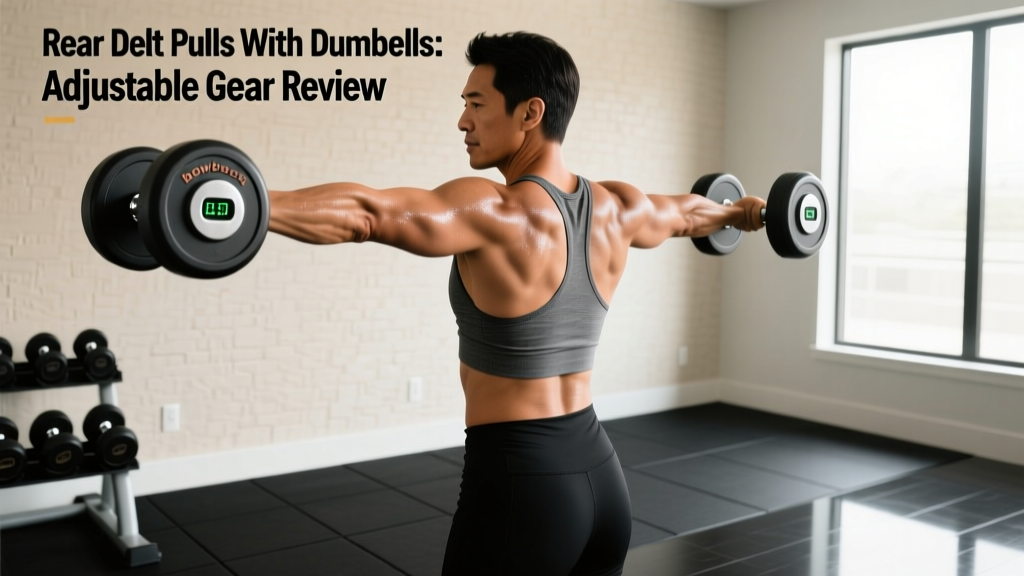
Rear Delt Pulls With Dumbbells: Adjustable Gear Review
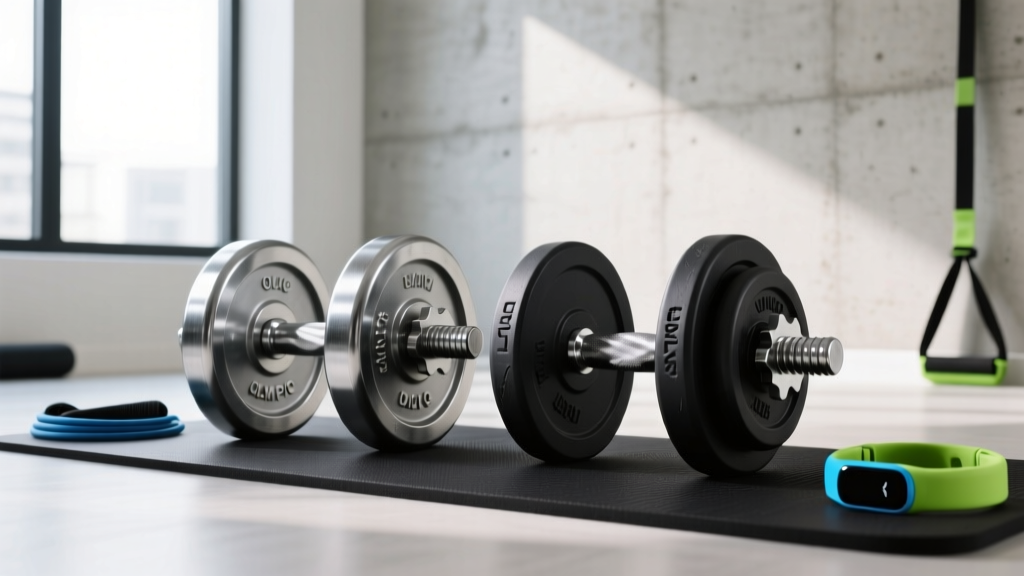
Dumbbell Training Program Stalled? Olympic vs Standard Plate Fixes
