Power Rack vs Squat Rack vs Stand: Dumbbell Deadlift for Back
Troubleshoot your home gym setup. We compare power racks, squat racks, and stands, and fix your dumbbell deadlift for back development.

Troubleshooting Your Home Gym: Hardware Limits and Back Pain
Building a resilient, muscular posterior chain is the cornerstone of any serious strength program. Yet, when lifters transition from commercial gyms to home setups, they frequently encounter a frustrating bottleneck: their equipment no longer matches their training goals. If you are trying to prioritize posterior chain development, you must critically evaluate the power rack vs squat rack vs squat stand debate. Choosing the wrong apparatus doesn't just limit your exercise selection; it forces biomechanical compromises that can lead to injury.
More specifically, many lifters find that traditional barbell hinging causes lumbar fatigue that outpaces muscular hypertrophy. When your hardware restricts safe pulling variations (like rack pulls) and your barbell deadlifts cause lower back shear, it is time to troubleshoot the movement itself. This is where mastering the dumbbell deadlift for back development becomes a critical intervention. In this guide, we will diagnose your rack setup, expose common equipment failure modes, and provide a biomechanical blueprint for using dumbbells to build a bulletproof back.
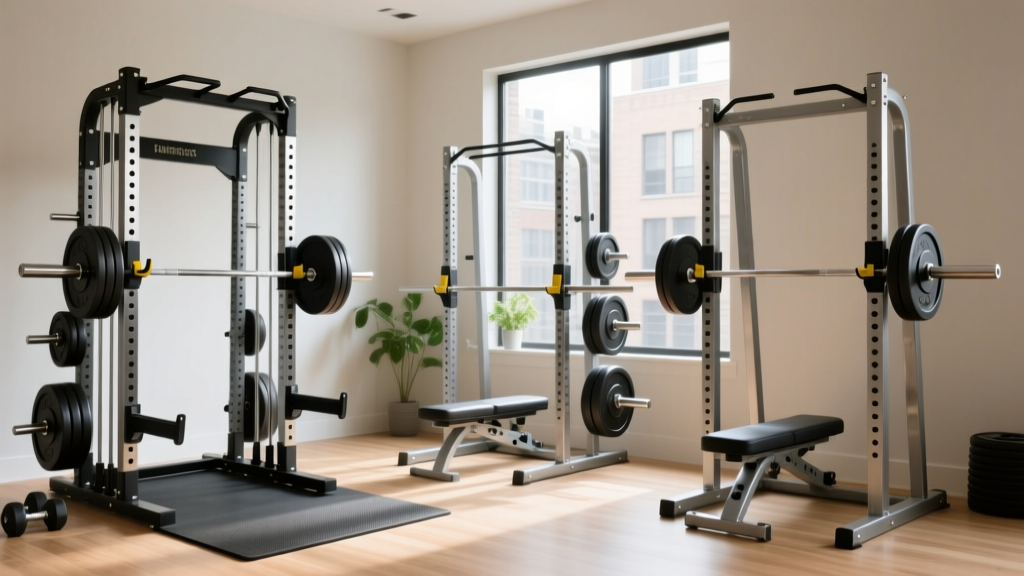
The Hardware Diagnosis: Power Rack vs Squat Rack vs Squat Stand
Before fixing your lifting mechanics, we must audit your steel. The market in 2026 is saturated with imported, low-grade racks that wobble under heavy eccentric loads. Here is the troubleshooting breakdown of the three primary categories, using industry-standard benchmarks like the Rogue Fitness lineup for dimensional accuracy.
1. The Power Rack (Full Cage)
Best For: Rack pulls, pin deadlifts, and heavy eccentric overload.
A true power rack, such as the Rogue RM-6 Monster Rack (priced around $3,800+ in 2026), features four to six uprights and a fully enclosed footprint. The interior width is typically 47 inches. The Back-Training Advantage: Power racks allow you to set pin-and-pipe safeties at knee height. This enables rack pulls, which isolate the erector spinae, traps, and lats without the immense compressive load of pulling from the floor. If your goal is pure back thickness, a power rack is non-negotiable.
2. The Squat Rack (Half Rack)
Best For: Sumo deadlifts, RDLs, and open-floor pulling.
Half racks, like the Rogue SAML-24 Monster Lite (approx. $1,200), feature two main uprights with rear storage uprights. They offer an open front, which is excellent for sumo deadlifts where a wide stance would cause your feet to hit the crossmembers of a full cage. However, they lack the front spotter arms required to safely fail a heavy floor pull or perform pin squats.
3. The Squat Stand (Two Uprights)
Best For: Budget setups, light dumbbell work, and pressing.
Squat stands, such as the Rogue SML-2C (approx. $495), consist of two independent uprights. While they boast a static weight capacity of 1,000 lbs, their dynamic tipping threshold is dangerously low.
⚠️ CRITICAL SAFETY WARNING: Never attempt heavy barbell rack pulls or eccentric deadlift variations on an unbolted squat stand. The forward shift in your center of gravity during a heavy hinge can easily tip the uprights forward, resulting in catastrophic failure. If you only own squat stands, you must pivot to dumbbell variations to safely train your back.The Biomechanical Pivot: Why the Dumbbell Deadlift for Back?
Let’s address a common troubleshooting scenario: You only have a squat stand, or your barbell deadlift is causing sharp, localized pain in your lumbar spine. According to biomechanical research popularized by Dr. Stuart McGill's BackFitPro, the barbell conventional deadlift generates massive shear forces on the lumbar discs, especially when the lifter's anthropometry (long femurs, short torso) forces them into a rounded starting position.
When barbell pulling becomes a liability, the dumbbell deadlift for back hypertrophy is the ultimate troubleshooting tool. Here is why this variation is superior for targeted back development when heavy barbell loads are contraindicated:
- Neutral Grip & Lat Engagement: Holding heavy hex dumbbells (e.g., 100 lb York Barbell rubber hex dumbbells) outside your thighs forces your arms into a neutral, vertical tracking path. This creates a longer moment arm for the latissimus dorsi to act as a stabilizer, generating intense isometric tension in the mid-back.
- Reduced Lumbar Shear: By utilizing two independent implements, you can adopt a slightly wider, more upright stance. This reduces the hip-to-load distance, decreasing the torque on the lumbar spine while maintaining high mechanical tension on the erectors.
- Unilateral Correction: Dumbbells expose and correct left-to-right asymmetries in your erector and quadratus lumborum (QL) muscles that a barbell masks.
"The goal of back training via hinging is not always moving maximum absolute load from point A to point B. It is about maximizing the internal tension of the posterior chain while managing the compressive costs to the spine. Dumbbells allow for a highly customizable stance that optimizes lat engagement without the rigid spatial constraints of a 7-foot barbell." — Adapted from National Strength and Conditioning Association (NSCA) principles on implement variability.
Troubleshooting Execution: Common Dumbbell Deadlift Mistakes
Even with the right implement, lifters frequently botch the execution. If you are using the dumbbell deadlift for back development but only feeling it in your hamstrings or lower back, audit your form against these common failure modes.
Mistake 1: Scraping the Shins (The Barbell Hangover)
When using a barbell, the bar must travel in a straight vertical line over the mid-foot, which requires it to physically drag against the shins and thighs. The Fix: Dumbbells are independent. Track them along the outside of your legs. Push your hips back into a deep hinge, allowing the dumbbells to pass beside your knees. This keeps the torso more upright, shifting the bias from the hamstrings directly to the lats and upper erectors.
Mistake 2: Forearm Failure Before Back Failure
Heavy hex dumbbells often feature thick 35mm handles. If your grip gives out at 120 lbs per hand, your back never receives the stimulus required for hypertrophy. The Fix: Use figure-8 lifting straps. According to data from Rogue Fitness equipment testing, utilizing straps on heavy dumbbell hinges allows lifters to increase their working weight by 15-20%, ensuring the erectors and traps reach true muscular failure.
Mistake 3: Losing the 'Anti-Shrug' at Lockout
Many lifters aggressively shrug their shoulders at the top of the movement, turning the exercise into a trap-dominant shrug. The Fix: At lockout, actively depress your scapulae (pull your shoulder blades down into your back pockets). Imagine trying to bend the dumbbell handles in half toward your body. This engages the rhomboids and lower traps, creating a dense, thick mid-back.
Equipment & Back Training Matrix
Use this decision matrix to troubleshoot your current home gym setup and select the correct pulling variation for your back goals.
| Equipment Setup | Primary Back Movement | Troubleshooting / Limitations |
|---|---|---|
| Power Rack (Pin Safeties) |
Rack Pulls, Pin Deadlifts | Requires high ceiling clearance. Best for isolating upper back and traps with supramaximal loads. |
| Half Rack (Open Front) |
Sumo Barbell Deadlift, RDLs | Lack of front safeties means heavy floor pulls carry higher risk if form breaks down. |
| Squat Stand (2 Uprights) |
Dumbbell Deadlift for Back | Do NOT use for heavy barbell hinging. DBs allow safe, high-tension back work without tipping risks. |
Step-by-Step: The Ultimate Dumbbell Hinge Protocol
To integrate this into your 2026 training block, follow this precise execution protocol designed to maximize erector and lat hypertrophy while sparing the lumbar spine.
- The Stance: Place your feet hip-width apart, toes pointed slightly outward (15 degrees). Position heavy hex dumbbells on the floor directly outside your shins.
- The Hinge: Push your hips backward as if closing a car door with your glutes. Maintain a neutral cervical spine (tuck your chin slightly). Grab the dumbbells with a neutral grip.
- The Pull-Through: Do not think about 'pulling' the weight up. Think about pushing the floor away and driving your hips forward. Keep the dumbbells tracking alongside your outer thighs.
- The Lockout: Squeeze the glutes hard. Depress the shoulder blades. Hold for a full 1-second isometric pause to maximize time-under-tension for the mid-back.
- The Eccentric: Hinge backward slowly (3-second negative), pushing the hips back until the dumbbells pass the knees, then bend the knees to return to the floor. Never round the lower back to reach the floor.
Final Verdict: Match Your Hardware to Your Hinge
Troubleshooting a stagnant or painful back workout requires looking at both the steel you own and the biomechanics you employ. If your budget or space restricts you to a squat stand, abandon the ego-driven barbell deadlifts that threaten your safety and your lumbar spine. Instead, invest in a high-quality set of heavy urethane or rubber hex dumbbells. By mastering the dumbbell deadlift for back development, utilizing straps, and focusing on lat depression and hip drive, you can build a massive, resilient posterior chain without ever needing to step inside a full power rack.
More gear to consider
All reviews
Beyond Upper Arm Exercises With Dumbbells: 2026 Kettlebell Trends
Olympic Barbell Buying Guide: Weight, Knurling & Press Muscles Worked

Bumper vs Iron Plate Trends & Upper Body Dumbbell Workout Plan

Power Rack vs Squat Rack: Space for Side Plank Dumbbell Raises?
Compact Dumbbell Racks: Layouts for Pull Downs With Dumbbells
