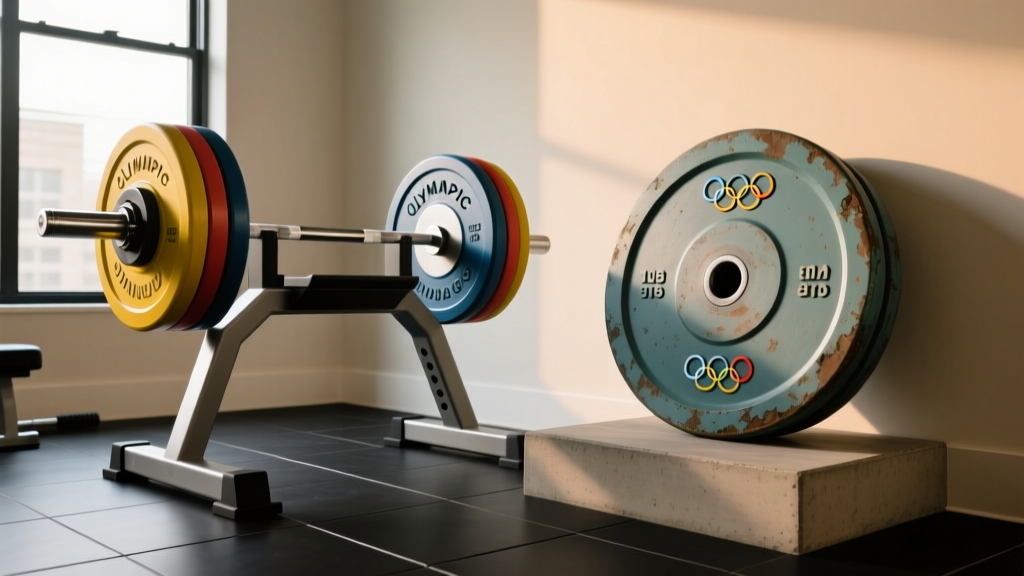
Fake Dumbbell Trap: Olympic vs Standard Weight Plates Compared
Avoid the fake dumbbell trap. We compare Olympic vs standard weight plates to help you build a durable, space-efficient, and accurate home gym setup.

The 'Fake Dumbbell' Epidemic in Home Gyms
If you have browsed online marketplaces for home gym equipment recently, you have likely encountered the 'fake dumbbell' phenomenon. These are typically adjustable dumbbell kits featuring hollow plastic shells filled with cement, sand, or water. While marketed as budget-friendly space savers, these low-density alternatives represent a massive compromise in biomechanics, durability, and progressive overload. To build a legitimate, lifelong home gym, you must abandon these novelty items and invest in real iron or urethane weight plates paired with loadable dumbbell handles.
But once you commit to real plates, you face the ultimate free weight debate: Olympic (2-inch) vs. Standard (1-inch) weight plates. In this head-to-head comparison, we break down the material science, dimensional footprint, and long-term viability of both plate types to help you engineer the perfect loadable dumbbell setup.
⚠️ The Density Warning: Cast iron has a density of roughly 450 lbs per cubic foot. Cement and sand mixtures hover around 150 lbs per cubic foot. A 40lb 'fake' cement plate is physically three times larger than a 40lb iron plate, severely restricting your range of motion during pressing and rowing movements.Material Science: Why Density Dictates Dumbbell Viability
When building a dumbbell from weight plates, the physical diameter and width of the plate dictate the exercise's mechanics. According to equipment testing by Garage Gym Reviews, adjustable setups that rely on low-density fillers or overly thick cheap cast iron severely compromise the range of motion (ROM) on movements like the dumbbell bench press or Romanian deadlift (RDL).
- The ROM Interference: If you are using bulky 1-inch standard plates or cement-filled 'fake' plates, the weights will clank together at the top of a chest press before your pectorals fully contract.
- The RDL Clearance: For Romanian deadlifts, a standard 25lb iron plate has a diameter of roughly 8 inches. A 'fake' cement 25lb plate can exceed 12 inches in diameter, forcing you to start the movement from a higher elevation and ruining the hamstring stretch.
Head-to-Head: Standard (1-Inch) vs. Olympic (2-Inch) Plates
Assuming you have ruled out plastic/cement 'fake' dumbbells, you are left with two legitimate metal pathways. Here is how Standard and Olympic plates compare when loaded onto dumbbell handles.
1. Tolerance, Fit, and the 'Stuck Plate' Syndrome
Standard (1-Inch) Plates: The 1-inch (25mm) hole standard is notorious for poor manufacturing tolerances. Budget standard plates often feature hole diameters that vary from 0.95 inches to 1.1 inches. This variance causes plates to rattle loosely on the handle or, worse, get permanently wedged onto the steel shaft due to friction and rust buildup.
Olympic (2-Inch) Plates: The 50mm Olympic standard is the global benchmark for commercial gyms. As highlighted in BarBend's comprehensive weight plate guide, the 50mm specification ensures tight tolerances, meaning plates slide smoothly onto sleeves and lock securely with spring collars without wobbling.
2. Handle Shear Strength and Load Limits
A weight plate is only as good as the handle it slides onto. This is where the Olympic standard completely eclipses the Standard 1-inch setup.
Most 1-inch dumbbell handles are made from solid steel shafts that max out at 14 to 18 inches in length. Because the shaft is only 1 inch thick, it lacks the shear strength to support heavy loads safely. Loading a 1-inch handle past 60 lbs per hand introduces a noticeable flex and bending risk. Conversely, Olympic loadable dumbbell handles feature massive 2-inch steel sleeves (often derived from actual barbell sleeves), easily supporting 120+ lbs per hand with zero deflection.
Comparison Matrix: Fake, Standard, and Olympic
| Feature | 'Fake' (Cement/Sand) | Standard (1-Inch Iron) | Olympic (2-Inch Iron/Urethane) |
|---|---|---|---|
| Hole Diameter | Varies (often 1.25') | 1 inch (25mm) | 2 inches (50mm) |
| Material Density | Very Low | High (Cast Iron) | High (Iron/Urethane) |
| Weight Accuracy | +/- 10% to 15% | +/- 5% | +/- 1% to 2% |
| Max Safe Handle Load | 40 lbs (Plastic failure) | 60 - 75 lbs (Shaft flex) | 120+ lbs (Sleeve strength) |
| Avg Cost Per Pound | $0.80 - $1.20 | $1.50 - $2.00 | $2.50 - $4.50 |
Building Your Loadable Dumbbell Setup (2026 Blueprint)
To transition away from the fake dumbbell trap and build a commercial-grade adjustable setup, you need the right combination of handles and plates. Here are the specific configurations we recommend based on your budget and space constraints.
The Elite Olympic Setup (Best for Heavy Lifters)
For athletes pressing over 80 lbs per hand, the 2-inch Olympic route is mandatory. The Rogue Loadable Dumbbell Handles remain the industry benchmark. Featuring a 17.5-inch overall length and 6.5-inch loadable sleeves, they can accommodate up to 120 lbs of standard-width urethane plates. Pair these with Rep Fitness Urethane Grip Plates to minimize the physical footprint on the sleeve, allowing for maximum weight loading without the plates clashing during neutral-grip exercises.
The Budget Standard Setup (Best for Beginners & Light Isolation)
If you are strictly doing lateral raises, bicep curls, and light tricep extensions, a 1-inch Standard setup is viable. Brands like Titan Fitness offer 14-inch solid steel standard handles for under $40 a pair. You can source used 1-inch cast iron plates locally for roughly $1.20 per pound. However, be prepared to upgrade to Olympic once your compound pressing strength exceeds 50 lbs per hand.
Pro-Tip on Collars: Never use the cheap plastic spring collars that come free with standard plates. For Olympic loadable dumbbells, invest in locking aluminum collars (like Rogue HG 2.0 Collars). The centrifugal force of a heavy dumbbell bench press can easily pop a weak spring collar, resulting in a dangerous plate slide.
Cost Breakdown: Building a 100lb Set Per Hand
Let us look at the actual financial investment required to build a 100lb dumbbell (handle + 100lbs of plates) in 2026, comparing the three tiers.
- The 'Fake' Cement Route: Buying two 50lb adjustable cement kits costs roughly $90. Result: Massive footprint, inaccurate weight, high breakage risk.
- The Standard 1-Inch Route: $45 for Titan handles + $160 for 200lbs of 1-inch cast iron plates ($0.80/lb used). Total: $205. Result: Heavy, rust-prone, limited to 60lb safe working loads per handle.
- The Olympic 2-Inch Route: $150 for Rogue Loadable Handles + $500 for 200lbs of premium urethane Olympic plates ($2.50/lb). Total: $650. Result: Lifetime durability, precise calibration, commercial-grade safety.
The Final Verdict
The 'fake dumbbell' trend of sand-filled and cement-cast adjustable weights is a false economy. The sheer volume of these low-density plates ruins exercise mechanics and limits your ceiling for progressive overload. While the 1-inch Standard cast iron plate is a step up in material quality, its inherent manufacturing tolerances and the shear-strength limitations of 1-inch handles make it a dead-end for serious lifters.
The Winner: The Olympic 2-inch weight plate paired with a high-quality loadable handle is the undisputed champion of the home gym. Yes, the initial buy-in is higher, but the precision, safety, and infinite scalability of the 50mm Olympic standard ensure you will never need to buy another set of dumbbells for the rest of your life.
More gear to consider
All reviews
Storing Thomas Inch Dumbbells: Rack & Storage Value Analysis
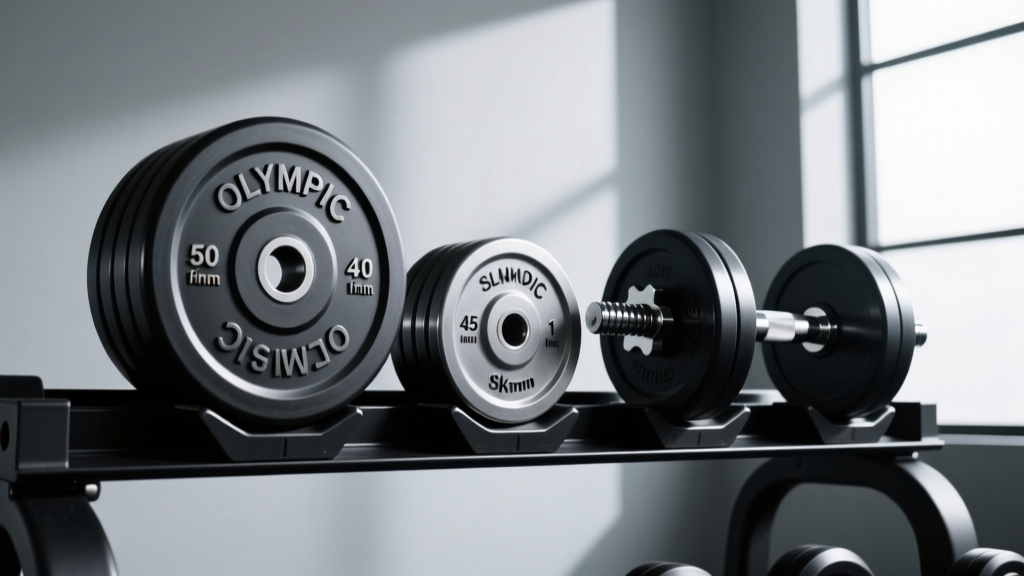
Olympic vs Standard Plates for Lying Dumbbell Skull Crushers
Neoprene Dumbbell Comparison & Dumbbell Bench Press Tutorial
Barbell Knurling & Weight Guide: Seated Dumbbell Rear Delt Fly

2026 Budget Guide: Loadable Dumbbells for Dumbbell Lunges Exercises
