Bumper vs Iron Plates: Gym Layouts & Dumbbell Pullover on Floor
Compare bumper vs iron plates for compact gym layouts. Learn how to optimize space for heavy lifts and the dumbbell pullover on floor.

The Spatial Geometry of Free Weights: Bumpers vs. Iron
Designing a high-functioning home gym in a constrained footprint—such as a standard 10x10 or 12x12 garage—requires treating your floor plan like a game of high-stakes Tetris. While most lifters debate the merits of bumper plates versus cast iron plates based on noise reduction or Olympic lifting requirements, the most critical yet overlooked factor in 2026 is spatial geometry. The physical dimensions of your weight plates dictate your storage infrastructure, which in turn dictates your usable floor space for accessory movements.
According to BarBend's comprehensive plate analysis, the fundamental difference lies in thickness and diameter consistency. A standard 45lb competition bumper plate (like the Rogue HG2) features a uniform 17.5-inch diameter and a thickness of roughly 3.25 inches. Conversely, a 45lb cast iron plate (such as the Rogue Echo Iron) shares the 17.5-inch outer diameter but clocks in at a mere 1.3 inches thick. This 2.5x difference in thickness radically alters how you store your weights and how much open matting you can preserve for floor-based exercises.
Space Math: The 10-Plate Problem
If you own 10 pairs of 45lb plates (450 lbs total), storing them on a standard barbell sleeve or a horizontal A-frame requires 32.5 inches of linear width for bumpers, compared to just 13 inches for iron plates. In a tight garage gym, those extra 19.5 inches can be the difference between a cluttered hazard zone and a functional training area.
Storage Infrastructure and Floor Plan Impact
Because bumper plates are incredibly voluminous, they demand heavy-duty, wide-footprint storage solutions. A standard 10-peg A-frame plate tree has a base footprint of roughly 30x30 inches, but when loaded with thick bumpers, the effective clearance required to safely load and unload plates expands to a 4-foot radius.
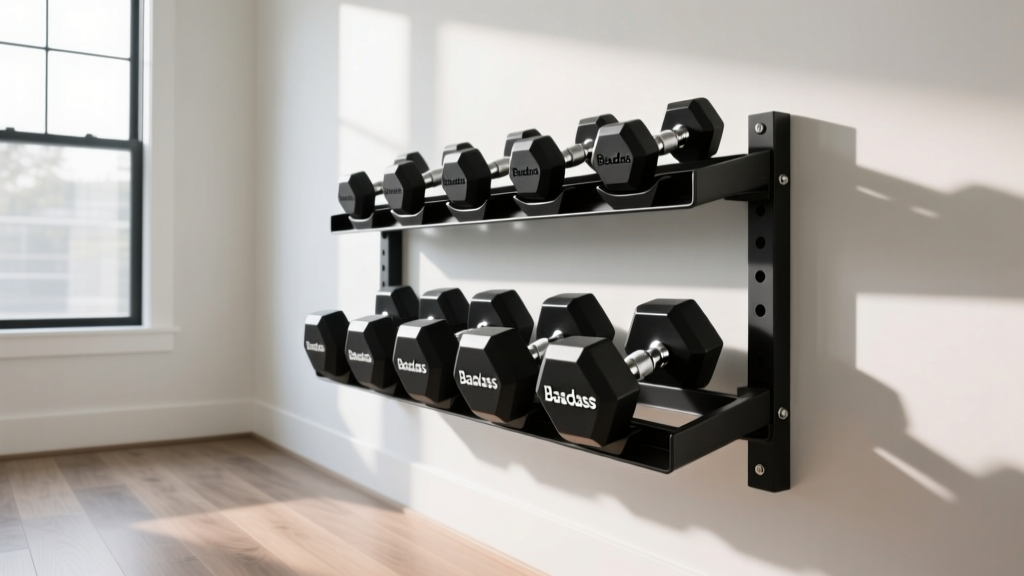
Iron plates, being high-density, allow for space-saving vertical storage. Wall-mounted plate racks (like the Rogue Monster Lite Wall Mount Rack) bolt directly to your studs, elevating the weight off the ground and reducing the floor footprint to zero. By shifting your iron plate storage to the vertical plane, you reclaim crucial square footage on the ground.
Preserving the Extension Zone
Why does this reclaimed floor space matter? Because a well-rounded hypertrophy and mobility program requires unobstructed matting. If your training split incorporates thoracic mobility and lat isolation work, you likely perform the dumbbell pullover on floor. This exercise demands a clear, flat 6x3 foot area to safely execute full overhead arm extension without the risk of striking a vertical plate tree, a protruding rack foot, or a stack of loose bumpers.
When you perform a dumbbell pullover on floor, your peripheral vision is blocked by the weight overhead, and your lats are under maximum stretch. Tripping over a poorly placed A-frame bumper tree or scraping your elbows against a low-profile plate stack is a severe injury risk. High-density iron plates stored on vertical wall mounts eliminate these ground-level obstacles, creating a safe, dedicated extension zone.
Cost-to-Space Ratio Matrix (2026 Market Data)
Beyond spatial efficiency, budget constraints heavily influence gym layouts. The pricing landscape for gym equipment has stabilized in 2026, but shipping costs for dense iron remain a factor. Below is a comparison of current market averages based on Rogue Fitness specifications and broader industry tracking from Garage Gym Reviews.
| Feature | Urethane/Rubber Bumper Plates | Cast Iron / Machined Iron Plates |
|---|---|---|
| Average Cost Per Pound | $3.50 - $4.50 / lb | $1.75 - $2.50 / lb |
| 45lb Plate Thickness | ~3.25 inches | ~1.30 inches |
| Storage Footprint (per 450lbs) | High (Requires wide A-Frame) | Low (Wall-mount compatible) |
| Floor Exercise Clearance | Poor (Encroaches on mat space) | Excellent (Vertical storage) |
| Acoustic Profile | Quiet, low vibration | Loud, requires thick matting |
Step-by-Step Layout Flow for a 10x10 Garage Gym
To maximize both heavy lifting safety and accessory movement clearance, follow this spatial optimization framework:
- Anchor the Power Rack: Place your 4x4 foot power rack (e.g., Rogue SML-2C 90" Monster Lite) flush against the rear wall or in a rear corner. This establishes your primary lifting zone and deadlift platform.
- Deploy Vertical Iron Storage: Bolt a vertical wall-mount plate rack to the studs immediately adjacent to the rack. Load your machined iron plates here. This keeps the weight off the floor and within arm's reach of the barbell sleeve.
- Map the Accessory Zone: With the floor space beside the rack reclaimed from bulky A-frame trees, lay down a dedicated 4x6 foot horse stall mat. This is your designated accessory zone.
- Execute Floor Movements Safely: Use this unobstructed 4x6 mat zone for movements requiring maximum spatial awareness and overhead clearance. When you set up for the dumbbell pullover on floor, position your upper back horizontally across the mat, ensuring your overhead extension path is completely free of the rack uprights and wall-mounted storage.
Acoustic Trade-Offs and Matting Solutions
The primary argument against iron plates in a residential garage gym is noise and vibration. Dropping iron plates on a standard concrete slab will transmit low-frequency shockwaves through the foundation, potentially damaging the floor and angering neighbors.
"If you prioritize floor space for movements like the dumbbell pullover on floor, you must accept the acoustic trade-offs of iron plates. Mitigate this not by buying thicker plates, but by investing in high-density 3/4-inch vulcanized rubber horse stall mats paired with a layer of EVA foam underneath to decouple the impact vibration."
By utilizing wall-mounted storage for your iron plates, you avoid the need for wide, sprawling plate trees that eat into your matting. You can instead dedicate your entire rubber mat footprint to lifting, dropping, and floor-based isolation work.
Frequently Asked Questions
Can I mix bumpers and iron plates in a small gym?
Yes, but it requires strict zoning. Keep a pair of 45lb bumpers on the barbell for Olympic lifts or heavy drops, and store your high-density iron plates on a vertical wall rack to preserve floor space for accessories like the dumbbell pullover on floor.
Do iron plates damage home gym flooring?
Only if dropped directly on bare concrete or thin foam tiles. When using iron plates, a 3/4-inch thick vulcanized rubber mat is mandatory to absorb the kinetic energy and prevent spalling of the concrete subfloor.
Why is floor clearance so important for pullovers?
The dumbbell pullover on floor requires you to lie flat and extend a heavy dumbbell behind your head until it nearly touches the ground. If your floor is cluttered with protruding plate trees or loose bumper plates, you risk severe shoulder impingement or wrist injuries upon impact.
More gear to consider
All reviews
Rubber Hex vs Urethane: 2026 Gear for a Biceps Routine With Dumbbells

Isolating the Tricep with Dumbbells: Adjustable Set Review

Compared: Top Neoprene Gear for Dumbbell Exercises for Toning Arms
Power Rack vs Squat Stand: Is Dumbbell Bench Press on Floor Better?

Maintaining Loadable Dumbbells for the Single Dumbbell Thruster