Budgeting a Chest Muscle Workout with Dumbbells: Hex vs Urethane
Analyze the true cost of rubber hex vs urethane dumbbells for your chest muscle workout with dumbbells. Deep dive into 2026 pricing, durability, and value.

The True Cost of a Heavy Chest Muscle Workout with Dumbbells
Designing an effective home gym for hypertrophy requires more than just buying the first weight set you find on sale. When your primary goal is a high-volume, heavy chest muscle workout with dumbbells—featuring demanding movements like 45-degree incline presses, flat bench flyes, and floor presses—the equipment you choose directly impacts your safety, grip stability, and long-term budget. In the 2026 fitness equipment market, the debate almost always narrows down to two distinct materials: rubber-coated hex dumbbells and virgin urethane dumbbells.
While rubber hex bells have long been the default for budget-conscious lifters, a deeper financial and biomechanical analysis reveals that the 'cheaper' option often carries hidden costs. This comprehensive budget breakdown and value analysis will dissect the real-world pricing, material failure modes, and cost-per-use metrics of rubber hex versus urethane dumbbells, ensuring your next pec-building session is both effective and economically sound.
Material Science: Recycled Rubber Hex vs. Virgin Urethane
To understand the price gap, we must first look at the manufacturing processes. According to extensive durability testing by Garage Gym Reviews, the material composition dictates not just the lifespan of the weight, but the environment of your home gym.
Recycled Rubber Hex Dumbbells
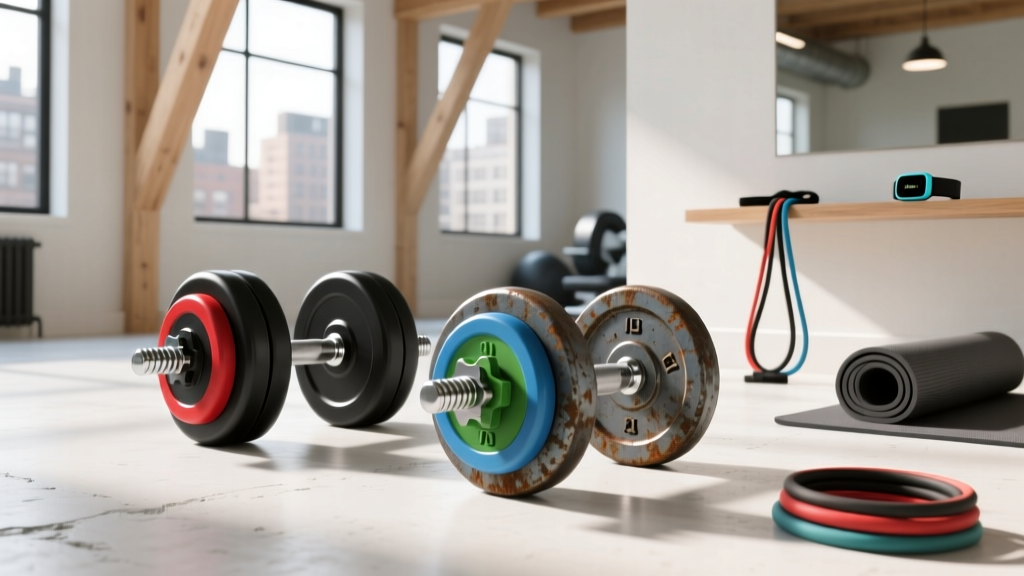
Rubber hex dumbbells are typically made from recycled tires and rubber scraps bound together with adhesives and sulfur-based vulcanizing agents. The hexagonal heads are molded around a cast-iron core. While the hex shape prevents rolling—a crucial safety feature when setting heavy dumbbells on your thighs before a flat bench press—the recycled rubber is highly susceptible to UV degradation, temperature fluctuations, and physical chunking upon impact.
Virgin Urethane Dumbbells
Urethane is a premium, synthetic elastomer poured in liquid form and cured. It is fundamentally different from rubber. It contains no sulfur, emits zero volatile organic compounds (VOCs), and boasts an exceptional abrasion resistance rating. Premium models, such as the Rep Fitness Urethane Dumbbells, feature a solid steel core encased in thick, virgin urethane, engineered to absorb kinetic energy without deforming or tearing.
The Grip Factor: Knurling and Wrist Stability
When executing a chest muscle workout with dumbbells, grip fatigue is often the limiting factor before pectoral failure, especially during eccentric flye stretches and heavy incline presses. This is where the handle engineering diverges wildly between the two tiers.
- Rubber Hex Handles: Budget hex bells often feature basic chrome-plated handles with shallow, sometimes painted-on knurling. After a few months of heavy use and sweat exposure, the chrome can pit, and the shallow knurl loses its bite, forcing you to rely on grip strength rather than pectoral tension.
- Urethane Handles: Premium urethane sets utilize high-grade steel handles with deep, aggressively cut knurling (often 5mm to 8mm deep) and specialized patterns like volcano or mountain knurl. This bites into the calluses, locking the dumbbell into your hand during the most precarious parts of a heavy press.
The 5-to-50 lb Set Budget Breakdown (2026 Market Pricing)
Let us run the exact mathematics on building a standard 10-pair set (5, 10, 15, 20, 25, 30, 35, 40, 45, 50 lbs), totaling 550 lbs of iron. This is the foundational set required for progressive overload in a chest-focused hypertrophy block.
| Metric | Rubber Hex (e.g., CAP Barbell) | Virgin Urethane (e.g., Rogue / Rep) |
|---|---|---|
| Average Cost Per Pound | $1.45 - $1.65 / lb | $2.75 - $3.20 / lb |
| Total Set Cost (550 lbs) | $852.50 | $1,622.50 |
| Expected Lifespan (Heavy Use) | 3 - 5 Years | 15+ Years (Lifetime) |
| Resale Value Retention | 20% - 30% | 65% - 80% |
| Warranty Coverage | 30 to 90 Days | 1 to 5 Years |
At first glance, the urethane set demands a 90% premium upfront. However, evaluating value requires looking beyond the initial point of sale.
Real-World Failure Modes During Chest Presses
Heavy chest training inevitably involves training to failure. When you fail a rep on the flat bench or floor press without a spotter, dropping 50 lb dumbbells from a height of 3 to 4 feet is a reality. How each material handles this kinetic shock is the ultimate stress test.
Warning: The 'Chunking' Effect
When recycled rubber hex dumbbells are dropped on concrete or hard rubber mats, the brittle nature of the compressed rubber causes the edges to chip, tear, and 'chunk' off. Within a year of heavy chest training, a 50 lb rubber hex dumbbell may physically lose mass, becoming unbalanced and dangerous for unilateral movements. Urethane, conversely, possesses high tensile strength and elasticity; it will bounce slightly upon impact but will not tear or lose mass, even after hundreds of drops.
The Hidden Cost of Floor Damage
Dropping unbalanced, chunked rubber hex bells concentrates impact force onto jagged, exposed cast-iron cores. This localized pressure can easily crack standard horse-stall mats or dent engineered wood flooring. Repairing a home gym floor can cost upwards of $400, instantly erasing the initial savings of buying the cheaper rubber set.
The 'Odor Tax' in Enclosed Home Gyms
An often-overlooked aspect of the budget analysis is the environmental cost. Recycled rubber off-gasses sulfur and VOCs, a process exacerbated by heat and humidity. If your home gym is located in a garage, basement, or spare bedroom with limited ventilation, the smell of a 550 lb rubber hex set can be overpowering and cause respiratory irritation during high-exertion sets like incline dumbbell presses.
As noted in equipment specifications by Rogue Fitness, even their higher-end rubber hex bells carry a warning about initial off-gassing that requires weeks of outdoor airing out. Virgin urethane is completely odorless from the moment it is unboxed, preserving the air quality of your training space and eliminating the need to buy heavy-duty air purifiers or ozone generators (an extra $150-$300 expense).
Cost-Per-Use: The 5-Year Hypertrophy Projection
To truly measure value, we apply the Cost-Per-Use (CPU) formula. Assume you perform a dedicated chest muscle workout with dumbbells twice a week, alongside other accessory work, totaling 150 uses of the dumbbell set per year. Over a 5-year training cycle, that is 750 uses.
- Rubber Hex CPU: $852.50 / 750 uses = $1.13 per workout (excluding potential floor repair or early replacement costs due to severe chunking).
- Urethane CPU: $1,622.50 / 750 uses = $2.16 per workout.
While the urethane CPU remains higher, the Information Gain here lies in the resale and replacement reality. At year 5, a used rubber hex set showing edge wear, chrome pitting, and rubber degradation will fetch perhaps $150 on the secondary market. A well-maintained urethane set will easily sell for $1,100+, effectively bringing your net 5-year ownership cost of the urethane set down to roughly $522, or $0.69 per workout.
Final Verdict: Where to Allocate Your Funds
If your budget is strictly capped under $1,000 and you are training in a well-ventilated garage with thick, high-density drop mats, the Rubber Hex Dumbbells remain a viable, functional tool to build a massive chest. They will get the job done, provided you accept the aesthetic degradation and potential odor.
However, if you are building a permanent home gym, training in an enclosed indoor space, and prioritize grip security during heavy, sweaty incline presses, the Virgin Urethane Dumbbells represent the superior long-term financial decision. The upfront premium buys you indestructible edges, zero off-gassing, premium knurling for better mind-muscle connection, and a high resale value that ultimately protects your investment. When your goal is a serious, long-term chest muscle workout with dumbbells, urethane is the undisputed champion of value.
More gear to consider
All reviews
Budgeting for the Butterfly Press with Dumbbells: Loadable Sets

Tricep Workouts with Dumbbells for Women: 2026 Loadable Plate Trends

EZ Bar vs Straight Bar Longevity: Dumbbell Zercher Squat Care
Loadable Dumbbells for Plank with Dumbbell Row: 2026 Value Guide

Bumper vs Iron Plate Comparison & The Underhand Dumbbell Bench Press